
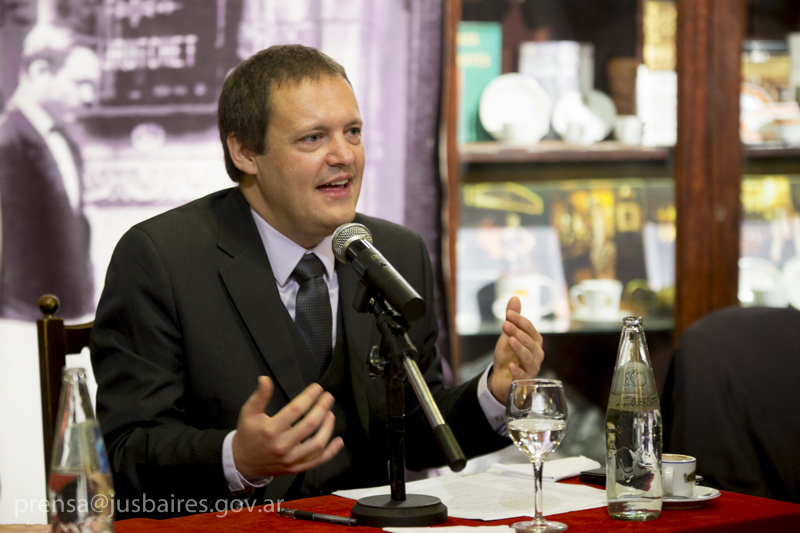
Conducted by Sonia Corrêa
Before his first year as pope was completed, Leo XIV had fiercely confronted US current migration policies and yet more poignantly the war on Iran, which provoked virulently grotesque Trump´s reactions. Right after the anniversary Leo XIV published his first encyclical letter Humanitas Magnifica that, albeit covering a wide range of issues, gives central attention to the risks of artificial intelligence, propelling a massive flow of press reports and academic analyses. In addition to selecting and compiling this vast material, we once again invited Stefano Fabeni to assess the political paths, breakthroughs and ambivalences at play during the first year of the first North American pope. We thank him for his time and enlightening insights!
SPW – In last year´s interview we have given much attention to the dynamics of the Conclave in which Prevost was elected. Your assessment was that Cardinal Dolan, one main figure in the US Catholic Church, played key role in the built up of the election outcome. I want to start by asking if you still consider this analysis to be valid and, if so, what are its subsequent implications considering the sequential and escalating conflicts between Leo and Trump?
Stefano Fabeni – Based on the huge amount of inside information that came out after the conclave I would say our assessment was correct. The inability of the Italian cardinals to gather around one candidacy has been confirmed. In such a context, a rather surprising convergence coalesced between the Latin American and the North American cardinals around Prevost. My view is that this happened because both camps saw him as “their candidate”. Let me give you a ground level illustration: two months ago, in Argentina a taxi driver talked to me about the new “Peruvian” pope. In the US, Prevost is also viewed by both the hierarchy and faithful as the American pope. In light of that, the coming together of Latin Americans and North Americans in the Sistina Chapel is not, in fact, so astonishing. So, in what concerns the geopolitics of the conclave, what I said last year remains valid. It remains to be better explored is if Cardinal Dolan, who is a staunch conservative and knew well who Prevost was, had or not predicted the political directions his papacy would quite immediately trail, given that Leo XIV, as soon as elected, reaffirmed Bergoglio´s sharp critique of Trump´s anti migration fury. Let´s consider that this development made him discomforted. Even so, I dare saying that the coming together of U.S. cardinals around his name may have derived by shared views not around the political faults running within the US Church, but in relation to tensions and fractures at play in the Christian camp more broadly speaking. It is reasonable to think that the U.S. Cardinals union around Prevost is aimed at creating a common front vis-a-vis the aggressive political advances of the US evangelicals, which may rapidly cross boundaries affecting Catholicism worldwide. In other words, they have opted for an American pope that may defend Catholicism and its Church in the US and eventually elsewhere. Dolan´s support to Prevost may have been a pragmatic calculated risk. They put aside the division within the U.S. Catholic Church to address challenges at play in the bigger picture.
SPW – Let´s move to the escalating conflicts between Rome and Washington. As I said, these contentions that begun before Leo, when Bergoglio condemned the violence of migration policies but taken harsher contours the pope frontally confronted the war on Iran. Despite Trump´s virulent reaction, Leo has not retracted, as shown by the strong concerns raised in Humanitas Magnifica about the military use of IA. In that respect I want to call attention to the fact that this is not the first time in history that the US State and the Vatican openly conflict. As retraced by the historian Matthew Avery Sutton, in a Wall Street Journal article, between the 18th century and the 1940´s the relations between the US State and the Catholic Church have been fraught with troubles. This is because the founding fathers correctly associated the Vatican to European monarchies and, later, a perception settled of the Catholic church as a powerful institution that often intervened in national internal affairs. These perceptions inevitably carried much older elements deriving from the religious wars. Sutton recovers, for example, when the tensions preceding the Civil War were on the rise, protestant Americans “enthusiastically consumed bestselling, lurid accounts of sexually promiscuous and abusive priests and nuns” (somehow reviving 15th century accusations brandished by Henry VIII after his break with Rome). He also recalls how, in the 1920´, Catholics were systematically targeted by the Klux Ku Kan. These contentious would be initially appeased by Roosevelt´s pragmatic strategies aimed at defeating Nazi- Fascism, this turn that consolidating during the Cold War Era, when the US and Vatican increasingly partnered around strategies to contain the “spread of Communism”. Not accidentally, it seems, when John Kennedy, the first Catholic president, was elected, the bi-polar tensions were reaching one of its highest points. Considering this long and convoluted course, how to read the current fracturing between Rome and Washington?
Stefano Fabeni – This recapturing is very interesting and stirs up other archaic elements. Indeed the conflations and tensions between the emerging Church and the empire go far back to Constantine. We should not forget either that the pilgrims started leaving Britain in the 17th century, when Charles I — who was married to a Catholic queen – claimed that he would only respond to God and not to the Parliament, by the triggering the so called first revolution. So, the suspicion in relation to Catholicism and Rome is in many ways inherent to the foundation of the United States.
Against that long course backdrop, Prevost election is really a quite striking event which makes it productive to explore the hypothesis that Leo XIV can be seen as a revival of John Paul II, an insider of the Communist world taken to Rome to dismantle that world from within. This was metaphorically observed by Piero Schiavazzi, an acknowledged Italian expert on the Vatican, when he said that: it is for a reason that the Holy Spirit – which is often represented as a dove – has nested its egg at the heart of the American Empire. Let me unpack that.
While North American cardinals may have gathered around Prevost to rein the Evangelical growing hegemony over state power, the non-American camp – especially from the global South – may have seen his election as wedge to fight the empire from within. And in that sense, it’s been extremely strategic. Let’s not forget that JD Vance´s appearance at Bergoglio´s death bed was not just the visit of a faithful to the departing Holy Father, it also aimed at imprinting a political rubber stamp to the event. Then, as the conclave gathered Trump was spreading memes of himself portrayed as the new pope, making clear that the empire was emmeshing with the Church political dynamics. This grotesque encircling has certainly resonated inside the Sistine Chapel.
SPW – This insight depicting Prevost as an insider raised to power to propel transformations from within makes me realize that his American birth rights allow him to contest Trump´s policies as a US citizen. If you read it well, he is confronting Trump from a citizen´s standpoint, resorting to a civil disobedience tone and semantics, something that a foreign pope could never do. What are you views on that?
Stefano Fabeni – Leo XIV acting not just as a pope, but also as a US citizen is decidedly one key element to understand the current scenario. On the other hand, we cannot minimize the 2000 years of institutional existence of the Church. Trump, sooner or later with be out of power, whether by the virtue of an election or by the virtue of nature, while the time frame of Leo XIV papacy will almost certainly be longer and the church will continue existing. Having said, let´s get back to Prevost election and revisit his first speech as the pope, when he spoke about the challenges for human and social conditions in what can be described as one of the most troubling times for humankind. Most importantly, considering what happened since then, his first words “Peace be with you all” peace already signaled towards how his mandate would evolve. In his first speech he mentioned the word peace ten times, more than the reference to God or Christ. Then, the war on Iran drastically contradicted these doctrinal tenets, it was not war that could be read as politics or diplomacy through other means. It is war as an end in itself, with no contempt for its bloody effects. Prevost sharp critical reactions to the conflict erupted as soon as the war was announced and were conveyed in three steps.
As highlighted by professor Schiavazzi, an acknowledged Italian Vatican scholar, right away the cardinals of Chicago, Washington, and Newark, made clear their moral critique of the war, declaring that the Trump administration had “called into question the moral role of the US in the world”. The second step went further, as Leo XIV, responding to Hegseth’s Pentagon “Pulp Fiction” prayer service blessing the departure of soldiers for Iran, quoted Isaiah 1:15 to state that “the Lord does not listen to the prayers of those whose hands are full of blood”. This declaration targeted the immorality of the war, the “bad” intentions of those waging it as well as the unacceptable excesses in the use of political power. But from the White House’s point of view, the third critique was even more troubling, because in reacting to Trump’s threat to destroy Iranian civilization, the pope called on Americans to contact their congressional representatives to demand an end to the war and to work for peace. In doing so, exactly as you said, he was no longer — or not only — the Pope, but a US citizen calling on politicians and the public to civic action.
These increasingly critical declarations against the war deployed by Prevost were preceded by an episode, which had not much repercussion beyond the US boundaries, but is relevant here because it illuminates the growing faultlines amongst American Evangelicals and Catholics. In April, news started spreading that in January the Pentagon had called the Vatican ambassador to admonish him because of the pope´s critique of the use of military force. Such a conduct is not surprising given the (Evangelical) Christian religious contours imprinted by Hegseth to the war, even though this version about the reason why the nuncio has visited the Pentagon was deflected by semi-official US sources and even Catholic voices.
Looking ahead, another relevant signal of how deep the fracturing between the Vatican and the Trump regime is running is that Prevost declined the invitation to visit the U.S. to attend the 250th anniversary of the US independence on July, 4th, projected to be a self-serving Trump spectacle. In justifying the declining, the pope informed Washington that, on that date, he will be in Lampedusa, the first entry point to Europe and hotspot for immigrants crossing the Mediterranean, not accidentally, the first official trip outside Rome by Bergoglio after his election. Prevost´s attitudes make clear that he is not afraid of intimidation and subtly intertwines his capacities as a dissident American citizen with Francis politics and legacy.
SPW – This recapturing and your reflections about them are fascinating. Yet, hearing them I cannot stop pondering how to place it in relation to the Trump´s regime composition in which the US ultra-Catholic camp, as never before, gathered so much power. JD Vance is the vice-president, the Opus Dei digitals can be tracked everywhere, it is not excessive to say that Project 2025 is mainly a product of ultra-Catholic intellectuals sitting at Heritage Foundation. How to locate Prevost in relation to this wide and powerful ecosystem. How are they reacting to his firm positions?
Stefano Fabeni – This is not so easy to respond, without further investigation. But the observation can be made that, while retaining lots of power in the regime, at least on the surface some signs suggest that the ultra-Catholic camp may be losing ground. JD Vance was one of those voices openly reacting to Leo XIV critiques of the war and he technically remains as a potential presidential candidate for 2028. But he has been losing public visibility lately and was privately criticized by Trump: a gossip circulates in DC that the president considers him to have been too much on vacation. On the other hand, Mark Rubio, who is also Catholic but does not appear to be organically part of the ultra-Catholic front, gained much space since January as one of the masterminds behind the so-called “Donroe” Doctrine, the Venezuela intervention and, to a less extent, the war against Iran. Having said that, I do not think that Prevost who is upfront challenging Trump, needs to confront the ultra-Catholic camp so directly. He may, however, be devising indirect means to begin eroding their political legitimacy and economic power. Having that in mind, it is worth recalling, for example, that in April, Leo XIV received Gareth Gore, the author of a best seller book on Opus Dei in a public audience, which had significant press coverage. Although the conversation was mostly about moral and sexual abuses, Gore´s investigation has also tracked the tortuous means used by prelature to amass financial and political power. Another aspect to be considered is relation to this complicated conundrum is that Trump´s self-posted meme mimicking Jesus sparked bad feelings wide across the Christian world, several voices, including MAGA personalities, qualifying it as blasphemy. There are good reasons to think that similar critiques were also raised at ultra-Catholics quarters, even though they may have kept them quiet, as to avoid deepening direct tensions with Trump.
SPW – Related to this same conundrum, how to assess the fact as these troubles were already very palpable, in March, when Peter Thiel disembarked in Rome to preach against the Anti-Christ. Thiel is not just a long-standing supporter of Trump but as reported in Gore´s book, at least in the past, had connections with an important figure of the US Opus Dei web. His “preaching” was followed by Palantir´s Declaration on the Technological Republic, which advocates for “digital supremacy” and the right of tech companies to participate in defense of the US nation. How does this other scene fits in the wider landscape of rising tension between the Vatican and Washington?
Stefano Fabeni – Well the firstto be said is that it is not surprising that artificial intelligence sits at the heart of tensions between the (still) more powerful empire in the world and the oldest centralized religious institution on earth. In that regard, Anthropic must also be brought into the picture because it opened a line of conflict with the Pentagon after establishing limits to the military use of its AI model and then made a further step towards collaborating with the Vatican in the drafting of Humanitas Magnifica. In any case, Peter Thiel going to Rome to talk about “theology” is decidedly an open affront to the Vatican that, not surprisingly, remained silent in face of such a ludicrous provocation, as to avoid adding waters to the mills of conflict escalation. Thiel´s attitude somehow mimics well known millenary conflicts between the church and empires.
SPW – This observation evokes the techno-feudalist Varoufakis crafted to describe the political economy of the techno tycoons, or tech bros as he calls them. On the other hand, it is really instigating to consider that current geopolitical tensions between the Vatican and the US power sounds as simulacra of the tensions and fracturing between Rome and European absolute monarchies from the 13th century onward. Are we watching deep political geologies breaking through the surface of contemporary conditions?
Stefano Fabeni – It is not the same exact pattern, but it is really fascinating how church versus empire tensions suddenly came back into existence, throwing us back to the moment of transition between feudalism and early modernity. And, as I see it, this is one sharp and drastic effect of the rapid erosion of multilateralism. On the other hand, these archaic imprints co-exist with the flagrantly contemporary features of what we are discussing. A paradoxical and complex dynamics is indeed at play, which is very hard to grasp. The only certainty we may retain from these explores is that our ordinary frames of analysis do not capture these multilayered and complicated layers. We are deeply challenged to think out of our boxes, shuffling and destabilizing our methods of thinking about the political exactly because archaic and very new elements are mixed up the picture.
SPW – Shifting the focus elsewhere, how is this complicated dynamic impacting on the European ultra-right, either in power – as in the case of Italy – or elsewhere where it still in state of arousal?
Stefano Fabeni – Firstly,in Europethe impacts and the resulting fault lines are far from clear. To begin, several countries are not so directly affected, such and the Netherlands, the Nordics and the UK, or even those parts of Eastern Europe where Roman Catholicism remains a minority religion. The countries where the effects can be better grasped are Hungary, Poland, and Italy, meanwhile the picture remains more blurred in Germany, France or even Spain. Before speaking about Italy, which I know better, it is worth situating Orban´s political defeat in Hungary in this shifting landscape, if nothing else because it conveyed to public opinion, everywhere that what Trump touches easily becomes contaminated.
Moving to Italy, let´s remind that, quintessentially, in the early 2010´s, Hungary and Italy emerged as the early infrastructure of the ultra-right arousal. In the case of Hungary this rapidly evolved towards a global spread, let´s recall that Orban attended Bolsonaro’s inauguration and that his political strategies contributed to the consolidation of MAGA. In March, Orbán was vanquished in a landslide election and, twenty days before, Meloni also lost a key constitutional referendum, a defeat that is receiving very little international attention. Yet it was crucial because the proposed reform would be a first step toward a further constitutional revision, which would strengthen executive powers, in a manner not dissimilar to Hungary’s. While Meloni might still win next year´s parliamentary election, her chances to implement an Orbán-like approach in Italy have likely vanished. On main factor explaining her loss is that the war against Iran and it´s economic impacts in Italy have overshadowed the final crucial moments of the campaign. Then, Trump’s attacks on the pope amplified the problem as his offensive act was widely repudiated in Italy, the prime minister could not remain silent and she openly criticized him.
In this case, Trump has really crossed a red line. Italian leaders can navigate difficult moments of relation with the Vatican, but the political culture is such that one cannot wage an open war against the pope. I would say that this is true for most Europeans even in countries where Catholics are not a majority. When the US attacked Iran, Meloni — already under pressure from public opinion over Gaza — kept neutrality, stating that she would neither support nor condemn the US. But this neutral position vanished the very day Trump attacked the pope and, since then, the relations between them have openly been stranded.
It is maybe too early to affirm it, but this fracture may signal towards a potential re-configuration of the ultra-conservative/ultra-right conservative camp in Europe. I am careful in that respect, because radical right key actors can be extremely pragmatic finding ways to continue collaborating even if there may be fierce disputes amongst them. One last observation, even if the transatlantic partnership between Meloni and Trump is now likely compromised, her ideologically imprinted domestic policies have not changed. For instance, in mid-June the parliament approved a law giving parents the rights to surveil sexuality education content as prevent “the confusion created by gender propaganda”.
SPW – Having covered so much in the domain of the geopolitical shifts triggered by Prevost surprising election, let´s move to Vatican´s politics on gender and sexuality. In last year´s interview, in a first round, you said it was too early to predict how Leo XIV would move with respect to these matters, suggesting, however, that he would not be as expressively compassionate, as Francis I had been. You said their personal styles are quite different, Prevost being more formal, institutional, contained. Then, we talked again two months later, when Leo XIV had already manifested strong positions against “gender ideology” and abortion and your views were less optimistic. A full year has elapsed since then, and a few relevant developments have taken place, as for example, the recent release of the full report of the Synod of Synodalities calling for the welcome and care of same sex couples, even if the sacralization of these unions remains unauthorized. Subsequently, Humanitas Magnifica came out that, in respect to gender and sexuality, basically reiterates the doctrinal views of Dignitas Infinita (2024), which re-defined the parameters to condemns abortion, surrogacy, “gender theory”, and “change of sex” in ways that I have deemed to be highly problematic and divisive. What do you have to say about these contradictory trends?
Stefano Fabeni – Last year my feeling was that Francis had been “revolutionary” in valuing and prioritizing compassionate gestures towards LGBTIQ persons, instead of claiming doctrinal views. Leo seemed to be more “conservative” in that he would probably opt for more institutional approaches to the matter. In fact, this prediction could be applied to all matters, as until up to 6-7 months into Leo’s papacy, many observers feared that he would be more an administrator than a leader. Presently we can say that he is a leader who will not retreat from the harsh big political battles.
But when it comes to LGBTQI matters, all suggests he will indeed frame the conversation in institutional or doctrinal terms. Having said that, let´s recall that Francis, though visionary and outspoken, had not the political strength to go as far as to significantly transform the doctrine. Though a disrupter, he could not overcome doctrinal barriers, such as those established in the Catechism. He went as far as authorizing the blessing of same sex unions in Fiducia Suplicans, a step that was close to provoke a schism in the Catholic Church, stirred by the vigorous reaction of African bishops.
Consequently, in what concerns dignity and inclusion of LBTQI+ persons, Leo XIV will walk along that same thin line. The publication of the Synod documents was, indeed, very positive, and Leo has also reconfirmed the LGBT Jubilee celebrations, a relevant symbolic gesture. On the other hand, I do not expect him to declare anything about the draconian criminalization of LGBTIQ persons now mushrooming across West Africa – Mali, Burkina Faso, Senegal, Ghana, Niger – which is unprecedented and extremely dangerous. Quite obviously, a statement by Prevost on how these new laws violate the dignity of minorities and put them at life risk would be highly welcome. But being realistic: this might not happen.
SPW – Are you saying that we should not expect from Leo any further compassionate and welcoming gesture towards LGBTQI+ population?
Stefano Fabeni- Yes. There will not be so many public gestures and outreach efforts, probably much less than what is presently needed. However, the difference in method and style between Bergoglio and Prevost does necessarily mean drastic distinctions in substantive terms. The hardcore doctrinal positions on gender identity condemning “gender theory” and “change of sex” remain deeply problematic. Particularly today, when trans people are under unprecedented and vicious attacks in so many countries and, in the US, in particular, where the Trump regime went as far as to frame them as “enemies of the nation”. Even though Leo XIV is fiercely confronting Trump on migration policies, war and IA, quite regrettably, he will not raise his voice to interrogate the brutal violations of trans people rights presently underway.
SPW – If the title of first Leo XIVs encyclical letter, Humanitas Magnifica, projects the image of a celebration of human plurality, this retrenched position implies an abyssal contradiction. Additionally, in a recent declaration, the pope has also declared that “the unity or division of the church should not revolve around sexual matters… as there are much greater, more important issues such as justice, equality, freedom of women and men, freedom of religion that would take all priority…”. Let´s not forget either that the staunch condemnation of abortion rights remains intact as sharply illustrated by the pope´s speech at the Spanish parliament in early June. How to interpret that? Is it to be read as solely doctrinal orthodoxy or can this paradox be interpreted to be a sort of strategy of survival, a way to keep the papacy untainted, meanwhile the pope fiercely confronts the empire?
Stefano Fabeni – Well, political survival does not exactly apply to an institution, as the Catholic Church, which has existed for the last 2000 years. A better way to approach these complicated games is to understand them as a highly sophisticated politics, as a method that historically enabled the church to remain on top, to even survive powerful empires. Once again, being realistic, my recommendation is that we should come to terms with respect to this core trace of this institution. If we want to keep open the dialogue with the Catholic church in relation of LGBTIQ+ and abortion rights, we must admit that some of its fundamentals will not change, certainly not in our lifetime. To be honest, perhaps never. And, undoubtedly, matters concerning gender, sexuality and procreation are inherent to the unmovable blocks at the heart of the Church structure.
SPW – Once again, we thank you dearly!