
Far-Right’s electoral victories in Colombia and Germany and their effects
This mini newsletter has been published during the week of October 19th as Brazil heads toward the runoff of a decisive presidential election, the results of which will determine the future of democracy in the country. It discusses the first round of voting but also contextualizes the Brazilian election in relation to two other electoral events. The first is Colombian presidential elections held in June; the other, farther afield, is the German state elections that took place in September. This editorial choice seeks to underscore, once again, that what is happening in Brazil—while it may have its own unique characteristics—is not exactly exceptional.
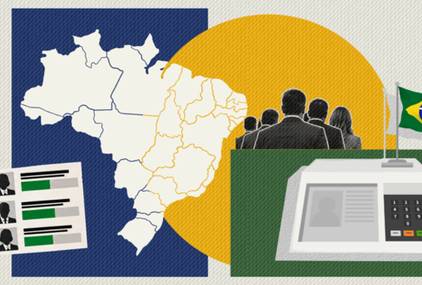
Presidential Elections in Brazil: Significant Gains for the Far Right
Far-right candidate Flávio Bolsonaro, of the Liberal Party (PL), finished the first round ahead of President Luiz Inácio Lula da Silva, of the Workers’ Party (PT): 47.03% versus 45.16% of valid votes. The two will face off again on October 25. The PL now holds the largest blocs in both the Chamber of Deputies and the Senate, and whoever wins will govern with a Congress dominated by the far right. The race for the Federal Supreme Court is also at stake, as the next president will appoint four justices to the Court.

What Do the AfD’s Successes in Germany’s Recent State Elections Mean?
The recent state elections in Germany have confirmed a profound transformation of the country’s party system: the Alternative für Deutschland (AfD) is no longer a marginal political force and has established itself as one of the main electoral vehicles of the German far right. In Mecklenburg-Vorpommern, in the northeast of the country, the AfD emerged from the September 20, 2026, elections as the party with the most votes, with 38.2% of the vote, ahead of the Social Democratic Party (SPD), which received 35.5%. This marks a significant break with the country’s recent political history, as the SPD had been the leading party in every state election since 1998. By Alrik Schubotz.
Sexual Politics from April to July 2026
For this issue we once again invited Fabeni to a conversation as to hear him about the complicated geopolitics of the new papacy – particularly the open confrontation with Trump – but also prospective directions of current Vatican´s LGBTQI+ politics.

Examining the first year of Leo XIV´s papacy: a conversation with Stefano Fabeni
We once again invited Stefano Fabeni to assess the political paths, breakthroughs and ambivalences at play during the first year of the first North American pope. We thank him for his time and enlightening insights!
Sexual politics in the global disorder of 2025
This is our second and latest bulletin of 2025. It offers a broad overview of events and trends in gender, sexuality, and abortion policy throughout the year to complement the analysis developed in July that addressed the policies implemented by the Trump’s second administration and the US landscape.

The Spanish Far Right On The Global Stage: Opposition To Sexual And Reproductive Rights
L’Associació de Drets Sexuals i Reproductius, an organization that works directly with young people and women at the community level to defend their sexual and
180 days of destruction, sadism, and global disorder
In June 2019, we published a special issue on the first 180 days of the Bolsonaro administration. Six years later, we take on the challenge

US Supreme Court: rolling back right – compilation
Gender and sexual politics The Supreme Court Has Dealt Another Devastating Blow to Women – The Nation What to know about the Supreme Court’s ruling

“Retrumped”? – Donald is back in the White House
When Trump was elected for the first time, in 2016, we published a compilation of articles that predominantly analyzed the astonishment that the election result