

SPW Newsletter N.12 – October, 2012
SPW Newsletter No.12 aims to analyze how sexuality matters are debated in international human rights bodies, specifically within the recently reformed Inter-American Human Rights System and the United Nations Human Rights Council (UN HRC). In the case of UN HRC, this issue of the SPW Newsletter looks closely at the second round of Universal Periodical Review (UPR) of India and Brazil, held in May 2012. Our main goal was to explore how two of the so-called emerging powers have responded to the UPR process, if sexual and reproductive rights issues have or have not been addressed in these reviews, and how the Indian and Brazilian states have or have not reacted to recommendations made in relation to these topics. These brief analytical exercises provide interesting insights on the merits and limits of the UPR processes, as well the challenges implied in engaging with and monitoring these reviews.
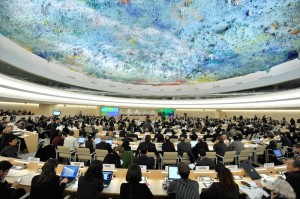
Sexual and reproductive rights at the 2012 Universal Periodic Review of Brazil
Read “INTRODUCTION: Sexual and reproductive rights at the 2012 Universal Periodic Review of Brazil”, written for the SPW Newsletter N. 12, based on analysis of Magaly Pazello, from EMERGE-Communication and Emergence Research Centre and Women’s Networking Support Programme of the Association for Progressive Communications (APC).
Interview: Camila Asano
For the Newsletter N. 12, SPW interviewed Camila Asano, Coordinator of Foreign Policy and Human Rights at Conectas Human Rights, who participated of the second round of the Universal Periodical Review (UPR) of Brazil, at the UN Human Rights Council (HRC), in Geneva, in May 2012. In this interview, Ms. Asano analyzed this mechanism for the human rights, explaining how this process works and highlighting recommendations to Brazil, challenges and perspectives. Read more.
ABIA organizes a seminar to mark thirty years of AIDS – the event will address the trajectory of both the epidemic and the Brazilian response
The Brazilian Interdisciplinary AIDS Association (ABIA) is completing 25 years in 2012. To mark this anniversary, a seminar will be held in August 2012 that will analyze the trajectory of the thirty years of AIDS in Brazil and the current challenges currently facing the Brazilian national response to the epidemic. Read more.
More than 1,000 sex workers participated at the Sex Worker Freedom Festival, in India
India: Though sex workers weren’t even permitted to participate, they managed to take a stand at the International AIDS Conference, which took place in USA, in july 2012. Besides, more than 1,000 sex workers from India and other nations convened in Kolkata for the “Sex Worker Freedom Festival”. Read more.
Giant leap backwards regarding the reproductive rights at Rio+20
Global: Gender equality and women’s human rights have continuously been a challenge and sexual and reproductive rights were not included in the Rio+20 document, which was a giant leap backwards. Read a series of contents on this issue.
Rio+20 and the agenda regarding the sexual and reproductive health and women rights
The United Nations Conference on Sustainable Development (UNCSD) will take place in, Rio de Janeiro, Brazil on 20-22 June 2012. Check more information on the agenda regarding the women’s rights and sexual and reproductive health at the Rio+20 Summit.
Fiocruz calls the Brazilian National STD/AIDS Program to correct its course*
Brazil: After awake praises in the international arena and be highlighted as a model, Brazilian National STD/AIDS Program is called to correct its course years. Read more.
Panel discussion will highlight the politics of human rights interventionism
UK: The Equal Rights Trust and the Human Rights Lawyers Association invite to the panel discussion “Advancing Sexual Rights in the ‘Developing World’: The Politics of Human Rights Interventionism”, which will take place in London, on 10 May 2012. Read more.
ABIA and SPW support the Brazilian UPR Pre-session
Brazil: ABIA and SPW supported the Brazilian UPR Pre-session, which took place on April 2nd, in Geneva, presenting a short video and recommendations aiming to contextualize some recent aspects of human rights in the country.