

Head of Commission for Human Rights and Minorities in Brazil’s lower house of parliament accused of homophobia and racism
Brazil: The Commission for Human Rights and Minorities in Brazil’s lower house of parliament elected an evangelical pastor from the Christian Social party to be the president. The Congressman Marco Feliciano is accused of homophobia and racism and outcries has spread to street around the country. Read more.
Civil Society follow up on the crisis Brazilian AIDS Response
Brazil: Read the “Civil Society follow up on the crisis Brazilian AIDS Response,” published after the Ministry of Health Note of Clarification in opposition to a public note written by Brazilian NGOs with concerns about the funds for AIDS programs.
Brazilian Ministry of Health Note of Clarification
Read the “Brazilian Ministry of Health Note of Clarification” regarding the Brazlian NGOs note on the funds that had been originally transferred by the Union for the exclusive use of AIDS programs, but were not used until december 2011.
Transcription of the Brazilian NGOs original note
Read the “Transcription of the Brazilian NGOs original note,” with concerns on the ordinance published by the Ministry of Health of that allows states and municipalities to use, for “general health purposes,” those funds that had been originally transferred by the Union for the exclusive use of AIDS programs, but were not used until december 2011.
World AIDS Day 2012
Global: To mark the World AIDS Day 2012, celebrated on 1st December, we present a series of contents , like the special World AIDS Day edition of the Alliance newsletter, a statement from the International Gay and Lesbian Human Rights Commission and more. Read now.
SPW Newsletter N.12 – October, 2012
SPW Newsletter No.12 aims to analyze how sexuality matters are debated in international human rights bodies, specifically within the recently reformed Inter-American Human Rights System and the United Nations Human Rights Council (UN HRC). In the case of UN HRC, this issue of the SPW Newsletter looks closely at the second round of Universal Periodical Review (UPR) of India and Brazil, held in May 2012. Our main goal was to explore how two of the so-called emerging powers have responded to the UPR process, if sexual and reproductive rights issues have or have not been addressed in these reviews, and how the Indian and Brazilian states have or have not reacted to recommendations made in relation to these topics. These brief analytical exercises provide interesting insights on the merits and limits of the UPR processes, as well the challenges implied in engaging with and monitoring these reviews.
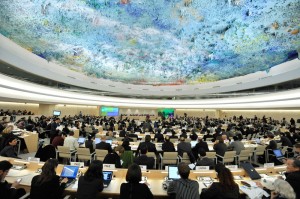
Sexual and reproductive rights at the 2012 Universal Periodic Review of Brazil
Read “INTRODUCTION: Sexual and reproductive rights at the 2012 Universal Periodic Review of Brazil”, written for the SPW Newsletter N. 12, based on analysis of Magaly Pazello, from EMERGE-Communication and Emergence Research Centre and Women’s Networking Support Programme of the Association for Progressive Communications (APC).
The Inter-American Human Rights System is under threat: Implications for the Sexuality and Human Rights Agenda
Read “The Inter-American Human Rights System is under threat: Implications for the Sexuality and Human Rights Agenda”, written by Marcelo Ferreyra, Latin America and Caribbean Coordinator at Global Initiative for Sexuality and Human Rights – Heartland Alliance for Human Needs & Human Rights, for the SPW Newsletter N. 12.
ABIA organizes a seminar to mark thirty years of AIDS – the event will address the trajectory of both the epidemic and the Brazilian response
The Brazilian Interdisciplinary AIDS Association (ABIA) is completing 25 years in 2012. To mark this anniversary, a seminar will be held in August 2012 that will analyze the trajectory of the thirty years of AIDS in Brazil and the current challenges currently facing the Brazilian national response to the epidemic. Read more.
More than 1,000 sex workers participated at the Sex Worker Freedom Festival, in India
India: Though sex workers weren’t even permitted to participate, they managed to take a stand at the International AIDS Conference, which took place in USA, in july 2012. Besides, more than 1,000 sex workers from India and other nations convened in Kolkata for the “Sex Worker Freedom Festival”. Read more.