
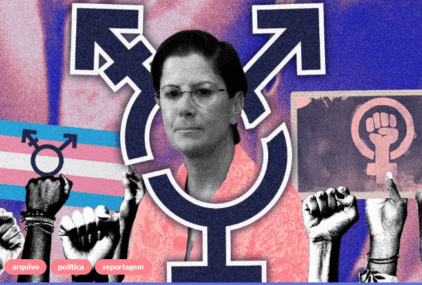
UN rapporteur promotes transphobia during Brazil visit
In meetings at the Supreme Court, Congress, and Brazilian universities, Reem Alsalem made anti-trans statements and was criticized by feminist and LGBTQIAPN+ organizations. By Dany Avelar (AzMina website), translated by SPW.
Notes on the webinar “Democracies in Dispute: Latin America”
In 2024, more than 60 countries will have elections at different levels of government1. The disputes will not only be electoral, but also about the
Sexual politics from July to October 2024
Introduction Once again, our newsletter brings you news and analysis about the current times, which are more somber than bright: authoritarian trends, the continued expansion
DEMOCRACIES IN DISPUTE: Explore the series and access the materials
In 2024, more than 64 countries will have elections at different levels*. These disputes are both electoral and about the meaning of democracies. They will
Sexual politics from January to June 2024 (Part 1)
>> Read in PDF << Part 1 – Democracies in dispute Introduction As we have pointed out in previous editions, in recent years sexual politics
Sexual Politics from July to November 2023
>> Download and read in PDF << First Words This edition of the SPW newsletter covers the main events in sexual politics since July, roughly
Sexual Politics from February to July 2023
>>> Read/download in PDF <<< Opening Words This newsletter describes and seeks to contextualize the developments in sexual politics since February 2023. In times of
SPW and LSE host seminar on anti-gender movements in Latin America
On April 11th and 12th, the seminar “Mapping and resisting the gender phantasm in Latin America: geographies of ‘anti-gender’ movements” took place in Rio de
Sexual Politics in 2022: Retrospective
>> Read in PDF << First words In 2022, we adjusted our perspective for monitoring and analyzing sexual politics. In the previous two years, our
Sexual Politics from August to November 2022
>> Download as PDF << Preface Due to its relevance in Brazil and the rest of the world, we rescheduled the publication of our newsletter
Anti-gender Politics in Latin America in Pandemic Times –
By Tomás Ojeda Thank you, Sonia, and hello everyone. Thanks for being here with us at the launch of the English version of these case
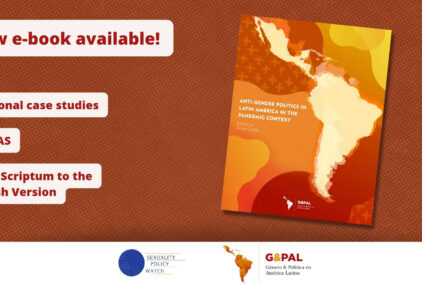
NEW E-BOOK: Anti-Gender Politics in Latin America in the Pandemic Context
SPW has launched the English version of our latest research. The e-book “Anti-Gender Politics in Latin America in the Pandemic Context” presents the results of
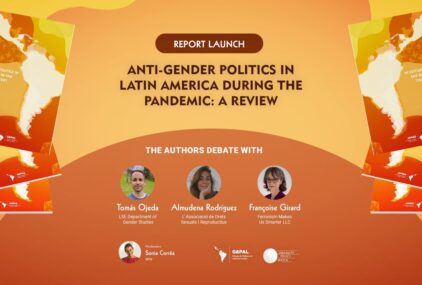
Anti-gender politics in Latin America during the pandemic: A review – Launching debate
SPW has launched the e-book “Antigender Policies in Latin America in the Pandemic Context”. The e-book presents the results of the second research phase

Summaries of Country Case Studies
Between 2018 and 2020, SPW conducted a research effort on Anti-gender Politics in LatinAmerica. This e-book offers condensed versions of all studies that encompass the
Sexual Politics from March to May 2022
>>> Read in PDF First Words Since April 2020, SPW newsletters have been tracking and analyzing sexual politics in the context of the COVID-19 pandemic.
Sexual Politics in Times of Pandemic – 2021 Retrospective
>>> Download the PDF version here. First Thoughts The last 2020 SPW special hypothesized that during 2021, because of vaccines, Covid-19 would no longer be

Colombia Supreme Court’s decision on abortion: compilation on the February 2022 rulling
Landmark Decision on Colombia Abortion Rights – Human Rights Watch Statements from the Center for Reproductive Rights on the Constitutional Court Decision Decriminalizing Abortion in
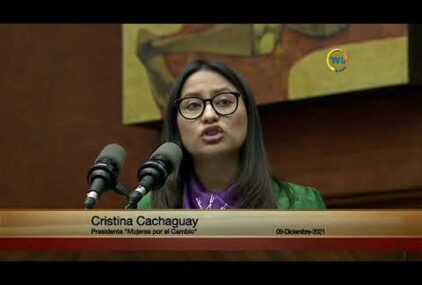
Decriminalization with exclusion: Ecuador’s new rape abortion law
By Manuela Lavinas Picq. This law is a victory for regulating the right to abortion due to rape, even allowing survivors to avoid police procedures, but advocates of decriminalization contested exclusionary aspects that will affect the most vulnerable. The dark side of the law? The deadlines.
Sexual Politics in Times of Pandemic: August-October 2021
Since July, when we published our last Special Edition, as you will see in this issue, a lot has happened in the pandemic and in the field of sexual politics. Once again, the pages that follow are quite dense, but we remind you that the sections are relatively autonomous.
Sexual Politics in Times of Pandemic: January-July 2021
First Words In the last 2020 edition of Sexual Politics in Times of Pandemic Special of 2020, we hypothesized that throughout 2021, with the arrival
Cuba 2021 protests: compilation
Is Cuba’s Communist Party Finally Losing Its Hold on the Country? – New Yorker ‘I’m surprised it took so long’: Cubans find anger in their
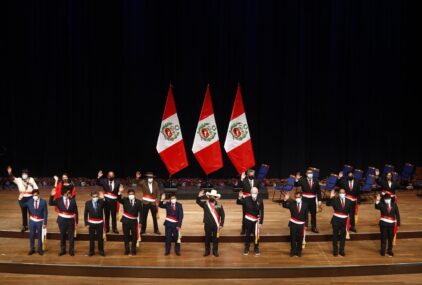
Peru: Dire prospects of the Pedro Castillo Government
Pedro Castillo Terrones is 51 years old and is a primary school teacher, farmer, and militia member. He studied education and obtained a master’s degree in Educational Psychology from the Universidad César Vallejo. He gained public notoriety after leading the teachers’ strike in 2017 and 2018 which stopped classes for months with the demand for salary improvements and the elimination of teacher evaluation. He was active in Perú Posible, the party of former president Alejandro Toledo, and was a member of the Cajamarca committee from 2005 until 2017, when the grouping lost its registration.
GLQ – A Journal of Lesbian and Gay Studies: new issue
Read the new issue of GLQ on “Cuir/Queer Américas: Translation, Decoloniality, and the Incommensurable”

One Year of COVID-19: Sexual Politics in Times of Pandemic Round-Up
Preliminary comment In 2020, in order to adjust our lenses to COVID-19 world conditions, we suspended our regular monthly announcements and started a series of
SPW and other media outlets: partnerships
Derechos en riesgo: la cruzada antigénero en América Latina y el Caribe Línea del tiempo de las políticas antigénero – Wambra Telemedicina: la última tensión
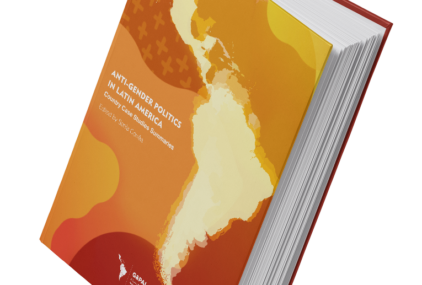
Anti-Gender Politics in Latin America: Abstracts
ANTI-GENDER POLITICS IN LATIN AMERICA Country Case Studies Summaries ABSTRACTS (Download here: https://sxpolitics.org/GPAL/ ) “Gender Ideology”, Catholic Neointegrismo, and Evangelical Fundamentalism: The Anti-Democratic Vocation
COVID-19 and BLM
COVID-19 encounters Black Lives Matter In June, however, another wave of protests swept over the global political landscape, also targetting State repression but carrying an
A Historical Fight for Abortion in Argentina
Argentinian MP Ofelia Fernandez: ‘Being a feminist means being on the side of history’ – France 24 Argentina moves closer to historic abortion legalization –
QAnon and pedophilia: compilation of analysis
Pedophilia – more of the same? – SPW Monsters Under The Bed – SPW How Covid-19 myths are merging with the QAnon conspiracy theory –
COVID-19 and Inequality: corruption and profit-seeking
COVID-19 to Add as Many as 150 Million Extreme Poor by 2021 – World Bank What crisis? Billionaires rack up record fortunes, survey shows –

Sexual Politics in Times of Pandemic: July to December 2020
Editors’ Note We apologize to our readers and partners for the delay in making our last Special Issue on Sexual Politics in the Pandemic available.
Anti-Gender Politics | video series
We hope the series Anti-Gender Politics with English subtitles can be a resource for organizations and collectives to inform about the order of the attack
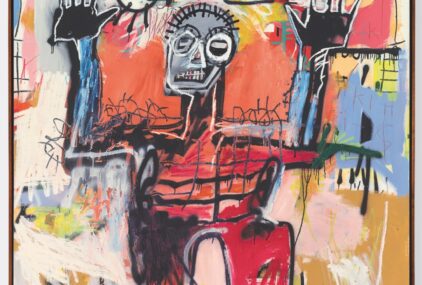
Pedophilia – more of the same?
By Sonia Corrêa & Rajnia de Vito Recently, references to pedophilia have increased vertiginously in Brazilian social networks and the press. At first glance, this
Pedophilia, moral panic and abortion rights in Latin America and Brazil
After six months into the pandemic, a striking feature of the condition under which we are working is that time has not expanded, as initially

Monsters Under the Bed
A series of memes and messages were recently circulated throughout the continent with the aim of alerting people to an alleged movement that would be
A Tribute to Katherine Cuellar Bravo
In May 2020, Katherine Cuellar Bravo, a young Colombian researcher from the public health field, has passed away. She was responsible for the Colombian case
Violence against LGBT during the pandemic
PROTECTING THE HUMAN RIGHTS OF LGBTI PEOPLE DURING THE COVID-19 PANDEMIC – Amnesty International LGBTQ Inequality and Vulnerability in the Pandemic – HRW COVID-19 pandemic
COVID-19 in prisons: compilations of news
North America US The Coronavirus Crisis Inside Prisons Won’t Stay Behind Bars – NY Times Stop Unnecessary Arrests to Slow Coronavirus Spread – NY Times
SPW Archive: Sexual Politics in Pandemic Times
Since the Covid-19 pandemic broke out in early 2020, SPW has been reporting on the events, trends and dynamics triggred by Sars-Cov-2. In order to
COVID -19 and Politics in March-April 2020
Since January, when the Chinese government adopted extreme confinement measures in Wuhan, the pandemic sparked the worldwide spread of questionable war semantics. It also provided
Sexual Politics in Times of Pandemic: May and June 2020
The global scenario of the COVID-19 pandemic has changed since April, but the crisis is still far from over. Only eight countries are listed as
COVID-19 and economic inequality
Six ways capitalism spreads the crisis – Corporate Watch Precarity in Times of Pandemic:Covid-19 and the crisis in India’s informal labor markets – Bot Populi
COVID-19 and indigenous people
World Indigenous groups in Canada, Australia, Brazil brace for coronavirus – Washington Post US Why has Navajo Nation been hit so hard by the coronavirus?
COVID-19 and Politics: De-democratization and Authoritarianism
EUROPE Crisis and Resistance at the Periphery: Bosnian responses to COVID -19 – Critical Legal Thinking Coronavirus: Hungary bid to end emergency powers ‘an optical
Sexual politics in times of pandemic: contribution of guest authors
The SPW Announcement for May and early June 2020 will have the same format adopted in March-April 2020, it will organize the newly compiled information
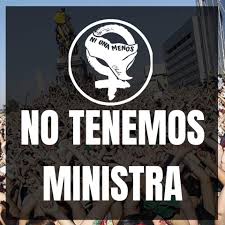
#NoTenemosMinistra: The crisis in Chile’s Ministry of Women and Gender Equality
By Bárbara Sepúlveda Hales & Lieta Vivaldi Macho The recent appointment of the new Minister of Women and Gender Equality, Macarena Santelices, by President Sebastián
Anti-gender politics during covid-19
GENDER UNDER ATTACK Europe Romania International Call Against the Teaching of Gender Ban in Romania – The Gender International Controversies Over Law Banning Any Reference
COVID-19 and economics: Disasters, corruption, more profits
US stocks surge as NYSE trading floor reopens – Al Jazeera Latin America’s Virus Villains: Corrupt Officials Collude With Price Gougers for Body Bags and
Sexual politics in times of pandemic
March and early April 2020 It has been very challenging to prepare the SPW announcement for March/April 2020 due to the abnormality, risks, and losses

130 groups from different religions sign declaration on COVID-19 pandemic in Latin America and the Caribbean
Preamble 1. We, the undersigning individuals and organizations, have gathered from all over Latin America in joint work to accompany people and communities of faith
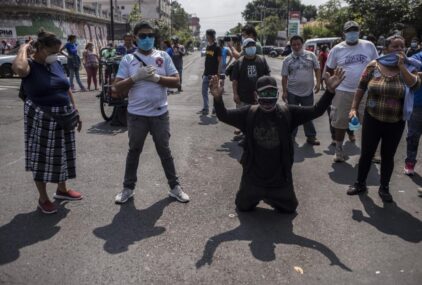
Bukele: A ‘caudilho’ Dies and A Messiah is Born in El Salvador
SPW begins a series of brief analyses of the Covid-19 crisis in contexts that are generally under-reported by the mainstream press and which are characterized

Sexual politics in January and February 2020
Anti- gender politics in Latin America – SPW is pleased to announce the collection Anti-gender Politics in Latin America, which encompasses nine case studies from
Anti-gender politics in Latin America
SPW is pleased to announce the collection Anti-gender Politics in Latin America, comprised of 9 case studies from Argentina, Brazil, Chile, Colombia, Costa Rica, Ecuador,

Sexual politics round up in 2019
The year of 2019 has finished and, as traditionally, SPW offers our readers and followers a compilation of the main facts, trends, setbacks and victories
Sexual politics in October, November and early December 2019
HIGHLIGHTS Latin America: Politics in Trance In the period covered by this newsletter, Latin America has been the scene of three simultaneous elections – in
Sexual politics in September 2019
September 28 – “Abortion is a Health Issue” was the theme of this year’s International Safe Abortion Day, widely celebrated around the world (see compilation).
Antigender politics from May to August 2019
We start this announcement recalling that, before May 2019, two major antigender events have taken place that are worth revisiting because of their potential subsequent

Sexual politics in May and June 2019
#StopTheBans – Thousands of demonstrators marched in more than 500 cities across the US on May, 21th to protect abortion rights after Alabama state house passed,
Sexual politics in April 2019
Highlights Algeria and Sudan: A revived Arab Spring? – Almost six years after the Arab Spring waned under the shadows of the Sissi regime, political
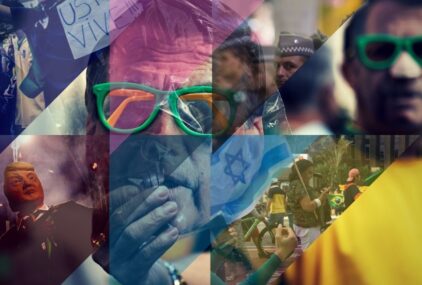
Brazilian presidential election: a perfect catastrophe?
By Sonia Corrêa Time to mourn Politics is both reasoning and affect. This is how the first version of this essay, written in the immediate aftermath
Gender and Politics in Latin America
Since January 2018, SPW has been developing a research and action initiative on antigender politics in Latin America: the project Género y Política en América

Sexual Politics in January and February 2019
#Hail International Women’s Day 2019: struggle, endurance, resistance! #Eyes on Brazil From an insider´s point of view, observing Brazilian politics after January 1st is like being caught
Sexual politics round-up in 2018
As 2018 reaches its end, SPW publishes a recollection of main events, trends, discoveries and challenges as we start 2019 and prepare for all the
Religious Conservatism on the Global Stage: Threats and Challenges for LGBTI Rights
Researchers: María Angélica Peñas Defago, José Manuel Morán Faúndes, Juan Marco Vaggione Guest Experts: Gordan Bosanac, Kapya Kaoma Research Assistance: Violeta Cánaves Download the report
Sexual politics in October 2018
The Brazilian perfect storm We apologize for the delay in the circulation of SPW’s October 2018 monthly announcement due to the stormy process and result

Brazilian 2018 presidential elections in figures
This fact sheet present figures of the results of the second round of the 2018 Brazilian presidential elections. The data comes from different sources: Items
Brazil: Education and gender under attack
A specter of Dictatorship in Brazil – NACLA Brazil’s election of far-right Bolsonaro leaves researchers reeling – Chemistry World Bolsonaro poses a serious threat to
The Brazilian Perfect Storm: a compilation
As done in other similar occasions, such as in the 2016 Trump elections, SPW has collected and selected the largest possible number of news, opinions
Sexual politics in September 2018
September is the key moment of the year in the global struggle for abortion rights, as the 28th marks the International Safe Abortion Day. In

Sexual politics in August 2018
#MourningMuseuNacional: As this announcement was being finalized, the Brazilian National Museum burned in flames. A singular and irrecoverable collection of the country’s historical and cultural

International Campaign – Argentina: no turning back
PRESS RELEASE 9 August 2018 – Argentina: no turning back By International Campaign for Women’s Right to Safe Abortion Argentina’s Senate voted last night –

The diversity in the São Paulo LGBT Pride Parade and the State of Israel
By Marco Aurélio Máximo Prado “I contend that these values all derive from important Jewish sources, which is not to say that they are only
Solidarity statement in support of Professor Maria Clara Dias
We, the undersigned, members of the academic community and civil society organizations, denounce the persecution suffered by advocates of the LGBTI+ community and demonstrate our
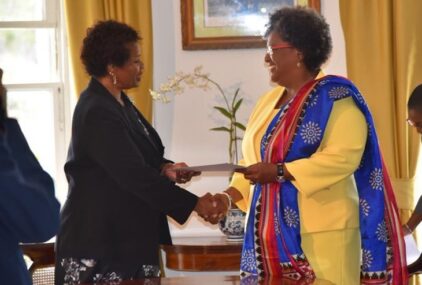
Social justice in the time of austerity: the promise(s) of Mia Mottley
By Roberta Clarke On May 24th, Mia Mottley became Prime Minister of Barbados with her Barbados Labour Party (BLP) winning all thirty parliamentary seats. This
Abortion rights in Brazil: the institutional debate, international effects on the media
By Fábio Grotz and Sonia Corrêa A new chapter of the ongoing institutional debate on abortion rights in Brazil is scheduled for August 3rd and
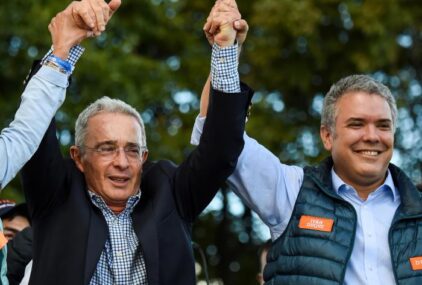
Gender and sexuality in the Colombia elections
By Franklin Gil Hernandes Apparently, attacks on “gender ideology”, quite central to the 2016 peace referendum, were peripheral in the 2018 Colombian presidential campaign.
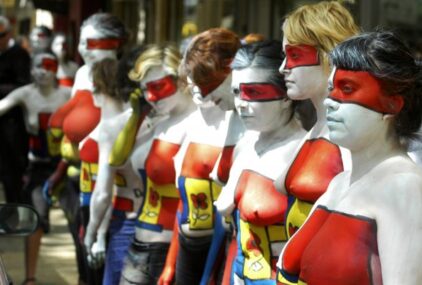
Painted bodies
“Decisions about your body, your health and your life belong to you, they are your rights, make them true.” These were the slogans of the
Sexual politics in May 2018
Nicaragua: SPW calls attention to the violent political crisis sweeping through this small Central American country and expresses its solidarity with the Nicaraguan society that

Gender Ideology: tracking its origins and meanings in current gender politics
By Sonia Corrêa In the first week of November 2017, Judith Butler was viciously attacked in Brazil by a heterogeneous group of actors who define themselves as
Brazilian abortion rights landscape
We gather here our monthly briefing writing efforts on the international context in regard to the state of the art and developments of abortion rights

A Cartography of Latin American Anti-Gender Frays
Since 2010’s political battles around gender have mushroomed globally involving a varied gamut of religious and secular forces. These frays became particularly frequent and vicious

Sexual politics in March and early April 2018
On March 14th, 2018, Marielle Franco and her driver Anderson Gomes were brutally assassinated in a shootout a week after Women’s International Day. Marielle was
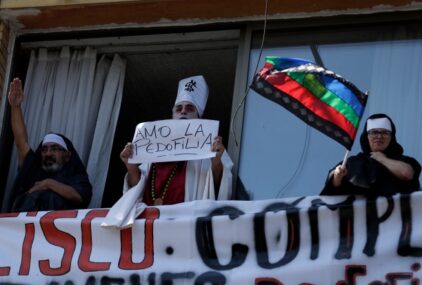
The Pope’s visit to Chile: the limits of the ‘Francis phenomenon’
By José Manuel Morán Faúndes Things did not turn out as expected in Chile. Pope Francis, whose image as a charismatic leader sharply contrasts with

The Reproductive Rights Counteroffensive in Mexico and Central America
Authors: Gabriela Arguedas Ramírez and Lynn M. Morgan Reference: Feminist Studies 43, no. 2. 2017 by Feminist Studies, Inc. Download the article here.
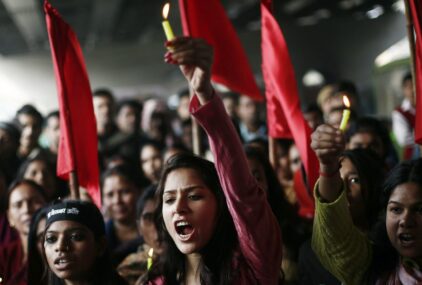
The #MeToo reflections in the Global South
Sexual Harassment in the Academia – What the Hitlist Misses: Debaditya Bhattacharya and Rina Ramdev – Kafila #MeTooInChina Media Highlights – Feminism for China #MeToo
REDLACTRANS Statement on the assault of transactivist Alexa Hoffman
From the Latin American and Caribbean Network of Trans people (REDLACTRANS) we reject the transphobic violent attack suffered by the national coordinator of Barbados, Alexa
Sexual Politics in January 2018
In January of 2018, a fierce transnational feminist controversy erupted on the question of sexual harassment. In the same week of the Golden Globes Award
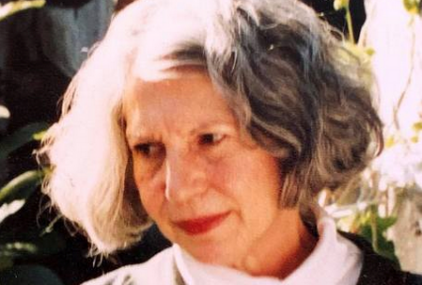
Evoking Teresita de Barbieri
By Sonia Corrêa In late January 2018, three people departed whose voices, or better said whose writings, inhabit very special places in my memory and
“We lost Teresita De Barbieri!”
Remembering Teresita De Barbieri who passed away on January 21, 2018. By Ana Laura de Giorgi Uruguayan, feminist and academically committed. First exiled in Chile, then
Latin American feminism at EFLAC
Montevideo (Uruguay) was the stage of the 14th Latin American and Caribbean Feminist Gathering (EFLAC in Spanish), where women gathered from the 23 to 25 of
LGBT Rights November 2017
Crackdowns have been reported in Azerbaijan, Kyrgyzstan, Russia and Tajikistan and, once again, in Egypt. In India, the Bharatiya Janata Party (BJP) Government presented the
Sexual Politics in October 2017
October began with the International Day of the Girl on the 11th when the media attention was towards highlighting how access to education, especially in some
Paraguay: Ministry of Education and Science resolution against “gender ideology”
Originally published at Amnesty International, on Oct 10, 2017. Available here. The recent Paraguayan Ministry of Education and Science resolution banning the dissemination and use
#IresistWePersist Campaign Toolkit 2017
September 28 has been a regional campaign for the decriminalization of abortion in Latin America and the Caribbean for over twenty years before being taken

Sexual Politics in August 2017
Two outstandingly positive news are to be reported in sexual politics worldwide in August 2017. In India, the Supreme Court issued a groundbreaking decision on
What is the latest news on the abortion rights front in Brazil?
By Carla Batista and Sonia Corrêa* In November 2016, the first bench of the Brazilian Supreme Court, in a judgment of a habeas corpus of
Sexuality, Health and Society – Latin American Journal 26th issue
The 26th issue of Sexuality, Health and Society – Latin American Journal, organized by the Latin American Center of Sexuality and Human Rights (CLAM/IMS/UERJ) is out
Sexual Politics in July 2017
In July, once again, contradictory trends were registered in the abortion frontline. In Chile, the processing of a bill aimed at legalizing abortion in three cases
Sexual politics in June 2017
June is LGBTIQ Pride month worldwide. This SPW brief highlights events around the world, prioritizing parades and other demonstrations that are not captured by mainstream radars. In that regard, we also recommend the readers who read Spanish to peruse the new blog Orgullos Críticos which examines trends and traps implied in the growing normalization and pinkwashing of pride parades
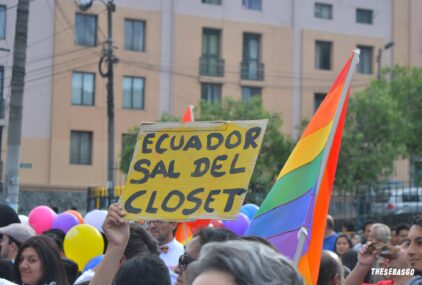
Sexual politics in Ecuador in the 2000’s: a bird’s eye view
By María Amelia Viteri and Gabriel Ocampo. Homosexuality was criminalized in Ecuador until November, 1997[1]. As a result, until then, lesbian, gay, bisexual and transgender persons were considered criminals, could face imprisonment and were often tortured and even killed.
Sexual Politics in April and May 2017
In April and May, Brazilian crisis has deepened further more, prompting colossal political chaos which reverberated in sexual politics. Sonia Corrêa, SPW co-chair, assess the deep connections within the crisis regarding threats to abortion rights. Celebrations and good news came from around the world. In Bangkok, researchers and activists gathered
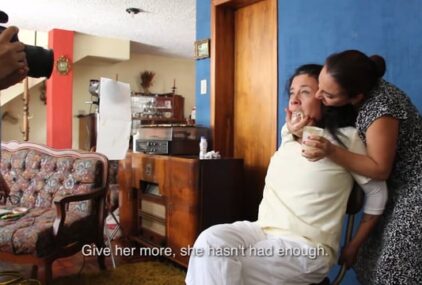
Equador: Photo series shines light on the abuse women suffer at illegal ‘conversion therapy’ clinics
Ecuadorian artist Paola Paredes has created a photo series, titled “Until You Change“, to protest against the existence of underground centers intended to “cure” homosexuality in Ecuador.
Sexual Politics in March and early April 2017
In March and early April, the abortion frontline in Latin America has been remarkably eventful, in positive ways. In Bolivia, the proposed revision of abortion

Latin America’s Gender Ideology Explosion
While it would be nice to report that the phrase is merely a malapropism, it is a very deliberate concept spawned by conservative religious groups. “Gender ideology” is becoming the catch-all metonym of a growing global movement opposing gender equality, abortion,
Sexual Politics in February and early March 2017
There are many events to be reported in regard to abortion rights in February and early March 2017. The most important comes from Brazil where
Petition to Supreme Court of Brazil seeks decriminalization of abortion
A petition was filed today, 7 March 2017, with the Brazilian Supreme Court which calls for the decriminalization of abortion on request up to 12 weeks of pregnancy. The petition was filed by the Socialism and Freedom Party (PSOL), with support from Anis – Institute of Bioethics.

Sexual Politics Round-up in 2016
As 2017 begins, SPW highlights the main events and trends as well as tensions and challenges traversing sexual politics worldwide. January In January, the Zika
Sexuality, Health and Society – Latin American Journal
The 24th issue of Sexualidad, Salud y Sociedad marks its eighth year of systematic publication and presents an expressive illustration of its central themes and objectives.
Sexual Politics in late October and November 2016
November began with a resounding shift in global politics: Donald Trump was elected president of the United States. As the reactions flooded through the world
The controversy surrounding gender: a central question of (sexual) politics in Colombia
By Mara Vivero. In this text I will present some elements on gender ideology, its antecedents and contemporary uses and secondly I will refer to the Colombian case, as one of the cases in which the term “gender ideology” has been used as part of a conservative rhetorical strategy to the constant interfaces between religious and political sectors that oppose the changes that have occurred in society in terms of gender and sexuality.
Sex, gender and far right’s global attack
In fact, “gender ideology” is an invention of the right. It’s a hodgepodge of disparate ideas developed by a diverse group of thinkers over the past 50 years, linked mainly in the minds of its opponents. It doesn’t really exist beyond its creators’ manifestos and protest banners, but it’s already helped them score some very real victories.
Constitutional developments in Latin American abortion law
This article offers an overview of the turn toward more liberal rules and the resolution of abortion disputes by reference to national constitutions. First, the main legal changes of abortion laws in the last decade are surveyed. Landmark decisions of the high courts of Argentina, Bolivia, Colombia, and Mexico are then analyzed. We show that courts have accepted the need to balance interests and competing rights to ground less restrictive laws. In doing so, they have articulated limits to protection of fetal interests, and basic ideas of women’s dignity, autonomy, and equality.

Sexual politics in August 2016
In August, the Rio Olympic Games provided a privileged stage for the critical observing of gender and sexuality performances. Several SPW partners positively and generously
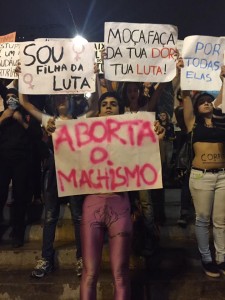
Sexual politics in May 2016
As the Brazilian crisis continues unfolding it gets increasingly intricate with gender and sexuality politics. Read Sonia Corrêa and Fábio Grotz report on what happened
Telling women to avoid pregnancy is not a solution for HIV and the Zika virus
To the development community on International Day of Action for Women’s Health: don’t curtail our rights by legitimising conservative religious ideologies.
Betraying women: Provider duty to report
The longstanding provider-patient confidentiality relationship is quietly eroding as an alarming number of medical staff across Latin America are reporting women and girls to the
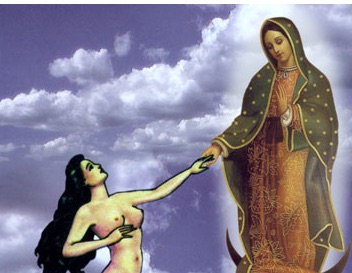
Our lady of controversies
Alma López is a queer Chicana artist who lives in California. Her work has many varied expressions. But most principally it elaborates and re-signify the
Tackling Zika: Have We Learned Our Lesson on Rights?
The Zika virus outbreak and the increase of babies being born with birth defects seemingly linked to the mosquito-transmitted disease have generated a series of prescriptions from governments of the most affected countries about what people need to do and not do. These include asking women to delay pregnancies—until 2018 in El Salvador, for example.
‘Spotlight’ abuse scandal didn’t end in Boston. In South America, it’s still unfolding
The Boston Globe’s investigation busted open a massive Catholic Church scandal in the United States 14 years ago. But in remote parts of South America, GlobalPost discovered that the church practice of reassigning child abusers to another parish, instead of defrocking them, has continued.
The sexual politics in February 2016
In February, there were good news to report from both Haiti and Europe. In the case of Haiti, the Penal Code reform is underway and
Pope and Patriarch Misrepresent the True Meaning of Secularism and Seek to Impose their Beliefs on Others
Originally published on Catholics for Choice. Available at: https://www.catholicsforchoice.org/news/pr/2016/PopeandPatriarchMisrepresent.asp On his way to Mexico, Pope Francis, head of the Roman Catholic church, met with Russian
Is the world finally waking up to intersex rights?
Originally published in The Guardian on 10/02/2016. Available at: https://www.theguardian.com/global-development-professionals-network/2016/feb/10/intersex-human-rights-lgbti-chile-argentina-uganda-costa-rica A landmark directive in Chile last month said doctors should stop ‘normalisation’ surgery, but tackling
News and analysis on the Brazilian and Latin American zika virus crisis and its effects on women’s health and reproductive rights here and worldwide
The Zika Virus Could Force Women To Have Unsafe Abortions – Huffington Post El Salvador’s Advice on Zika Virus: Don’t Have Babies – New York
First LGBT member of Guatemala Congress takes office
The first openly LGBT person elected to Guatemala’s Congress took office last week. Sandra Morán, a lesbian woman who is a member of Convergencia, a left-leaning political movement that advocates on behalf of indigenous Guatemalans and other underrepresented groups in the Central American country, was sworn in on Jan. 14.

2015 Sexual Politics Round- Up
As the year heads toward its end, SPW recollects main trends and facts in sexual politics worldwide. January Pope Francis drew global attention after urging
IACHR Publishes Report on Violence against Lesbian, Gay, Bisexual, Trans, and Intersex Persons
The Inter-American Commission on Human Rights today is publishing a regional report on the violence perpetrated against lesbian, gay, bisexual, trans, and intersex (LGBTI) persons or those perceived as LGBTI.
Sexual and Reproductive Rights in the Dominican Republic
AWID spoke with Sergia Galván, Executive Director of Colectiva Mujer y Salud [Women and Health’s Collective] from the Dominican Republic, on the realities faced by women with regard to their sexual rights and reproductive health.
SPW mourns the death of Diana Sacayán
On October 14, the internationally known Argentinean trans activist Amancay Diana Sacayán was found dead in her apartment. She was the third Argentinean trans woman
Compilation of statmements and news on the murder of Diana Sacayán
Statements ILGA: ILGA mourns the loss of Diana Sacayán, Argentinian Trans activist Outright – Action International: Argentinian Trans Rights Activist, Diana Sacayan, Found Dead in her
Revisit the SPW Regional Dialogues
Between 2009 and 2011 SPW has been engaged in a critical reflection on Sexuality and (Geo) Politics that involved regional dialogues in Asia, Africa and
Independent analysis of systematic gender discrimination in the El Salvador Judicial process against 17 women accused of the aggravated homicide of their newborns
Every defendant in the Salvadoran criminal system is guaranteed three fundamental rights by the state. First, every person accused of a crime will be presume innocent until proven guilty, in accordance with the law. Second, in cases of doubt, the judge must find in favour of the defendant.

Adriana and the “Business of Sex”
José Miguel Olivar Nieto, the author of the drawing Adriana is a social communicator. He has a master degree in Latin American Literature from the
The sexual politics landscape in July 2015
In July the hottest topic to be reported on is, undoubtedly, the global controversy that emerged when Amnesty International made public a draft policy defining
Paraguay denies respect to older persons in the Americas
Paraguay denies respect to older persons in the Americas The 45th General Assembly of the Organization of American States (OAS) adopted the Inter-American Convention on
Sexual politics in May 2015
In early May, SPW re-launched its website. Its new architecture allows an easier access to our products, publications and other contents. In particular, we call
Sexuality around the world: Main debates
_______________________________________________________ Relevant meetings The V Conference of ILGA-LAC was held in Curitiba, Brazil, from January 26th to 30th, 2010. Regional highlights > Read these information
Ecuador’s Left punishes women rights
by By Manuela L. Picq* A debate on abortion suspended the voting on the new penal code in the Ecuadorian Congress this week. Congresswoman Soledad Buendía,
The LGBTTTI Coalition working at the OAS and the civil society forum at the 7th Summit Of The Americas, Another Day in the Struggle
The Coalition of Lesbian, Gay, Bisexual, Travesti, Transgender, Transsexual and Intersex Organizations from Latin America and the Caribbean (LGBTTTI Coalition) that brings together groups from
CSW59 DECLARATION: A WEAK DOCUMENT TO ADDRESS THE WOMEN’ S AND GIRLS CHALLENGES
Women’s, Feminists and other civil society NGOs from Latin America and the Caribbean launched a statement criticizing the Political Declaration approved by Members States Monday
Abortion and Reproductive Rights in Latin America: Implications for Democracy
We are pleased to present this report on women’s reproductive rights in Latin America. In recent decades, women throughout the region have made tremendous strides
Chile’s Same-Sex Civil Unions Bill Gets Final Approval By Lawmakers
Originally published on The Huffington Post on 29/01/2015. Available at: http://www.huffingtonpost.com/2015/01/29/chile-same-sex-civil-unions-_n_6569912.html SANTIAGO, Chile (AP) — Chilean lawmakers gave final approval on Wednesday to a bill
El Salvador: Pardon for woman jailed for miscarriage, a triumph of justice
Originally published by The Amnesty International on 22/01/2015. Available at: https://www.amnesty.org/en/articles/news/2015/01/el-salvador-pardon-woman-jailed-miscarriage-triumph-justice/ 22 January 2015, 00:00 UTC A pardon granted by El Salvador’s Parliamentary Assembly to a
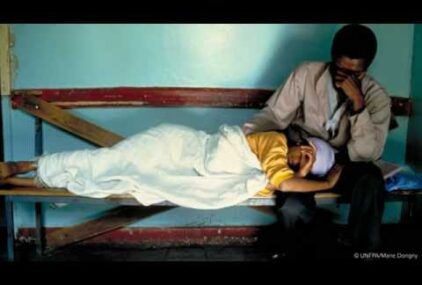
Unsafe abortion: another facet of femicide in Latin America
Originally published on CLAM on 29/10/2014. Available at: http://www.clam.org.br/EN/destaque/conteudo.asp?cod=11878 Every day women die of unsafe, illegal abortions. Two recent deaths provoked uproar in Brazil.Elisângela Barbosa, a
As Women Die from Illegal Abortions in Brazil, Presidential Candidates Remain Silent
By Lucy Jordan September 25, 2014 | 8:05 pm In late August, a 27-year-old woman named Jandira dos Santos Cruz went to a bus station
September 28th – Global Day of Action for Access to Safe and Legal Abortion
SPW joins forces with other networks and organizations engaged in the Global Day of Action for Access to Safe Abortion. We recall that the date
Global and regional campaigns for September, 28th, 2014.
International Campaign for Womens Right to Safe Abortion When abortion is a crime – Center for Reproductive Rights. Take action for the September 28 Campaign
Portuguese written materials on the cases, few of which also look into the connections with electoral politics
Caso Jandira e aborto no Brasil: crime com pena de morte – Pragmatismo político Coragem para enfrentar o preconceito – Observatório da Imprensa Sobre princípios,
English written articles about the deaths of Jandira and Elizângela
Brazil’s Criminal Abortion Laws Are Killing Women – Reality Check Aborto clandestino en Brasil provoca muertes trágicas – Diário Rotativo (México) Stigma of Brazil abortions
Abortion and the general elections: a chronicle of announced tragedies
Jandira Cruz and Elisângela Barbosa died after resorting to unsafe clandestine abortion clinics. Their deaths are now inevitably interwoven with the 2014 intense and complex
Spain withdraws Bill aimet at limiting abortion right
The Spanish government has decided to withdraw a bill that would only allow abortion in cases of rape or significant health risk to the mother or fetus. Read
Crucial Sexual Orientation and Gender Identity UN resolution: SA’s vote will lead the way – but what will it be?
By Marianne Thamm Three years ago South Africa and Brazil co-sponsored a historic resolution encouraging the UN to discuss discrimination and violence based on sexual
Sexual and reproductive rights global landscape in August 2014
In August, the Sexuality Policy Watch (SPW) published the outcomes from the three Regional Dialogues organized in Asia (2009), Latin America (2009) and Africa (2010)
The LGBT, feminist and student voices behind Uruguay’s radical reforms
From legalising abortion to transsexual rights, marginalised groups have united to become a formidable force for change One tiny country has been blazing a liberal
Sexual and reproductive rights global landscape in July 2014
In 2013, Sexuality Policy Watch began a new line of work aimed at critically examining how sexuality, gender and human rights can be located in
Sexual and reproductive rights issued in the last days at global, Latin American and Brazilian scene
At the International Conference on Human Rights (7 to 10 July 2013), the main outcome was the final report, which represents a unique platform to
Interview With Darkmatter—Janani Balasubramanian and Alok Vaid-Menon
Read interteview Janani Balasubramanian and Alok Vaid-Menon about South Asian-American queer activism. Here.
Sexual and reproductive rights global landscape in March and early April 2014
Sexual and reproductive rights global landscape in March and early April 2014 During March and early April, Brazil was under the spotlight in terms of
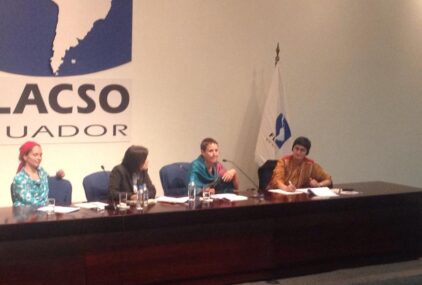
SPW Activities – February 2014
At the V Queering Paradigm Conference held in Quito, in February 2014, Sonia Corrêa, Nikita Dhawan and Brenny Mendinza were keynote speakers at one main
Achievements in 2013 in Latin America and Caribbean
The LGBTTTI Coalition Working at the OAS highlighted the advances achieved in 2013, such as the approval of the Inter-American Conventions Against Racism and Against
Groups Sue Government of El Salvador Over Treatment of Beatriz, Criminalization of Abortion
Citizen Group for the Decriminalization of Abortion in El Salvador, the Feminist Collective for Local Development, CEJIL (Center for Justice and International Law) and Ipas
LATIN AMERICAN AND CARIBBEAN CELEBRATES THE CREATION OF IACHR LGBTI RIGHTS RAPPORTEUR TO ENSURE THE RIGHTS OF LGBTI PERSONS IN THE AMERICAS
LGBTTTI Coalition of Organizations working within the framework of the OAS expressed support and appreciation regarding the creation by the Inter-American Commission on Human Rights
Ecuador “Cure” Clinic Raided: 17 Rescued, Torture Claims Emerge
Equador faces a double pattern in adressing reproductive and sexual rights: while Presidente Rafael Corrêa makes pression against abortion legalization, his Public Health Ministry leads
Global and regional issues highlighted by SPW on October
In October 2013 our main themes were the following: On October 10, activist Gabriela Leite, who devoted her life to fight for the rights of
UN special envoy for HIV/AIDS pleads for removal of discriminatory laws in Trinidad and Tobago
The United Nations Secretary-General’s envoy for HIV and AIDS in the Caribbean, Dr Edward Greene, has pleaded for the removal of discriminatory immigration laws in
Prostitution, love and market
Latin American Center on Sexuality and Human Rights brough interviews with scholars (Sealing Cheng and Thaddeus Blanchette) working on the connections between love, prostitution and
STOP THE GENOCIDE AGAINST TRANS WOMEN! STOP VIOLENCE AGAINST TRANS PEOPLE!
Organizations, associations and activists defending the human and civil law of trans people denounce generalized extreme violence and murders and impunity that trans people suffer
World facts highlighted by SPW on September
During the month of September, Sexuality Policy Watch has followed the global landscape of sexual and reproductive rights. In the Latin American scene, we highlighted
World facts highlighted by SPW in September 2013
During September, Sexuality Policy Watch followed the global landscape of sexual and reproductive rights. In the Latin American scene, we highlighted the Regional Conference on
Sexuality, culture and politics – a south American reader
Although mature and vibrant, Latin American scholarship on sexuality still remains largely invisible to a global readership. In this collection of articles translated from Portuguese
Regional Conference on Population and Development in Latin America and the Caribbean 2013
The Regional Conference on Population and Development in Latin America and the Caribbean ended on August 15, 2013 after country delegates agreed upon a groundbreaking
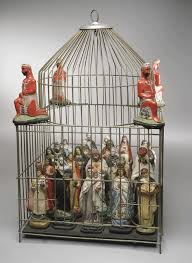
SPW Newsletter N.13 – July, 2013
SPW Newsletter No. 13 landscapes the implications of the new papacy of Francis the First for the sexual and reproductive rights in Latin America. We invited five SPW partners: Daniel Jones, Diana Maffía and Juan Marco Vaggione, from Argentina; Edgar Ruiz, from Mexico; and Maria José Rosado, from Brazil to share their views on how this political shift at the Vatican will affect sexual politics in the region. We choose three authors from Argentina because we wanted critical assessments made by analysts more closely acquainted with Bergoglio’s trajectory and political style. Edgar Ruiz in his article provides a sweeping view of the new papacy from a wider Latin American perspective, and Maria Jose Rosado’s interview speaks more directly of the Brazilian context including concerns about the papal visit and its potential negative impacts.
SPW Newsletter’s 13 – author’s profiles
Maria José Rosado Sociologist. Teacher at the Pontifical Catholic University of São Paulo. She founded the Brazilian NGO Catholics for Free Choice. Her field of
Salvadoran woman who sought abortion delivers baby after a C-section
El Salvador: Following an Inter-American Court of Human Rights’ determination, Salvadoran woman who sought abortion delivers baby after a C-section. Read more.
SPW Newsletter N.12 – October, 2012
SPW Newsletter No.12 aims to analyze how sexuality matters are debated in international human rights bodies, specifically within the recently reformed Inter-American Human Rights System and the United Nations Human Rights Council (UN HRC). In the case of UN HRC, this issue of the SPW Newsletter looks closely at the second round of Universal Periodical Review (UPR) of India and Brazil, held in May 2012. Our main goal was to explore how two of the so-called emerging powers have responded to the UPR process, if sexual and reproductive rights issues have or have not been addressed in these reviews, and how the Indian and Brazilian states have or have not reacted to recommendations made in relation to these topics. These brief analytical exercises provide interesting insights on the merits and limits of the UPR processes, as well the challenges implied in engaging with and monitoring these reviews.
The Inter-American Human Rights System is under threat: Implications for the Sexuality and Human Rights Agenda
Read “The Inter-American Human Rights System is under threat: Implications for the Sexuality and Human Rights Agenda”, written by Marcelo Ferreyra, Latin America and Caribbean Coordinator at Global Initiative for Sexuality and Human Rights – Heartland Alliance for Human Needs & Human Rights, for the SPW Newsletter N. 12.
Gender identity Law in Argentina: an opportunty for all
Argentina: On May 9, 2012 the Senate passed the first ever gender identity law in the country. With 55 votes in favor, 1 abstention and no votes against the law passed is for now the most progressive disposition on transgender people rights in the world. Read the note published by GATE and more.
Gender Identity Law in Argentina
Argentina: On April 24, 2012 the Senate Committees on General Legislation and on Population and Development signed in Buenos Aires an agreement that authorizes the discussion on the Gender Identity Law at the Argentine Senate to proceed. Read more.
Aid, resistance and Queer power
Hakima Abbas, the Executive Director of Fahamu Network for Social Justice, wrote for the SPW Newsletter n. 11 the article “Aid, resistance and Queer power”, on the effects of the aid conditionality to the LGBTIQ issues in Africa.
Aid conditionality and respect for LGBT people rights
Read the article Aid conditionality and respect for LGBT people rights, written by Luis Abolafia Anguita, from Fundación Triángulo, a Spanish LGBT organization wich works with development cooperation. The article debates the threats, reactions and effects of the recent initiative to reduce the development aid to countries that criminalize homosexuality.
Interview: Radhika Balakrishman
Read the interview with Radhika Balakrishnan, the Executive Director and a Professor at the Center for Women’s Global Leadership, about aid conditionalities to developing countries and its impacts on national human rights agenda.
March 8th – The International Women’s Day: some highlights
Global: To mark the International Women’s Day and to highlight backs and forwards in terms of women’s current condition, SPW has gathered a series of articles, studies, news and arts in a special bulletin.
2011 – Intersections and challenges for the sexual politics in LA, Africa and Asia: notes on the Inter-regional Dialogue on Sexuality and Politics
From September 26 to 29 2011, the Sexuality Policy Watch (SPW) organized the Inter-Regional Dialogue on Sexuality and Politics, in Rio de Janeiro, gathering researchers and activist members of the global forum, as well as people involved with the Regional Dialogues on Sexuality and Geopolitics, which took place in Asia (April 2009, Hanoi, Vietnam), Latin America (August 2009, Rio de Janeiro, Brazil) and Africa (October 2010, Lagos, Nigeria).
Argentina uncategorized: Debates about human trafficking, prostitution and sex work
Read the article “Argentina uncategorized: Debates about human trafficking, prostitution and sex work,” by Carolina Justo von Lurzer and Santiago Morcillo, on the debate organized by the Sexualities Studies Group of the Gino Germani Research Institute of the University of Buenos Aires to discuss the public policies related to prostitution, after president Cristina Fernandez Kirchner announced the enactment of the decree 936/11, which prohibits advertisements that promote sexual services in all media.
SPW Newsletter N.10 – September, 2011
A number of factors hampered our ability to deliver the 10th SPW Newsletter in early 2011, as planned. On the one hand, we regret and apologize for this delay. On the other, it is rather striking to note that how, in such a relatively short period of time, the world scenario has been swept by a sequence of outstanding events and trends, whose meaning and effects can not yet be fully grasped. So, in this issue you can find information on the cycle of “Regional Dialogues on Sexuality and Geopolitics”, that is finalyzing in late September 2011, with an inter-regional meeting which will take place in Rio de Janeiro to share and process the outcomes of the three dialogues and to prepare the foundation for a global publication, planned for 2012. In the section “Around the world”, you can read reflections on how sexual politics intersect with a shifting landscape, as well as on the relevants global meetings in terms of the intersections between sexuality and politics. Find also the sections “Advocacy: keep an eye”, “Sexuality in Art”, “Check it out” and “We Recommend”, with suggestions of publications, resources, papers, articles, and relevant links.
2011 – SPW at the VIII IASSCS Conference
The Sexuality Policy Watch (SPW) is participating at the VIII International Association for the Study of Sexuality, Culture and Society (IASSCS) Conference, in Madrid, Spain, from 6th to 9th July 2011, organizing the session Regional dynamics in Sexuality and politics: common threads and differences (July 8th) and participating in the panel Electronic Sociability, Gender, Sexuality and Internet Regulation (July 9th), organized by APC-WNSP. Read more.
Mexican Activist Susana Chavez Murdered
Mexico: Susana Chavez, a human rights activist best known for her poetry and actions to help raise awareness of the violence towards women, was murdered in Ciudad Juarez, a gritty border metropolis that has become Mexico’s most violent city. Read more.
Statement of SOCUMES and CENESEX on Cuban vote at the United Nations General Assembly
Cuba: Read the statement of SOCUMES and CENESEX on the Cuban vote at the Third Committee of UN General Assembly in support of the amendment which removed the explicitly mention of “sexual orientation” at the periodic resolution condemning the extrajudicial, arbitrary or summary executions.
The postulation of a transexual lesbian feminist woman, activist of human rights, to become a Judge for the Constitutional Chamber of the Supreme Court of Justice Venezuela causes call to mind in Venezuela
Venezuela: The postulation of a transexual lesbian feminist woman, activist of human rights, to become a Judge for the Constitutional Chamber of the Supreme Court of Justice Venezuela causes call to mind in Venezuela. Read more.

SPW Newsletter, N. 9 – October, 2010
In this issue, you find information on the main activities which SPW has been involved in the last months, like the African Regional Dialogue on Sexuality and Geopolitics, that will be held in Lagos, Nigeria from October 4th to 6th, 2010, as part of the series of Regional Dialogues on Sexuality and Geopolitics. We also highlight in “Around the world” a series of global meetings that are relevant in terms of the intersections between sexuality and politics, mainly the Vienna XVIII International AIDS Conference (July). You also can find in this issue other updates on regional highlights and more in the sessions “Advocacy: keep an eye”, “Sexuality in Art”, “Check it out” and “We Recommend”, with suggestions of publications, resources, papers, articles, and relevant links.
Newsletter 8 – para RTF
CONTENTS I. SPW ACTIVITIES / EDITORIAL Since late September 2009, the SPW executive team has been engaged in a wide variety of activities. First and
The abortion front lines
2.8 The abortion front lines In the struggle for legal abortion, as well, good news is often accompanied by bad news. As we were finalizing
Global and regional relevant events
2.3 Global and regional relevant events > The Panel Discussion on Opposing grave Human Rights Violations on the basis of Sexual Orientation and Gender Identity
The contents of the Latin American and Asian Dialogues on Sexuality and Geopolitics are available
The overview and short papers written for the Latin American Regional Dialogue are available on SPW’s website (in Spanish and Portuguese only), as are the summaries (also available in English). The papers, summaries and reports produced on the Asian Dialogue are also available (in English only).
Nicaragua abortion law puts pregnant cancer victim at risk
Nicaragua: On 2 February, 2010 a 27-year-old woman was admitted to a hospital in Leon, the second largest city in Nicaragua. She was diagnosed with an advanced case of cancer, which had metastasised and may have spread to her breasts, brain and lungs. She was told she couldn’t be prescribed an aggressive chemotherapy or radiotherapy treatment because she was pregnant and, under Nicaraguan law, any medical procedure to save the life of a mother is banned if it jeopardises the life of the foetus.
Trans people
Due to the larger representation of trans people in this edition of ILGA-LAC, there was a greater exchange of experiences, and more effective integration amongst
Pre-conference event themes
Planned preparatory meetings on the 26th and 27th of January 2010, preceded the main event, with themes directly related to the defence of LGBT rights.
International instruments, commitments of the United Nations and international policy
As well as examples of achievements regarding public policy and LGBTI citizenship in Latin America, the conference also promoted the exchange of experiences about different
5th ILGA-LAC Conference brings together more than 400LGBTI activists in Curitiba, Brazil
Brazil: 5th ILGA-LAC Conference brings together more than 400 LGBT activists in Curitiba, Brazil.
MANIFESTE LA TRANSEXUALITÉ N’EST PAS UNE MALADIE! POUR LA SUPPRESSION DE LA TRANSEXUALITÉ DU DSM ET DU CID!
MANIFESTE LA TRANSEXUALITÉ N’EST PAS UNE MALADIE! POUR LA SUPPRESSION DE LA TRANSEXUALITÉ DU DSM ET DU CID! Nous, participants du Dialogue Latino-américain sur Sexualité

SPW Newsletter, N. 8 – March, 2010
In this issue, you find information on what SPW has been involved since October, 2009. First and foremost, we made further progress on preparation for the Dialogue on Sexuality and Geopolitics and the African Regional Dialogue will held in the last week September, 2010. Following the recommendation of the Latin American Regional Dialogue, we have added our voices to a global campaign that has been underway since May 2009 by developing, together with partners, a statement calling for the de-pathologization of transexuality. In the session “Around the world”, we highlight on the one hand the regressive legislation proposed in Uganda, which aims to further criminalize “homosexual” behavior, and on the other hand you find information on the same sex marriage legislation recently approved in the Federal District of Mexico. Read also about other regional highlights, and recent sexuality/sexual rights advocacy, like the 54th Session of the Commission on the Status of Women (CSW). See what projects and events connect art and sexuality and browse listings of upcoming events, scholarships, job opportunities and publications.
Transexuality is not a disease Calling for the elimination of transexuality from the DSM and ICD
Transexuality is not a disease Calling for the elimination of transexuality from the DSM and ICD We, as participants of the Latin American Regional Dialogue
Earthquake in Haiti
Haiti: The SPW team is shocked with the disaster that devastated Haiti on January 12, 2010, the thousands of deaths and the many risks that may ensue the disaster that has been catastrophic for every sector of society, including Haiti’s feminist and LGBTI communities.
SPW debates the dynamics of sexuality in Latin America
Between August 24th and 26th, 2009, the Latin American Dialogue on Sexuality and Geopolitics took place in Rio de Janeiro, Brazil. Organized by Sexuality Policy
First Session – Sexuality, States and Political Processes
First Session – Sexuality, States and Political Processes Morning—August 24 , 2009 The first session of the Latin American Dialogue on Sexuality and Geopolitics was
Latin American Dialogue
Rio de Janeiro, Brazil – August 24-26, 2009 Latin America has been a fertile ground for sexual and reproductive rights debates during the last decades,
Panama Declaration
Panama Declaration Meeting of women representing regional Networks in latin America and the Caribbean in the process of Cairo +15 Panama, 3-5 August 2009 The
Special Rapporteur on the Right to Health visited Poland and Brazil
Anand Grover, the Special Rapporteur on the right of everyone to the enjoyment of the highest attainable standard of physical and mental health (the Right to Health) was in Poland from May 4 to May 12. Before this meeting, Anand Grover also attended a South American Consultation about the Right to Health in São Paulo, Brazil, where he met 40 representatives of civil society organizations from Argentina, Colombia, Paraguay, Uruguay, Peru, Venezuela and Brazil.
The abortion front lines – Newsletter n.6
The abortion front lines: Recently in Brazil a scandal came out when a 9 years-old girl was impregnated by his stepfather and then excommunicated by the Olinda’s bishop. Meanwhile, in Nepal the Court orders the State to improve women’s access to abortion. Read more in the SPW’s newsletter n.6.
Papers and articles written by our partners
Argentina uncategorized: Debates about human trafficking, prostitution and sex work In this article, Carolina Justo von Lurzer and Santiago Morcillo present the main points debateted
Uruguay: Perspectives on the abortion front
Alejandra López Gómez* The Reproductive Health Policy Law (Law 18.426), finally promulgated by the Executive in Uruguay on November 20th, 2008, was substantially different in
South American Regional Consultation on the Right to Health
SPW, ABIA and Conectas Human Rights facilitated a South American Consultation on Right to Health called by Anand Grover, UN Special Rapporteur on the Right to Health, March 25th and 26th, in São Paulo, Brazil.
General Information
SPW organized a series of Regional Dialogues on Sexuality and Geopolitics, to convene in Asia (Vietnam, April 2009), Latin America (Rio de Janeiro, Brazil, August 2009) and Africa (Lagos, Nigeria, October 2010). Inspired by the studies that form the e-book SexPolitics: Reports from the Front Lines, the Regional Dialogues aimed at expanding the knowledge and understanding that emerged from this previous research efforts and to more organically articulate global analysis and regional and national processes of research and activism. The dialogues provided a venue to discuss and think more deeply and complexly about shifts in the geopolitical landscape of the politics of sexuality. Read more.
Our publications
As SPW presents the final publications of the Regional Dialogues on Sexuality and (Geo) Politics, we also recommend as an additional reading (in Spanish and