

To build feminist futures, suspend judgment!
Originally posted by Srilatha Batliwala, Geetanjali Misra and Nafisa Ferdous at Open Demoracy on 03/10/2016. Available at: https://www.opendemocracy.net/en/5050/to-build-feminist-futures-suspend-judgment/ As feminist thinkers and activists, we must
Vitit Muntarbhorn: new UN investigator to protect LGBT
The UN Human Rights Council has nominated its first independent investigator aimed at protecting people in regard to sexual orientation and gender identity across the
Sex work at the Olympics Games: report
Originally from Prostitution Policy Watch ——————- Once again, Rio de Janeiro has hosted a sporting mega-event, this time the 2016 Olympic and Paralympic Games. And once
Emerging Powers, Sexuality and Human Rights at the AWID Forum
The session examined how the geopolitical shifts implied in the articulation of these global South countries in new blocs, especially the BRICS, has generated expectations that this emergence of “powers from the South” would eventually open up space for new platforms for the political work on sexuality, gender and human rights, that would not be caught by overlapping North-South tensions (or post-colonial effects) that perennially cross these fields of debate.
Empower newsletter: Women and LGBT voices from Nigeria
Women’s Health and Equal Rights Initiative (WHER) has launched its first issue of Empower newsletter, aimed at promoting a deeper conceptual understanding of gender and
The child now: new issue of GLQ journal
The new issue of GLQ Journal, by Duke University Press, brings the theme “The child now” and features Paul Amar’s article “The Street, the Sponge,
Key Trends and Tensions in sexual politics: a commentary
It also seemed to me that the general mood of pessimism came from the fact that most of the meeting’s participants were not digital natives, not exactly the ”globalized children”. This meant – again, with notable exceptions – that we still saw activism and policy advocacy
In Plainspeak september issue: Migration and Sexuality
Talking about migration would be talking about what happens with the crossing of boundaries. Boundaries of culture and climate, and boundaries of visibility, where a change in semantics can come to render what was invisible visible (an accent, perhaps a way of dressing, one’s values and ideas, the experience of being surveilled as an alien), while also allowing the migrant certain new freedoms to be invisible (anonymity where ‘nobody knows your name’, and certain kinds of agency one may not have enjoyed back home).
India – Gender in Medical Education: Perceptions of Medical Educators
The study findings point to the need for a nuanced understanding of gender among medical educators and students. The introduction of gender could pave the way for an opening up of medicine to delve deeper into how signifiers such as class, caste, gender etc. have a bearing on health. The medical curriculum and training must undergo fundamental changes to integrate gender so as to ensure the creation of a gender-sensitive and socially-relevant medical force in the country.
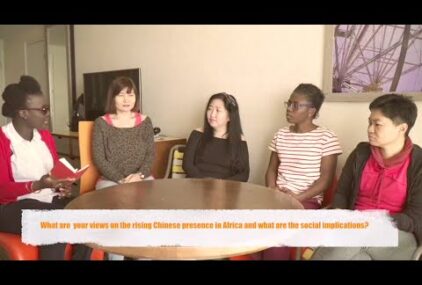
Why gender and sexuality are central to China’s relationships with the Global South
China’s interactions with the global South have been the subject of much attention and study from both inside and outside the country. Yet issues of gender and sexuality have been largely ignored.