

Armenia: Changes in the law on abortion
Originally posted by the International Campaign for Women’s Right to Safe Abortion on 02/11/2016. Available at: https://www.safeabortionwomensright.org/news/changes-in-the-law-on-abortion-statement-by-the-womens-resource-center-armenia/ A number of changes were made in the
Malaysia: Legal and Policy Environment of Safe Abortion
On the 21 March 2016, Reproductive Rights Advocacy Alliance Malaysia (RRAAM) in collaboration with the Joint Action Group for Gender Equality (JAG) held a policy discussion on “The Legal and Policy Environment of Safe Abortion in Malaysia”.
Morocco: Religious Fundamentalism and Safe Abortion
This research study was carried out by the Moroccan Family Planning Association (MFPA) in partnership with the Asian-Pacific Resource and Research Centre for Women (ARROW), Malaysia, to generate evidence on the nature and consequences of unsafe abortions in Morocco and how religious fundamentalism (in the case of Islam) prevents adequate policies and practices for safe abortion services.
Intersections and continuums in reproductive justice
Within South Africa, more than 20 years post democracy, the legal provisions on reproductive health and sexual orientation have been recognisable gains. It is a challenge though that these legal rights are not well realised and the struggles of many girls, young women and gender queer people remain unrealised in reproductive justice.
Constitutional developments in Latin American abortion law
This article offers an overview of the turn toward more liberal rules and the resolution of abortion disputes by reference to national constitutions. First, the main legal changes of abortion laws in the last decade are surveyed. Landmark decisions of the high courts of Argentina, Bolivia, Colombia, and Mexico are then analyzed. We show that courts have accepted the need to balance interests and competing rights to ground less restrictive laws. In doing so, they have articulated limits to protection of fetal interests, and basic ideas of women’s dignity, autonomy, and equality.
South Korea: a “black protest” movement for abortion rights
The current law, called the Mother and Child Health Act, permits abortions only if the woman or her spouse has a genetic mental or physical disorder; the woman has an infectious disease; the pregnancy is the result of rape, quasi-rape, or incest; or when the pregnancy is seriously detrimental to the woman’s health.
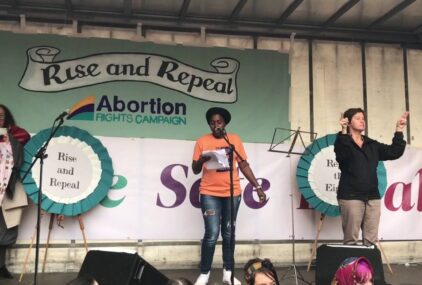
Repeal the Eighth: putting intersectionality into practice
A long-established conservative media frames the terms of abortion politics in Ireland. The pro-choice activism challenges dominant discourses with the inclusivity and diversity of the movement exemplifying how to put intersectionality into practice.

The Sexual Politics in September and early October 2016
Last month a large number of events took place across the globe to mark September 28th as the Global Day of Action for Access to
September in Brazil: retreats and resistance
September 2016 began under the government of Michel Temer, whose intermediary presidency governed Brazil from May to August while awaiting the results of the impeachment
Women’s protest leads Polish Congress to vote down abortion ban
The government said that protests against the bill had given ministers “food for thought”. Poland already has among the tightest abortion laws in Europe, and