
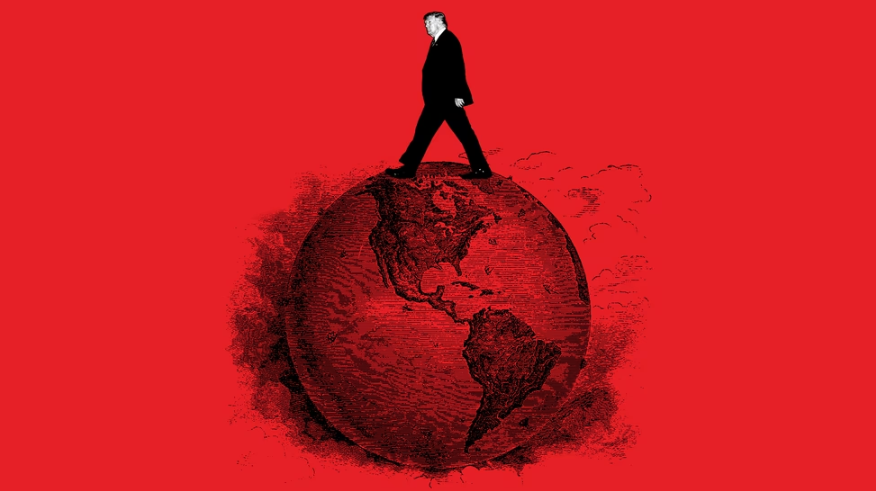
On January 22, Trump’s administrarion announced it was suspending the funding for foreign organizations that promote diversity, equity, and inclusion initiatives. SPW summarized the main changes, which expand the restrictions set by the Mexico City Policy and will have many ramifications. This briefing is based on information shared by US partner organizations and on the report produced by the Kayser Foundation on this new Trump administration policy, the English version of which can be accessed here.
Background
The Gag Rule is the name given to the US government’s Mexico City Policy (MCP) which, when in force, requires foreign NGOs to certify that they will not “actively perform or promote abortion as a method of family planning” using funds from any source (including non-US funds) as a condition for receiving US global assistance in family planning. The name “Global Gag Rule” is due to the fact that the rule prohibits foreign NGOs from using any funds (including non-US funds) to provide information about abortion as a method of family planning and for advocacy activities in favor of abortion rights.
It was first announced in 1984 by the Reagan administration and has been in effect for 23 of the last 42 years, having been repealed and reinstated by subsequent administrations, depending on their party lines. It had already been expanded during the first Trump administration, when it was renamed the “Protection of Life in Global Health Assistance” (PLGHA). In this new version, it has been named the “Policy for Promoting Human Flourishing in International Assistance” (by the U.S. government).
Structural aspects
The new rules represent a significant expansion and tightening of restrictions compared to previous versions, which were limited to health policy assistance. Now, they apply to all forms of U.S. foreign assistance except military aid. This means they could have a potentially drastic impact on at least $39 billion in foreign assistance, according to calculations by the Kayser Foundation based on the 2024 budget. These figures may be adjusted due to the drastic changes implemented by the Trump administration in this sector since January 2025, which include the disappearance of several institutions that channel these resources, in particular USAID.
They also considerably broaden the type of beneficiary entities affected and open up the possibility of eventually applying the ban to foreign states and parastatal bodies, without clarifying under what circumstances this may occur.
The base text defines both for-profit and non-profit entities as non-governmental entities. This implies that the rules will also apply to private companies (as has already been tested since the first half of 2025 with the ban on companies that implement DEI programs from providing services to U.S. embassies and consulates).
As with previous Gag Rules, in the case of organizations receiving U.S. foreign assistance funds, the ban also applies to programs funded by other donor sources. However, in some cases, the new rules allow these activities to be implemented as long as U.S. funds are strictly isolated from other funds supporting these prohibited activities.
The new policy has created new accusatory definitions, such as distorting the acronym DEI, now translated as Discriminatory Equity Ideology. Its content is strongly aligned with the “America First” ideology and its goal is to impose it, via financial conditionalities, on other countries, within the broader framework of neo-imperialist interventions implemented by the Trump administration.
The three pillars of the Expanded Gag Rule
1. Protection of life in global health assistance
- Prohibits the promotion or practice of abortion as a method of family planning, with exceptions for abortion-related activities in cases of rape, incest, or risk to the woman’s life in countries where such procedures are legal.
- Applies to US-based and foreign NGOs, international organizations, a category that includes the UN, OAS, World Bank, and IDB. As already mentioned, it may eventually be applied to foreign governments and parastatal entities.
2. Combating gender ideology in foreign assistance:
- It prohibits the use of US funds to promote “gender ideology,” defined as “the replacement of biological sex with ‘gender identity.’”
- The policy creates a new accusatory definition: “sex-rejecting procedures” to name medical procedures and practices aimed at “social transitions” (social names, neutral language, etc.).
It applies to gender identity policies and programs that aim to support people of all ages, not just adolescents and children. - The promotion of “gender ideology in education” is one of the main targets of the new rules, which now also extend to prohibiting the use of U.S. funds for other areas, such as public education campaigns, media projects, performing arts, and films, including documentaries on identity-related issues.
3. Combating Discriminatory Equity Ideology
- As already mentioned, the policy text has distorted the acronym DEI (Diversity, Equity, and Inclusion) to mean “discriminatory equity ideology.”
- It prohibits the use of U.S. funds to support any activity related to affirmative action in all its forms, not exclusively programs designed to correct discrimination based on gender identity (in other words, affirmative action related to race, ethnicity, gender, age, disability, etc.).
- The definition of activities that cannot be funded is very broad and vague.
- It also restricts access to funds for American NGOs, foreign NGOs, and international organizations. As in other cases, it can also be applied to governments/parastatal entities that engage in or promote such activities.
Types of organizations and amounts of resources affected
By type of beneficiary:
- Multilateral organizations: US$16.3 billion
- Foreign governments: US$1.3 billion
- U.S. NGOs: US$16.5 billion
- Foreign NGOs: $3.5 billion in non-health sectors
By sector:
- Non-health sectors: $29.2 billion, including (for example)
- Humanitarian assistance: $11.5 billion
- Economic development: $8.7 billion
- Democracy, human rights, and governance: $2.6 billion
- Peace and security: $2.2 billion
- Education and social services: $1.2 billion
- Health sector: $8.3 billion in funding from U.S. NGOs, multilateral organizations, and foreign governments
___________
US: New, Sweeping Foreign Aid Rules Undermine Global Rights – Human Rights Watch