

The Trump administration’s politics of cruelty and its impact on global health
This Commentary – published at Global Public Health – addresses key decisions made and policies approved primarily during the first six months of the second Trump administration in the U.S.A. that affect global health, with an emphasis on their implications for the work of World Health Organization (WHO), the Joint United Nations Programme on HIV/AIDS (UNAIDS), the United States Agency for International Development (USAID), and the U.S.

The suspension of the Brazilian USAID HIV Program in 2005
This short comment offers a good overview of this very relevant episode of HIV Global policies in the 2000s
Article “The double-helix entanglements of transnational advocacy: Moral conservative resistance to LGBTI rights”
Published at Review of International Studies (RIS). Download it here.
The anti-feminism of anti-trans feminism
Access here the article of Alyosxa Tudor: The -anti-feminism-of-anti-trans-feminism
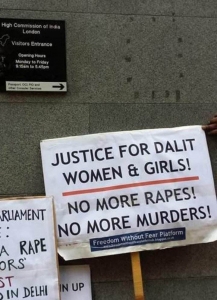
Hindu supremacism, ‘anti-gender’ politics, and feminist resistance
By Kalpana Wilson This contribution was first presented at the 2 December 2022 workshop on Transnational “Anti-Gender” Politics and Resistance, part of the AHRC-LSE project on Transnational
Article “Welcome to the Kremlim
This article is one of the chapters of the book “This is War”, written by the Polish feminist journalist Klementyna Suchanova. We dearly thanks her
The politics of gender: A genealogical commentary –
“I was motivated to write this comment after reading a series of analyses that re-visit the conditions in which a transnational agenda of repudiation of
Global Public Health Journal – Human Rights ‘Missing the point’: A conversation with Sonia Corrêa about the emergence and complexities of anti-gender politics at the intersections of human rights and health
Reproductive and sexual health policies have long mobilised religious and political forces. In this interview conducted in September of 2021, Brazilian feminist activist and researcher
Research: Politics of fear in Brazil: Far-right conspiracy theories on COVID-19
In this article, we present an analysis of narratives mobilised by extreme right-wing leader Jair Bolsonaro and his supporters in response to the COVID-19 pandemic
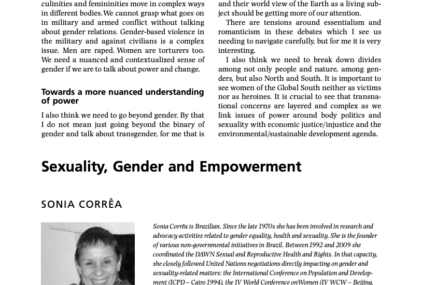
Sexuality, Gender and Empowerment – by Sonia Corrêa
In 2010, Sonia Corrêa wrote on how the concept of “empowerment” is not reduced to a binary between men and women, where men have all
ASTRA Network’s brochure: Sexual and Reproductive Health and Rights
The Covid-19 pandemic has changed the face of the world as we knew it. The lives of whole societies were put on hold, almost all
GLQ – A Journal of Lesbian and Gay Studies: new issue
Read the new issue of GLQ on “Cuir/Queer Américas: Translation, Decoloniality, and the Incommensurable”

Analysing the intersection between health emergencies and abortion during Zika in Brazil, El Salvador and Colombia
Journal Social Science & Medicine Volume 270, February 2021 by Clare Wenhama, Camila Abagarob, Amaral Arévaloc, Ernestina Coasta, Sonia Corrêad, Katherine Cuéllare, Tiziana Leonea, Sandra
Offline: COVID-19 – a crisis of power
Read Richard Horton’s essay on biopolitics during COVID-19
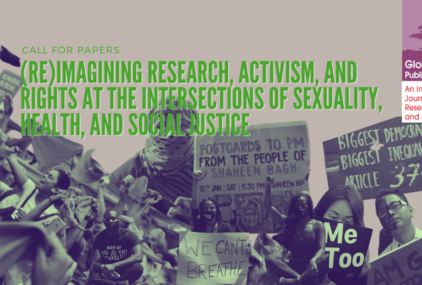
Call for Papers | Global Public Health’s Special Issue – DEADLINE EXTENDED (15th October)
Global Public Health Special Issue: (Re)imagining Research, Activism, and Rights at the Intersections of Sexuality, Health, and Social Justice Guest Editors: Debolina Dutta, Laura Murray,
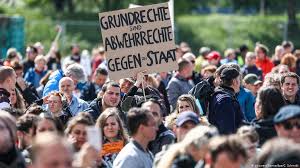
Paradoxes and dangers of anti-lockdown protests
A summary of the article “Corona protests: The cross front for trivialization” authored by Nils Markwardt and published at Die Zeit in May 2020. By
Biopolitics & The COVID-19 Pandemic: A Feminist Perspective
As part of DAWN’s webinar series DAWN Talks on COVID-19, Sonia Corrêa shares a piece she wrote especially for DAWN on COVID-19 biopolitics from a

Backlash: A misleading narrative
By David Patternote (Université libre de Bruxelles)[1] On 13 February 2019, the European Parliament adopted a resolution “on experiencing a backlash in women’s rights and gender equality

To drink or not to drink – that is not the question: Alcohol consumption in India and South Africa in the time of COVID 19
By Dr. Debjyoti Ghosh* “That’s the problem with drinking, I thought, as I poured myself a drink. If something bad happens you drink in an
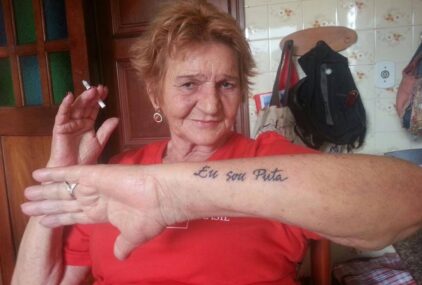
The Prostitute, the Virus, and the City
Prostitution Policy Watch, IPPUR, Federal University of Rio de Janeiro Authors: Soraya Silveira Simões, Laura Murray, Patrícia de Moura e Silva Toledo, Thaddeus Gregory Blanchette,
Call for papers: Intersex special issue
Special Issue Intersex & Sexuality Education Intersex variations comprise atypical sex characteristics: be these chromosomal, hormonal or anatomical. They represent a challenge to traditional binary
WhatsApp and political instability in Brazil – 2018 Presidential elections
Rafael Evangelista Laboratory of Advanced Studies on Journalism (Labjor), State University of Campinas (Unicamp), Brazil, rae@unicamp.br Fernanda Bruno Communication and culture, Federal University of Rio
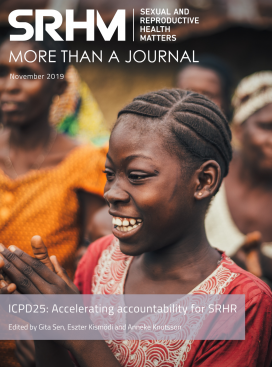
Special issue of the SRHM on ICPD25: Accelerating accountability for SRHR
Editorial Moving the ICPD agenda forward: challenging the backlash Gita Sen, Eszter Kismödi, Anneka Knutsson Commentaries The battle for sexual and reproductive health and rights
Health and Human Rights Journal: 25th anniversary special edition (Open access)
“I am delighted to let you know that as part of our Human Rights Day celebrations, we have just published the December 2019 issue of

The Lancet HIV highlights threats the Brazilian response to the epidemic faces
Due to a historically progressive human-rights based approach to HIV/AIDS treatment and prevention, Brazil has globally been deemed an important standard-bearer of the HIV/AIDS response
Gender Identity and Reproductive Autonomy: Deconstructing sex, gender and roles
About the publication The right to found a family is a fundamental right recognized by many international treaties and conventions. This is an evolving right, indicating
Bolsonaro’s Brazil
The teratology of the contemporary political imagination – plentiful enough: Trump, Le Pen, Salvini, Orbán, Kaczyński, ogres galore – has acquired a new monster. Rising above
SIGNS: Gender and the Rise of the Global Right
In this special issue of Signs, the contributors address the complex and powerful relationship between gender and the rise of the global Right. This discussion demonstrates how, in transnational terms, the Right has become a significant player in gender politics.

Global Public Health Special Issue on Pleasure & Danger Call for Papers
SPW has the pleasure of promoting the Global Public Health Journal call for papers for the Special Issue — The Contested Global Politics of Pleasure
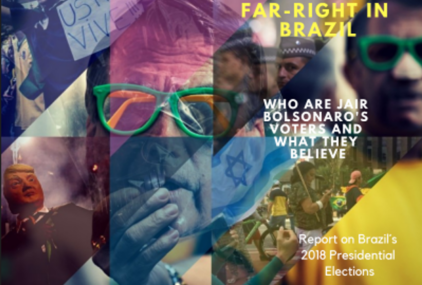
Who are Jair Bolsonaro’s voters and what they believe
SPW gladly presents the ethnographic research work of Isabela Oliveira Kalil and her team at FESPSP on Bolsonaro and his different types of supporters. These
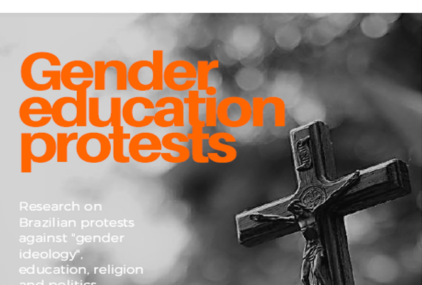
Gender education protests: Dossier Urban Controversies #1
Download FESPSP’s Núcleo de Etnografia Urbana magazine – Center for Urban Ethnography Vol.1 Issue Dec. 2017 Gender education protests
Violence, the state and gendered indigenous agency in the Brazilian Amazon
José Miguel Nieto Olivar* ABSTRACT The aim of this article is to understand feminine and indigenous forms of agency, especially that of the young women
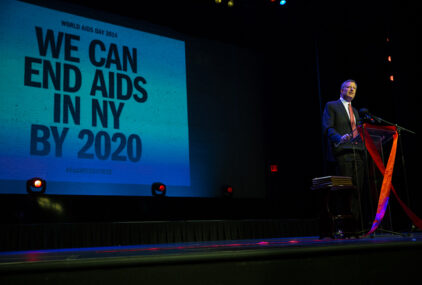
Global Public Health Journal releases a critical perspective edition on the “End of AIDS”
On the eve of the 2018 International AIDS Conference that takes place in Amsterdam (Netherlands) in July, the Global Public Health Journal, one of the
Anti-Gender Campaigns in Europe: Mobilizing against Equality
SPW has the pleasure to announce the recently published book Anti-Gender Campaigns in Europe: Mobilizing against Equality, edited by Roman Kuhar and David Paternotte. Description
American Nightmare: Neoliberalism, Neoconservatism, and De-Democratization
Wendy Brown University of California, Berkeley Neoliberalism and neoconservatism are two distinct political rationalities in the contemporary United States. They have few overlapping formal characteristics,
Exorcising a ghost: The Interests Behind The War On “Gender Ideology”
Author: Richard Miskolci Abstract: The persecution of philosopher Judith Butler during her visit to Brazil in late 2017 revealed the power of the ghost of

A Cartography of Latin American Anti-Gender Frays
Since 2010’s political battles around gender have mushroomed globally involving a varied gamut of religious and secular forces. These frays became particularly frequent and vicious
Gender Perspectives on Torture: Law and Practice
I once asked a Guatemalan public defender how she knew when a woman’s murder was the result of gender-based violence and not a simple homicide.

The Reproductive Rights Counteroffensive in Mexico and Central America
Authors: Gabriela Arguedas Ramírez and Lynn M. Morgan Reference: Feminist Studies 43, no. 2. 2017 by Feminist Studies, Inc. Download the article here.

Sur Conectas Human Rights – Issue V. 26
LETTER TO THE READERS Since beginning to prepare the 26th edition of the Sur International Journal on Human Rights, which Conectas is grateful to have

GATE Publication: Gender is not an illness
December 15, 2017. GATE released the publication Gender is not an illness. How pathologization violates human rights law. This paper was conceived and produced as a contribution

Health and Human Rights Journal – Vol 19, Issue 1, June 2017
Table of Contents Special Section: Abortion and Human Rights GUEST EDITORS Alicia Ely Yamin, Paola Bergallo, and Marge Berer EDITORIAL Narratives of Essentialism and Exceptionalism:
Ghostly Desires: Queer Sexuality and Vernacular Buddhism in Contemporary Thai Cinema
By Arnika Fuhrmann Through an examination of post-1997 Thai cinema and video art Arnika Fuhrmann shows how vernacular Buddhist tenets, stories, and images combine with sexual politics
Sexuality, Health and Society – Latin American Journal 26th issue
The 26th issue of Sexuality, Health and Society – Latin American Journal, organized by the Latin American Center of Sexuality and Human Rights (CLAM/IMS/UERJ) is out
The Sur file on Natural Resources and Human Rights
Patrick Alley, Global Witness Guest Editor Oliver Hudson, Sur Journal Managing Editor Source: Conectas Five years ago, on 26 April 2012, Chut Wutty, a courageous
Psychology in Russia: State of the Art – Psychology of sexual and gender identity
Psychology of sexual and gender identity Volume 10, Issue 1, 2017 (click here to access it) Certainly, many significant and important strides in achieving equality
RHM’s new issue: Disability and sexuality: claiming sexual and reproductive rights
Reproductive Health Matters is pleased to publish its 50th journal issue! Over the past 25 years, RHM has supported new thinking about sexual and reproductive
ARROW for Change – Intersections: The Politicisation of Religion and Sexual and Reproductive Health and Rights
The world is seeing a resurgence of religious extremism at national, regional, and global levels, which renews the threat to many of the rights that
Macro-and Micro-Political Vernaculizations of Rights: Human Rights and Abortion Discourses in Northern Ireland
This paper examines the translation of human rights norms into discourses on abortion in Northern Ireland, a region where abortion is highly restricted, with extensive contemporary public debate into potential liberalization of abortion law. This paper emanates from research examining political debates on abortion in Northern Ireland and contrasts findings with recent civil society developments, identifying competing narratives of human rights with regard to abortion at the macro- and micro-political level.
Religion and Gender Special Issue Habemus Gender!
Habemus Gender! The Catholic Church and ‘Gender Ideology’ – Volume 6 – Issue 2 – 2016 Guest editors: Sarah Bracke and David Paternotte You can
Punitive laws, key population size estimates, and Global AIDS Response Progress Reports: an ecological study of 154 countries
UN global plans on HIV/AIDS have committed to reducing the number of countries with punitive laws criminalizing key populations. This study explores whether punitive laws are associated with countries’ performance on targets set in the global plans.
In Plainspeak month issue: Marriage and Sexuality
Traditionally, marriage and sexuality have been bagged together and tinted with a bed-of-roses romance that has, over the last century or so, been unpacked and
Introduction of medical abortion methods in Zambia
After two years, 25 of 28 sites provided abortion services, caring for more than 13,000 women during the intervention. For the first time, abortion was decentralized, 19% of all abortion care was performed in health centres. At the end of the intervention, all providing facilities had managers supportive of continuing legal abortion services. When asked about the impact of medical abortion provision, a number of providers reported that medical abortion improved their ability to provide affordable safe abortion.
Self-Care and Sexuality – In Plainspeak
As the theme of this month’s In Plainspeak issues, we locate self-care (and self and care) in relation to its connections with issues of sexuality. In the Issue in Focus, Mamatha Karollil lays out ideas of care and sexuality for examination under a psychoanalytic lens.
LGBTI organizations navigating imperial contexts
This article presents the first sustained social analysis of the Kaleidoscope Trust, the UK’s leading social movement organization on LGBTI issues internationally, and its engagement
Abortion incidence and unintended pregnancy in Nepal
Despite legalization of abortion and expansion of services in Nepal, unsafe abortion is still common and exacts a heavy toll on women. Programs and policies to reduce rates of unintended pregnancy and unsafe abortion, increase access to high-quality contraceptive care and expand safe abortion services are warranted.
Ensuring an inclusive global health agenda for transgender people
Article authored by Rebekah Thomas, Frank Pega, Rajat Khosla, Annette Verster, Tommy Hanaa & Lale Sayc. Published at Bull World Health Organ. Click here to
Uganda’s Abortion Rate: decreased since 2003, but Unsafe Procedures persist
Originally posted at Guttmacher Institute Feb 14, 2017. Available here. An estimated 314,300 Ugandan women had abortions in 2013, according to a new study conducted
New IDS Bulletin published – Engaged Excellence
Who defines good quality research? How, why and with whom should we co-construct knowledge? What counts as impact? How do we build enduring partnerships? The articles
Access to misoprostol through community-based advocacy in Kenya and Tanzania
This initiative proves that, even where abortion is legally restricted and socially stigmatized, community-based organizations can publicly and openly share information about misoprostol and refer it to women by using innovative and effective strategies, without political backlash
“Silent No More” – The Transgender Community in Pakistan
his study on trans-women living in Pakistan uncovers an in-depth review of their socio-economic situation and the challenges/barriers they face as well as the support systems available to them.
Shame, Stigma, and Period Poverty
We still have a period taboo. We acknowledge that they happen but it’s vulgar to talk about them in public. A natural process
Sexuality, Health and Society – Latin American Journal
The 24th issue of Sexualidad, Salud y Sociedad marks its eighth year of systematic publication and presents an expressive illustration of its central themes and objectives.
ARROW for Change new issue: Sexual and Reproductive Health and Rights, and the Internet
What are the relationships and interdependencies influencing the promises of being online: voice, visibility, and power? This ARROW for Change (AFC) issue on sexual and reproductive health and rights (SRHR) and the internet documents some of these dynamics.
Reform of abortion law in Uruguay: Context, process and lessons learned
Authored by Susan Wood, Lilián Abracinskas, Sonia Corrêa and Mario Pecheny, this article – based on a descriptive study of the context and political processes
Is Porn the New Sex Education?
To develop a comprehensive sex education strategy for young people that aims to reduce maternal and child mortality, unwanted pregnancy, sexual violence and includes the realities of sex and pleasure, policymakers and sex educators need to engage with new and traditional gatekeepers, porn distributors and young people themselves.
Gender Politics and Authoritarian Regime
The question of whether and how authoritarian regimes may use gender politics to preserve their rule has attracted insufficient academic attention so far. Research on state feminism shows that non‐democratic regimes often enact women‐friendly policies for the purpose of maintaining power. However, this finding has not been linked to the broader research on authoritarian resilience.
Constitutional developments in Latin American abortion law
This article offers an overview of the turn toward more liberal rules and the resolution of abortion disputes by reference to national constitutions. First, the main legal changes of abortion laws in the last decade are surveyed. Landmark decisions of the high courts of Argentina, Bolivia, Colombia, and Mexico are then analyzed. We show that courts have accepted the need to balance interests and competing rights to ground less restrictive laws. In doing so, they have articulated limits to protection of fetal interests, and basic ideas of women’s dignity, autonomy, and equality.
The child now: new issue of GLQ journal
The new issue of GLQ Journal, by Duke University Press, brings the theme “The child now” and features Paul Amar’s article “The Street, the Sponge,
In Plainspeak september issue: Migration and Sexuality
Talking about migration would be talking about what happens with the crossing of boundaries. Boundaries of culture and climate, and boundaries of visibility, where a change in semantics can come to render what was invisible visible (an accent, perhaps a way of dressing, one’s values and ideas, the experience of being surveilled as an alien), while also allowing the migrant certain new freedoms to be invisible (anonymity where ‘nobody knows your name’, and certain kinds of agency one may not have enjoyed back home).
India – Gender in Medical Education: Perceptions of Medical Educators
The study findings point to the need for a nuanced understanding of gender among medical educators and students. The introduction of gender could pave the way for an opening up of medicine to delve deeper into how signifiers such as class, caste, gender etc. have a bearing on health. The medical curriculum and training must undergo fundamental changes to integrate gender so as to ensure the creation of a gender-sensitive and socially-relevant medical force in the country.
The Uruguayan experience on preventing unsafe abortions
The volume 134 (August 2016) of the International Journal of Gynecology & Obstetrics brings the special issue “Reducing Maternal Mortality by Preventing Unsafe Abortion: The
Bulletin on Sexual and Reproductive Health and Rights and the Internet
Guest-edited by Tactical Tech, the 2016 AFC bulletin includes contributions from 16 sexual and reproductive health and rights (SRHR) and tech activists, researchers, and writers, who explore the relationships and interdependencies influencing the promises of being online: voice, visibility, and power; and look at the possibilities offered by technologies to SRHR work, amidst challenges related to access, the corporatisation of the internet, collusion between governments and technology companies, censorship, violations of privacy, sexism, and violence, amongst others.
Why don’t humanitarian organizations provide safe abortion services?
Although sexual and reproductive health services have become more available in humanitarian settings over the last decade, safe abortion services are still rarely provided. The authors’ observations suggest that four reasons are typically given for this gap: ‘There’s no need’; ‘Abortion is too complicated to provide in crises’; ‘Donors don’t fund abortion services’; and ‘Abortion is illegal’.
Literature Review of LGBT Youth in Pakistan
NAZ Pakistan is committed to working with youth who identify as sexual and gender minorities. As a first step to establish a baseline, the technical
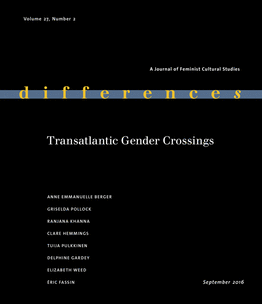
differences’ new issue: Transatlantic Gender Crossings
The most recent issue of differences, “Transatlantic Gender Crossings,” edited by Anne Emmanuelle Berger and Éric Fassin, addresses French and US feminism, gender, and queer
Kohl’s new issue: Beyond Victims and Savages – The Complexities of Violence, Resistance, and Pleasure
Going beyond the dichotomy of victims and savages entails a nuanced understanding of violence. Such an understanding perceives mainstream violence as indivisible from other paradigms of large-scale oppression – hegemony, socioeconomic injustice, institutionalization, neoliberalism, occupation… It also accounts for the normalized violence we live on a daily basis, in silent acts of coercion, harassment, bullying, and self-damage, and the ways in which they are informed by macro instances of violence, and vice versa.
Research Study in Canada Shows Needs of Rural Sex Workers
On the 20th of May in Brantford, Ontario (Canada), a report was released by Dr. Stacey Hannem and the organisation REAL that assesses the needs
How Many Adults Identify as Transgender in the United States – The Williams Institute
Utilizing data from the 2014 Behavioral Risk Factor Surveillance System (BRFSS), which includes representative state-level surveys, Williams Institute scholars provide up-to-date estimates of the percentage and number of adults who identify as transgender in the United States. Approximately 0.6% of adults in the United States, or 1.4 million individuals, identify as transgender.
A Development Agenda for Sexual and Gender Minorities
A Development Agenda for Sexual and Gender Minorities, by Andrew Park, International Program Director, The Williams Institute, UCLA School of Law is grounded in current research literature regarding important development outcomes for sexual and gender minorities, such as health, employment, family formation, education and civil participation.
The Lancet: Can India transition from informal abortion provision to safe and formal services?
The past three decades brought important developments to the area of women’s access to abortion, especially with the advent of medical abortion methods. However, the
In Plainspeak – TARSHI’s magazine July edition: Science and Sexuality
With Assisted Reproductive Technologies, science has managed to use technology to prise apart previous associations between reproduction and sex. With gender, class and queer theory, the social sciences have prised apart previous associations between gender and sex. We have found that knowledge through science, like knowledge of sexuality, can’t be pinned down to absolutes. “The more you know, the more you know you don’t know,” said Aristotle. While science may value the systematic and objective, it cannot escape the baffling convolutions of lived experience. How does life influence knowledge, and knowledge influence life?
A Glimpse Into Arab Studies Journal’s Newly Released Issue: Spring 2016
In this issue, we are proud to feature a collection of innovative and rigorous contributions. Two exceptional articles tackle archives as a historical and conceptual
East Asia Forum Quarterly (EAFQ)’s new issue – Gender and sexuality in Asia today
This issue of East Asia Forum Quarterly brings together prominent scholars of gender studies from various countries and disciplines to explore the diversity and complexity of issues of gender and sexuality in contemporary Asia. The essays touch on major developments that have caused shifts in gender relations. They illustrate the tensions between structural violence against women and women’s own agency in coping with male-dominant social arrangements.
New GenderIT edition: three key issues for a feminist internet: Access, agency and movements
The Feminist Principles of the Internet arose from the first Imagine a Feminist Internet meeting in 2014 in Malaysia. The meeting brought together 52 women’s rights, sexual rights and internet rights activists from six continents to discuss one question: “As feminists, what kind of internet do we want, and what will it take for us to achieve it?”
Brasiliana’s new edition on the politics of violence and securitization in Rio de Janeiro (Brazil)
New double issue of Brasiliana, edited by Paul Amar, is out. It addresses the politics of violence and securitization in Rio de Janeiro. Click here
Mapping & appraisal of HIV prevention and care interventions for men who have sex with men (MSM) in Kenya, Tanzania, Uganda and Zimbabwe
This report, by the London School of Hygiene and Tropical Medicine, summarises the rationale, methods and findings of an in-depth appraisal of targeted HIV prevention and
A call for critical reflection on queer/LGBTIA+ activism in Africa
This essay looks at the complex relationship between the personal and the political in queer/LGBTIA+ organizing in Africa. It considers how current modes of organizing impact the connection between professional activism and grassroots participation and explores some of the consequences of these two intersecting factors for activist praxis.
The psycho-medical case against a gender incongruence of childhood diagnosis
Jack Drescher and colleagues (March, 2016)1 highlight two controversies surrounding gender incongruent children below puberty. One controversy concerns how one helps these children.
Feminism Without Transphobia
Feminism and trans activism don’t have to be mutually exclusive, argue the contributors to “Trans/Feminisms,” the most recent issue of TSQ: Transgender Studies Quarterly.
Scotland: Shifting abortion care from a hospital to a community sexual and reproductive health care setting
Community sexual and reproductive health (SRH) services are well placed to deliver abortion assessment services and early medical abortion (EMA), but comparative data on safety and acceptability from both settings are important for future service planning.
Threats of retrocession in sexual and reproductive health policies in Brazil during the Zika epidemic
Brazil has one of the most restrictive legislations in the world on abortion. Since 1940, abortion is only allowed in Brazil in cases involving either risk to the woman’s life or rape, and in cases of fetal anencephaly. Yet abortion is common despite these legal restrictions.
New resource synthesizing abortion stigma qualitative research: “Abortion Stigma Around the World”
Source: http://endabortionstigma.org/en/Blog/2016/March/QualitativeSynthesis.aspx We are excited to share “Abortion Stigma Around the Globe”: A Qualitative Synthesis. After a review of literature and available resources, we discovered
Rainbow warriors: Attacks and killings of LGBT activists in Honduras
A YEAR AFTER RETURNING from exile, Honduran gay rights activist Donny Reyes still fears a murderous attack at any minute.
“These things are dangerous”: Understanding induced abortion trajectories in urban Zambia
Unsafe abortion is a significant but preventable cause of global maternal mortality and morbidity. Zambia has among the most liberal abortion laws in sub-Saharan Africa, however this alone does not guarantee access to safe abortion, and 30% of maternal mortality is attributable to unsafe procedures.
Unsafe Abortion Is Common In Tanzania and Is A Major Cause of Maternal Death
Originally posted at the Guttmacher’s Institute on 31/03/2016. Available at: https://www.guttmacher.org/news-release/2016/unsafe-abortion-common-tanzania-and-major-cause-maternal-death In the first nationally representative study of the incidence of abortion and the provision
Equal Rights Review Vol 16 – issue on intersectionality
Today the Equal Rights Trust has published volume sixteen of its biannual Equal Rights Review, an interdisciplinary journal offering analysis, insight and ideas to those promoting equality. This issue has a special focus on intersectionality.
New issue of “GLQ: A Journal of Lesbian and Gay Studies”
“Area Impossible: The Geopolitics of Queer Studies” is the latest issue of GLQ: A Journal of Lesbian and Gay Studies. Edited by Anjali Arondekar and Geeta Patel, “Area Impossible” stages a much-needed conversation between two often-segregated fields: queer studies and area studies.
New study estimates contraceptive failure rates in 43 countries
In the most comprehensive study to date of contraceptive failure rates in the developing world, researchers found that overall, failure rates are lowest for users of longer-acting contraceptive methods (IUDs, implants or injectables), intermediate for users of shorter-acting methods (oral contraceptive pills or male condoms) and highest for users of traditional methods (withdrawal or calendar rhythm).
IDS new bulletin: Connecting Perspectives on Women’s Empowerment
Originally published on IDS. Available at: https://www.ids.ac.uk/news/connecting-perspectives-on-women-s-empowerment Worldwide, women continue to contribute to social, economic, cultural and political achievement. And we have much to celebrate
Gender incongruence of childhood in the ICD-11: controversies, proposal, and rationale
Article available at: https://www.researchgate.net/publication/296683386_Gender_incongruence_of_childhood_in_the_ICD-11_Controversies_proposal_and_rationale As part of the development of the eleventh revision of the International Classification of Diseases (ICD-11), WHO appointed a Working Group
Human rights contestations: sexual orientation and gender identity
This article asks if and why sexual orientation and gender identity-related rights should connect to a human rights framework. To answer that question it begins by addressing how we understand what makes human rights resonate or not resonate and if addressing a contentious issue such as sexual orientation or gender identity from within a human rights frame advances or detracts from such resonance.
Gender, Sexuality and Social Justice: What’s Law Got to Do with It?
This Collection offers multiple routes to sexuality and gender justice and numerous suggestions of what sexuality and gender justice could be in a plurality of contexts. It also suggests that there are many potential pitfalls and barriers to justice or progress. What this Collection highlights, however, is that by listening carefully to each other and by paying careful attention to the needs of those working on the ground, we give ourselves the best chances of success, individually and collectively.
Disability and sex work: developing affinities through decriminalization
This article argues that strong policy frameworks are required to support the health and well-being of sex workers, disabled people, and disabled sex workers. Through an examination of the context of sex work in Canada, it articulates the flaws of sex work criminalization and the persistent barriers that criminalization creates.
The Incidence of Abortion in Nigeria
Because of Nigeria’s low contraceptive prevalence, a substantial number of women have unintended pregnancies, many of which are resolved through clandestine abortion, despite the country’s restrictive abortion law. Up-to-date estimates of abortion incidence are needed.
The Right of Access to Information: Exploring Gender Inequities
The article examines the issue of gender inequity in the exercise of the right of access to information by exploring the legislative framework underpinning the right for women, detailing the value of information for women, describing the principal obstacles that propagate information asymmetries, and exploring potential responses to advance a more universal right to information.
Examining the Implications of PrEP as HIV Prevention for Sex Workers
New medication to prevent HIV, known as pre-exposure prophylaxis (PrEP), could provide protection where condoms are not used. Integrating it into HIV and sexual health programming for various communities has become a focus of researchers and health and development agencies. However, PrEP raises important challenges in the context of female sex work.
New issue of Reproductive Health Matters: sexuality, sexual rights and sexual politics
The issue 46 of Reproductive Health Matters focuses on the theme “Sexuality, sexual rights and sexual politics” and brings articles offering “a wide range of
New issue of Kohl: a Journal for Body and Gender
The second issue of Kohl: a Journal for Body and Gender Research is out. Kohl serves as an alternative platform of knowledge production. It tackles feminisms,
Out of DSM: Depathologizing Homosexuality
In 1973, the American Psychiatric Association (APA) removed the diagnosis of “homosexuality” from the second edition of its Diagnostic and Statistical Manual (DSM). This resulted
Intersex rights and freedoms
Originally from: https://morgancarpenter.com/intersex-rights-freedoms/ Published in the UNSW Law Society journal “Court of Conscience” issue 9, 2015, on “rights and freedoms”, this paper considers what it
Transgender women living with HIV in Los Angeles County face an array of unmet legal needs
Transgender women living with HIV in Los Angeles County face a variety of legal needs that have a significant impact on their access to resources such as income, health care and housing, but most do not receive any legal assistance, according to a new analysis by researchers at the Williams Institute at UCLA School of Law.
The Ashgate Research Companion to Lesbian and Gay Activism
Edited by David Paternotte, Université Libre de Bruxelles, Belgium and Manon Tremblay, Université d’Ottawa, Canada The Ashgate Research Companion to Lesbian and Gay Activism provides
SDG SERIES: What Might the SDGs Mean for Health and Human Rights?
The SDG Series on SDGs and the right to health on the Health and Human Rights Journal is avaialable online. Click below to read the articles.
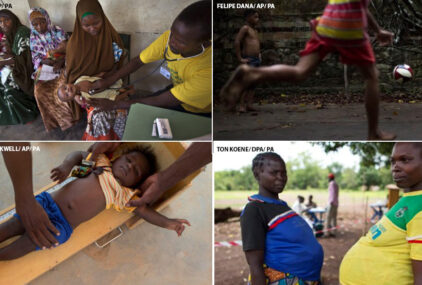
BMJ’s dossier Women’s, children’s, and adolescents’ health
Originally published on The BMJ. Available at: http://www.bmj.com/content/women%E2%80%99s-children%E2%80%99s-and-adolescents%E2%80%99-health-0 The year 2015 marks a defining moment for the health of women, children, and adolescents. It is
“Sexual health, human rights, and law” from the Lancet
The article Sexual health, human rights, and law, authored by Rajat Khosla, Lale Say, Marleen Temmerman was published at The Lancet, Volume 386, No. 9995.
Homophobia and Transphobia in Caribbean Media: A Baseline Study
During the month of July 2014, the International Gay and Lesbian Human Rights Commission and United and Strong, in collaboration with Groundation Grenada, Guyana Rainbow
New issue of African Journal of History and Culture
The issue nº 8 brings articles on religion and development. Click here to access it.
Colonizing African Values: How the U.S. Christian Right is Transforming Sexual Politics in Africa
Uganda’s infamous 2009 Anti-Homosexuality Bill, which would institute the death penalty for a new and surreal category of offenses dubbed “aggravated homosexuality,” captured international headlines
Lesbian, Gay, Bisexual and Transgender Rights in Iran – Analysis from Religious, Social, Legal and Cultural Perspectives
The International Gay and Lesbian Human Rights Commission (IGLHRC) has released a collection of eight articles that offer innovative and provocative approaches to advance acceptance
Moving Beyond Biomedicalization in the HIV Response
Global AIDS Policy Watch (GAPW) has announced the launching of the article Moving Beyond Biomedicalization in the HIV Response: Implications for Community Involvement and Community
Pharmacy Access to Medical Abortion in India: Reality, Necessity & Potential
by Dr Nozer Shariar Past Secretary General & Chairperson, MTP Committee, Federation of Obstetric & Gynecological Societies of India (FOGSI); Past President,Mumbai Obstetric & Gynecological
Transgender Men Who Experienced Pregnancy After Female-to-Male Gender Transitioning
SPW recommend the study Transgender Men Who Experienced Pregnancy After Female-to-Male Gender Transitioning, aimed at conducting a cross-sectional study of trans- gender men who had
Kohl’s summer issue is out!
Check the English version of the very first issue of Kohl: a Journal for Body and Gender Research. Kohl serves as an alternative platform of knowledge production. It tackles feminisms,
Reproductive Rights: an unacknowledged casualty of conflict in Sri Lanka
This study analyses the experiences of women living in areas of SriLanka that were affected by armed conflict for more than two decades. It is
Conscientious Objection and Abortion: A Global Perspective on the Colombian Experience
SPW recommends Georgetown Law School’s O’Neill Institute study (co-authored by Women’s Link) Conscientious Objection and Abortion: A Global Perspective on the Colombian Experience. Click here
Public Attitudes towards Homosexuality and Gay Rights across Time and Countries
A new study finds that residents in 90% of all surveyed countries have become more accepting of homosexuality over the past 20 years. The study examines
Intersex rights and freedoms
Published in the UNSW Law Society journal “Court of Conscience” issue 9, 2015, on “rights and freedoms”, this paper considers what it means to address
“Rugged vaginas” and “vulnerable rectums”: the sexual identity, epidemiology, and law of the global hiv epidemic
SPW recommends Aziza Ahmed’s article – published on Columbia Journal of Gender and law – “Rugged vaginas” and “vulnerable rectums”: the sexual identity, epidemiology, and
New Issue of The Equal Rights Review Published by the Equal Rights Trust
Equal Rights Trust published the Volume Thirteen of The Equal Rights Review (ERR), an interdisciplinary biannual journal intended as a forum for the exchange of legal,
Proposed declassification of disease categories related to sexual orientation in the International Statistical Classification of Diseases and Related Health Problems (ICD-11)
SPW recommends the article Proposed declassification of disease categories related to sexual orientation in the International Statistical Classification of Diseases and Related Health Problems (ICD-11),
WLUML Launches Bumper-Size Dossier on Sexualities in Muslim Contexts
Women Living Under Muslim Laws (WLUML) released its latest publication, Dossier 32-33: Sexualities, Culture and Society in Muslim Contexts, available in paperback hard copy and
Article Newsletter N14 – Rahul Rao
Staying positivist in the fight against homophobia Rahul Rao* In recent weeks, arguments against homophobia have been made in two paradigmatically positivist registers – science
Human Rights, Sexual Orientation and Gender Identity in the Commonwealth: Struggles for Decriminalisation and Change
Corinne Lennox and Matthew Waites, from Institute of Commonwealth Studies (University of London), are the editors of the free online book Human Rights, Sexual Orientation
Homicide and Gender
The Cranky Sociologists website publishes an article arguing, according to a global map of gender murders, that homicides are gendered social fact. Here.
EROTICs project final publication online
Read the final publication of the EROTICS: sex, rights and the Internet project here.
Troubling the waters of a ‘wave of homophobia’: Political economies of anti-queer animus in sub-Saharan Africa
Read Ryan Richard Thoreson’s article, from Yale Law School, about the debate over Uganda’s Anti-Homosexuality Bill in 2009 and 2010, when journalists and activists warned of
Sexualities january edition
SPW recommends Sexualities january edition. It brings articles about gender and sexuality boundaries on evangelical websites; medicalization of women sexuality as well as other interesting
Gender, Justice, and Neoliberal Transformations – new issue of Scholar & Feminist Online
This new issue of The Scholar & Feminist Online, edited by Elizabeth Bernstein and Janet R. Jakobsen, forges new ground by weaving together issues of
“The Implications of the Anti-Homosexuality Bill 2009 on Uganda’s Legal System”
Read the article “The Implications of the Anti-Homosexuality Bill 2009 on Uganda’s Legal System”, by Adrian Jjuuko and Francis Tumwesige, in which the authors discuss
The Security Archipelago
The Introduction chapter of Paul Amar book, “The Security Archipelago”, has been published online by Duke University Press, for free access. Feel free to check
The HIV epidemic and human rights violations in Brazil
In an article published at Journal of the International AIDS Society, Chris Beyrer and Monica Malta highlight setbacks on the Brazilian political and financial commitment
Sexual Violence in Asia
A new research in the Lancet Global Health, a medical journal, indicates that more than one in ten men surveyed in six Asian countries said
Sexuality, culture and politics – a south American reader
Although mature and vibrant, Latin American scholarship on sexuality still remains largely invisible to a global readership. In this collection of articles translated from Portuguese
Provisional Measure 557 (MP 557) has been archived, but the matter is not resolved*
Read the article “Provisional Measure 557 (MP 557) has been archived, but the matter is not resolved,” written by Ana Maria Costa and Luís Bernardo Delgado Bieber, on the creation of the National System of Registration, Tracking and Follow-up of Pregnant and Puerperal Women for the Prevention of Maternal Mortality.
What are the connections? Overview and Literature Review
Read What are the connections? Overview and Literature Review, launched by Sida. This publication illustrates the necessity for economic policies and poverty reduction efforts to take account of sexuality. If they don’t, they risk exacerbating exclusions and inequalities, and becoming less effective. It is hoped that this paper will support the work of donors, policy makers and activists in the areas of economic policy and poverty reduction, as well as in struggles for sexual and economic justice more broadly.
Sexuality and Human Rights – Discussion Paper
Sexuality and Human Rights – Discussion Paper was commissioned by the International Council on Human Rights Policy from Alice M. Miller, Lecturer in Residence and
Global Public Health
Global Public Health, a leading peer-reviewed journal distinguished by its global focus and concern for health inequalities and the social and cultural dimensions of health, has dedicated a special supplement to the research that culminated in the publication of SexPolitics. The supplement, entitled The Contested Politics of Sexual and Reproductive Health and Rights, features condensed versions of six of the ten case studies that appear in SexPolitics: Reports from the Front Lines; these include Brazil, India, Peru, South Africa, Vietnam, and the World Bank.
IDS Bulletin – Sexuality Matters
SPW launched the Portuguese translation of the IDS Bulletin – Sexuality Matters. The publication is entitled Questões de Sexualidade – Ensaios Transculturais and is also being translated into Arabic, Chinese, French, Hindi and Spanish. The Arabic and Spanish translations are already available online.