
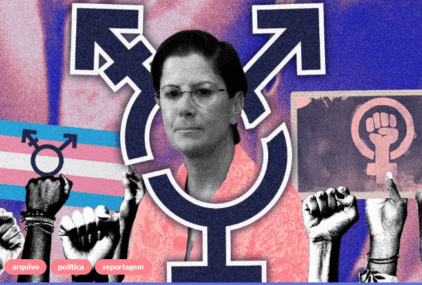
UN rapporteur promotes transphobia during Brazil visit
In meetings at the Supreme Court, Congress, and Brazilian universities, Reem Alsalem made anti-trans statements and was criticized by feminist and LGBTQIAPN+ organizations. By Dany Avelar (AzMina website), translated by SPW.
Sexual politics in the global disorder of 2025
This is our second and latest bulletin of 2025. It offers a broad overview of events and trends in gender, sexuality, and abortion policy throughout the year to complement the analysis developed in July that addressed the policies implemented by the Trump’s second administration and the US landscape.
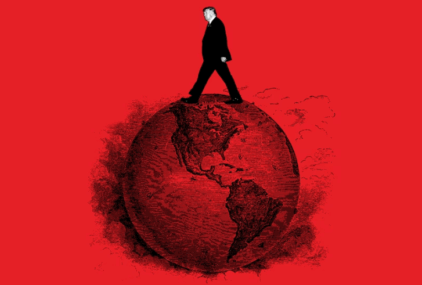
Global Gag Rule expanded by Trump’s administration: explanatory summary
On January 22, Trump’s administrarion announced it was suspending the funding for foreign organizations that promote diversity, equity, and inclusion initiatives. SPW summarized the main changes, which expand the restrictions set by the Mexico City Policy and will have many ramifications. Check it out below:

Transsexuality in the eyes of Genspect
Genspect was founded in 2021 by Irish psychotherapist Stella O’Malley. As will become clear later, it is based on a conservative ideology. Insidiously, it disrespects the transgender community and undermines their rights—namely, the right to undergo medically assisted gender transition—which is in clear dissonance with the current values of integration and acceptance of this group.

The Spanish Far Right On The Global Stage: Opposition To Sexual And Reproductive Rights
L’Associació de Drets Sexuals i Reproductius, an organization that works directly with young people and women at the community level to defend their sexual and
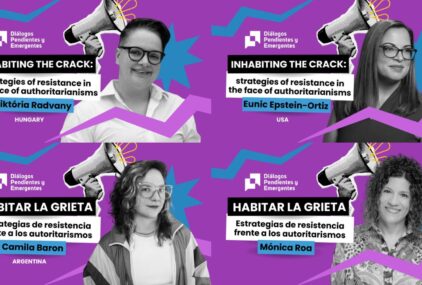
VIDEOS: Inhabiting the Crack: strategies of resistance in the face of authoritarianisms
The Diálogos Pendientes y Emergentes (Pending and Emerging Dialogues) space is a joint initiative of five organizations working on gender, sexuality, and reproductive justice issues in Latin America: the Sexuality and Politics Watch (SPW), Akahatá, Promsex, Puentes, and Synergia.
“Blurred Boundaries” maps the ecosystem of essentialist feminisms and their relationship with the anti-gender field
The Sexuality Policy Watch (SPW), the Center for LGBT+ Human Rights and Citizenship at the Federal University of Minas Gerais (NUH/UFMG), and the National Association of Travestis and Transsexuals (ANTRA) have released the research report “Blurred Boundaries: Feminist and Women’s Movements and Anti-Gender Politics in Brazil,” which is also supported by Ação Educativa, Cladem Brasil, Criola, Ipas Brasil, and the Nem Presa Nem Morta campaign.
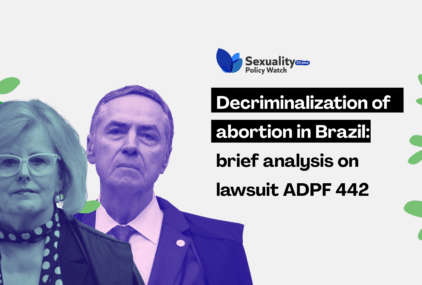
Decriminalization of abortion in Brazil: brief analysis on lawsuit ADPF 442
The politics of abortion rights in Brazil entered a new chapter in October. Before his voluntary retirement, the last act of Federal Supreme Court (STF) Justice Luís Roberto Barroso was to cast a vote in favor of lawsuit ADPF 442, which seeks to decriminalize abortion up to the 12th week of pregnancy.
The new world disorder – Meanings and impacts of Trump 2.0 – condensed vídeos
On June 17th, SPW hosted, as part of the Pending and Emerging Dialogues project, the debate The new world disorder: meanings and impacts of Trump 2.0, with the participation of Heidi Beirich (GPAHE – focus on Project 2025) and Paisley Currah (Professor of Gender and Women’s Studies, expert on trans rights).

The power of anti-gender politics and its effects on human rights
by Sonia Corrêa [1] Anti-gender politics: Why the name and how to define it today? In September 2025, there is little doubt that the relentless
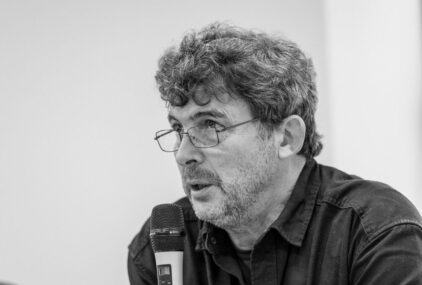
Éric Fassin on the specter of a new McCarthyism: “Democracy is collapsing like a house of cards”
Question: Two weeks ago, we witnessed a new and fierce attack on academic freedom in the United States. The University of Berkeley that is considered
180 days of destruction, sadism, and global disorder
In June 2019, we published a special issue on the first 180 days of the Bolsonaro administration. Six years later, we take on the challenge

Bergoglio, his legacies, and what comes next: An interview with Stefano Fabeni
As soon as US-born Robert Prevost was chosen to be the new head of the Catholic Church at a conclave held in May 2025, SPW
Reading The “Politics of Gender” in March 2025 – by Susana Fried
To mark the launch of SPW’s new website, we invited some long-term partners to explore our archive and select a piece of content (a publication,

Reading “Re-Trumped” – by Françoise Girard
To mark the launch of SPW’s new website, we invited some long-term partners to explore our archive and select a piece of content (a publication,

Notes on the webinar “Democracies in Dispute: Africa”
In 2024, more than 60 countries held or will hold elections at different levels of government. The contests aren’t only about who gets elected, but

Notes on the webinar “Democracies in Dispute: Latin America”
In 2024, more than 60 countries will have elections at different levels of government1. The disputes will not only be electoral, but also about the

Notes on the webinar “Democracies in Dispute: The United States”
In 2024, more than 60 countries will have elections at different levels of government. The contests will not only be electoral, but also about the

“Retrumped”? – Donald is back in the White House
When Trump was elected for the first time, in 2016, we published a compilation of articles that predominantly analyzed the astonishment that the election result
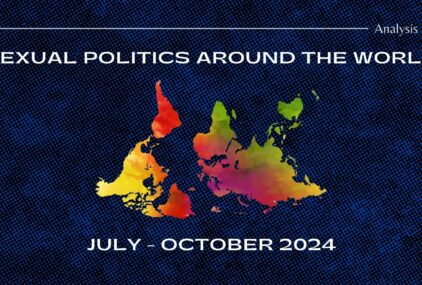
Sexual politics from July to October 2024
Introduction Once again, our newsletter brings you news and analysis about the current times, which are more somber than bright: authoritarian trends, the continued expansion
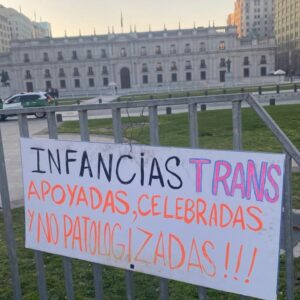
Gender affirmation and evidence around suicide: Contributions to public debate
By: Tomás Ojeda, Mariana Gaba, Isidora Paiva-Mack, Rodrigo Sierra Rosales, Débora Fernández y Alemka Tomicic Year: 2024 This piece explores the relationship between gender-affirming interventions,

Dignitas Infinita: a first and brief reading
Sonia Corrêa In April 2024, the Dicastery for the Doctrine of Faith, the main doctrinal body of the Holy See, published the Declaration Dignitas Infinita. This

The “Politics of Gender”: A Genealogical Commentary
by Sonia Corrêa Introduction I was motivated to write this commentary after reading a series of articles that revisit the conditions in which a transnational
DEMOCRACIES IN DISPUTE: Explore the series and access the materials
In 2024, more than 64 countries will have elections at different levels*. These disputes are both electoral and about the meaning of democracies. They will
Sexual politics from January to June 2024 (Part 2)
>> Read in PDF << Part 2 – Continuing anti-gender offensives Gender politics: good news Inevitably, the political situation described in part 1 of this
Sexual politics from January to June 2024 (Part 1)
>> Read in PDF << Part 1 – Democracies in dispute Introduction As we have pointed out in previous editions, in recent years sexual politics
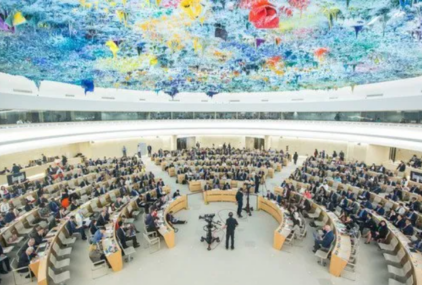
Brazil is accused at the UN of violations of the right to legal abortion
Originally from Jamil Chade,UOL columnist in Geneva. Translation to English by Giulia de Vito ______________________ Civil society organisations have appealed to the United Nations, asking international

“Dr Frankenstein’s Hydra: Contours, meanings and effects of anti-gender politics”
This text is a chapter authored by Sonia Corrêa, David Paternotte, Claire House and published in Routledge Handbook of Sexuality, Gender, Health and Rights. Download
Sexual Politics from July to November 2023
>> Download and read in PDF << First Words This edition of the SPW newsletter covers the main events in sexual politics since July, roughly
Sonia Corrêa interview at SDGSummit2030: September 2023
Feminist Voices at #SDGSummit2030 on “Speak out against anti-gender and anti-rights narratives and actions to achieve the 2030 Agenda” with Sonia Correa, Co-Coordinator, Sexuality Policy Watch (SPW),
Sexual Politics from February to July 2023
>>> Read/download in PDF <<< Opening Words This newsletter describes and seeks to contextualize the developments in sexual politics since February 2023. In times of

Anti-trans attacks in sports: a necessary update
By Nana Soares. In July 2022, we published an article echoing and contextualising the guidelines then adopted by the International Swimming Federation (FINA) regarding the participation of trans women in their competitions. As we highlight in the article, gender policing in sports is not a new debate, but it is one that has intensified and taken on new forms in recent years.
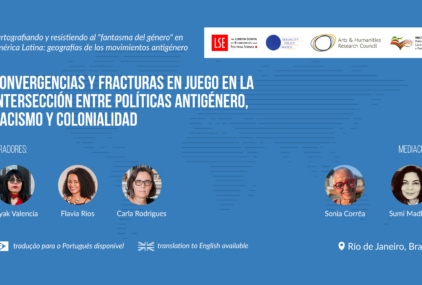
Convergences/fractures at play at the intersection of anti-gender politics,racism & coloniality
On 11-12/04/2023, the seminar “Mapping and resisting the ghost of ‘gender’ in Latin America: geographies of anti-gender movements” took place in Rio de Janeiro, organised
Sexual Politics in 2022: Retrospective
>> Read in PDF << First words In 2022, we adjusted our perspective for monitoring and analyzing sexual politics. In the previous two years, our
The rise of Georgia Meloni: An interview with Massimo Prearo
SPW: There has been a lot of talk abroad about Giorgia Meloni, the far-right politician who made a meteoric rise in the polls, becoming Italy’s
Sexual Politics from August to November 2022
>> Download as PDF << Preface Due to its relevance in Brazil and the rest of the world, we rescheduled the publication of our newsletter
Anti-gender Politics in Latin America in Pandemic Times –
By Tomás Ojeda Thank you, Sonia, and hello everyone. Thanks for being here with us at the launch of the English version of these case
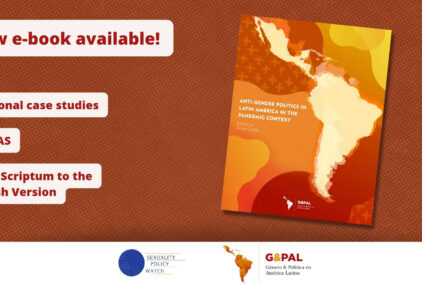
NEW E-BOOK: Anti-Gender Politics in Latin America in the Pandemic Context
SPW has launched the English version of our latest research. The e-book “Anti-Gender Politics in Latin America in the Pandemic Context” presents the results of
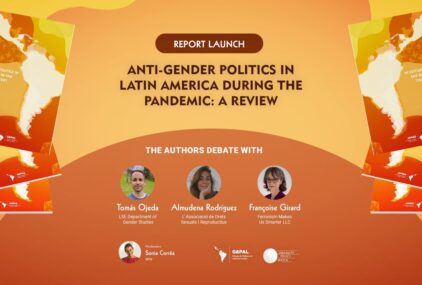
Anti-gender politics in Latin America during the pandemic: A review – Launching debate
SPW has launched the e-book “Antigender Policies in Latin America in the Pandemic Context”. The e-book presents the results of the second research phase
Brief notes on the 2022 Brazilian elections (for those who don’t live in Brazil)
By Sonia Corrêa. These notes on the end of the Bolsonaro government are brief and very preliminary. As I was writing I was just adjusting to the atmosphere that started to be installed in Brazil on Sunday. To be more precise, last night when it became clear that, despite a cowardly and deplorable statement and last-minute coup attempts, we began a new political cycle. I will start sharing my sentiments and not objective information. My feeling today November 2nd 2022 is very different from the one that seized me, in 2018, when, in the wake of the astonishing electoral process that elected Bolsonaro to the presidency, I was overtaken by a productive anger. It made me immediately sit down and write an essay that, inspired an article by Celso Rocha Barros published that same day, I have titled “Brazilian Elections: Perfect Catastrophe?”
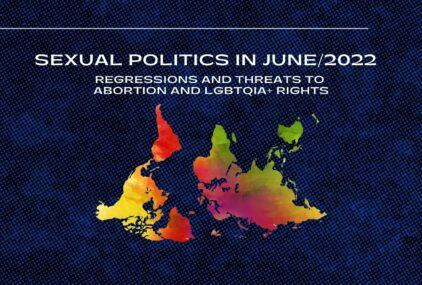
Sexual politics in June 2022: regressions and threats to abortion and LGBTQIA+ rights
In early July, we issued the Spanish version of our sexual politics bulletin, published in Portuguese and English in early June. More complete and updated,
SPW’s Sonia Corrêa on the end of Roe: check our videos with her remarks
See our playlist featuring SPW co-chair Sonia Corrêa dedicated to analysing the roots, meanings and effects from the overturning of the constitutional right to abortion

The new anti-trans women rules in elite sports: the new face of an old ‘problem’
By Nana Soares The International Swimming Federation (FINA) announced at the World Championship, held in June in Budapest, a new technical-medical rule to regulate the

Summaries of Country Case Studies
Between 2018 and 2020, SPW conducted a research effort on Anti-gender Politics in LatinAmerica. This e-book offers condensed versions of all studies that encompass the

Jamil Chade: Letter to an 11-year-old girl
By Jamil Chade* Dear young girl, While your story was the subject of a dramatic debate in Brazil, I tell you that in a room

The “Gilead” decision: a compilation
As predicted since December, when a public hearing on the Dobbs case took place, on June 24th 2022, the U.S. Supreme Court, overturned the right
Sexual Politics from March to May 2022
>>> Read in PDF First Words Since April 2020, SPW newsletters have been tracking and analyzing sexual politics in the context of the COVID-19 pandemic.
Memories of Adrienne
By Carmen Barroso I first met Adrienne when she went to Brazil in 1974 as a young Ford Foundation program officer. I knew right away
Sexual Politics in Times of Pandemic – 2021 Retrospective
>>> Download the PDF version here. First Thoughts The last 2020 SPW special hypothesized that during 2021, because of vaccines, Covid-19 would no longer be
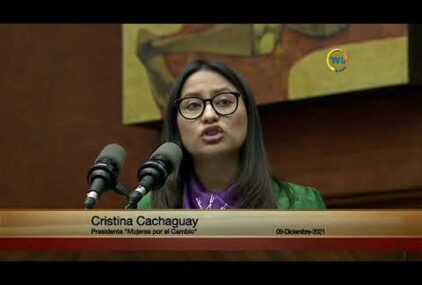
Decriminalization with exclusion: Ecuador’s new rape abortion law
By Manuela Lavinas Picq. This law is a victory for regulating the right to abortion due to rape, even allowing survivors to avoid police procedures, but advocates of decriminalization contested exclusionary aspects that will affect the most vulnerable. The dark side of the law? The deadlines.
COVID-19 and the production of ignorance: Richard Parker’s article
Originally published at Radis. Author: Richard Parker. Translated by SPW. Available at: https://radis.ensp.fiocruz.br/opiniao/pos-tudo/covid-19-e-a-producao-da-ignorancia/ The first year of the COVID-19 pandemic has taught us many lessons
Transnational activities of the Ministry on Women, Family and Human Rights
At the beginning of September 2021, although she was on vacation, the Brazilian National Secretary for the Family, Angela Gandra, went to Portugal and Spain.
Unpack the reconfiguration of population policy in China – Cai Yiping
In September 2021, the Chinese government released the new policy guideline on women, namely “Program for Women and Development (2021-2030)”. In the area of “Women
“Gender ideology” and anti-vaccine politics in Brazil: the misuse of the hotline run by the Ministry of Women, Family and Human Rights has been contested at the Supreme Court
On February 8th, 2021, the National Confederation of Workers in Education and the National Confederation of Workers in Health presented a petition to the Brazilian
Brazil as a hub of anti-gender transnational politics (August – October 2021)
By Sonia Corrêa In September, Pope Francis visited Hungary and Slovakia, and in the latter country, in a conversation with a group of Jesuits, he
Sexual Politics in Times of Pandemic: August-October 2021
Since July, when we published our last Special Edition, as you will see in this issue, a lot has happened in the pandemic and in the field of sexual politics. Once again, the pages that follow are quite dense, but we remind you that the sections are relatively autonomous.

An interview with Massimo Prearo: The Zan Law failure, the neo – Catholic movement and Vatican’s Politics:
In the last Special Issue of last year we did a brief assessment of Vatican politics. Concomitantly, we published an article by the Italian political

Celebrational video for the publication of the Brazilian version of “Our bodies, ourselves”
Video prepared as a tribute to the launching of the Brazilian version of the book “Our bodies, ourselves”, presented at the book launch event, a
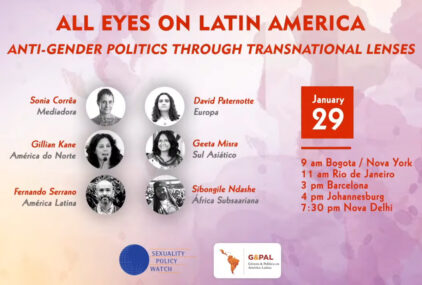
Sexual Politics in Times of Pandemic: January-July 2021
First Words In the last 2020 edition of Sexual Politics in Times of Pandemic Special of 2020, we hypothesized that throughout 2021, with the arrival
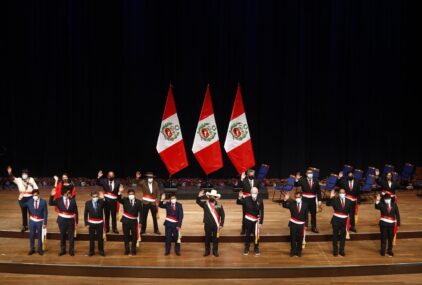
Peru: Dire prospects of the Pedro Castillo Government
Pedro Castillo Terrones is 51 years old and is a primary school teacher, farmer, and militia member. He studied education and obtained a master’s degree in Educational Psychology from the Universidad César Vallejo. He gained public notoriety after leading the teachers’ strike in 2017 and 2018 which stopped classes for months with the demand for salary improvements and the elimination of teacher evaluation. He was active in Perú Posible, the party of former president Alejandro Toledo, and was a member of the Cajamarca committee from 2005 until 2017, when the grouping lost its registration.

One Year of COVID-19: Sexual Politics in Times of Pandemic Round-Up
Preliminary comment In 2020, in order to adjust our lenses to COVID-19 world conditions, we suspended our regular monthly announcements and started a series of
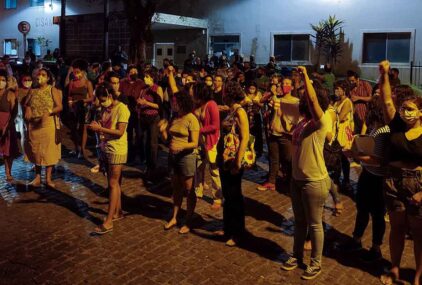
Brazil: New president of the House opens the road for anti-abortion provisions
by Thais Rodrigues and Edson Sardinha* Brazilian conservative and extreme-right parliamentarians are planing to take advantage of the new presidency of the House, MP Arthur
Recommendations on Brazil to President Biden
With the contribution and/or endorsement of 100 academics from universities such as Harvard, Brown and Columbia, and of organizations such as Greenpeace USA, Amazon Watch,
Anti-Gender Politics in Latin America: Abstracts
ANTI-GENDER POLITICS IN LATIN AMERICA Country Case Studies Summaries ABSTRACTS (Download here: https://sxpolitics.org/GPAL/ ) “Gender Ideology”, Catholic Neointegrismo, and Evangelical Fundamentalism: The Anti-Democratic Vocation
Pope Francis discursive games
Since 2013, Pope Francis I has been making unexpected comments about homosexuality, which usually call for compassion and tolerance. While these speech acts erupt here

Sexual Politics in Times of Pandemic: July to December 2020
Editors’ Note We apologize to our readers and partners for the delay in making our last Special Issue on Sexual Politics in the Pandemic available.

Vatican Politics: Dispersed Events in the Same Plot
By Sonia Corrêa A new encyclical signed by Pope Francis I was published in early October 2020. Entitled Fratelli Tutti, the new papal exhortation was
Anti-Gender Politics | video series
We hope the series Anti-Gender Politics with English subtitles can be a resource for organizations and collectives to inform about the order of the attack

Brief note on the politology of a Catholic discourse
By Massimo Prearo* That words such as “revolution”, “change” or “turn” can be attributed to a religious institution like the Catholic Church, or to the
Pedophilia – more of the same?
By Sonia Corrêa & Rajnia de Vito Recently, references to pedophilia have increased vertiginously in Brazilian social networks and the press. At first glance, this
Pedophilia, moral panic and abortion rights in Latin America and Brazil
After six months into the pandemic, a striking feature of the condition under which we are working is that time has not expanded, as initially

Monsters Under the Bed
A series of memes and messages were recently circulated throughout the continent with the aim of alerting people to an alleged movement that would be
The case of the girl from Espírito Santo: Is this a new turning point in the long journey for abortion rights in Brazil?
By Sonia Corrêa Since 1940, Brazilian law has permitted abortion in cases of rape, and sexual intercourse with persons under 14 years old is automatically
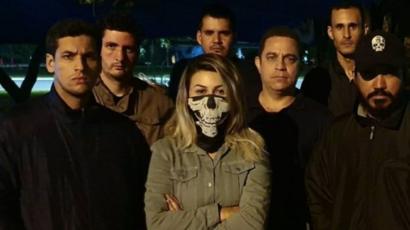
Anti-gender activist Sara Winter arrested
On Monday, June 15th, anti-gender activist Sara Winter was arrested in Brasilia in a Federal Police operation. Supreme Court Justice Alexandre de Moraes issued a
Gender in the New Vatican Directory for Catechesis
A widespread orientation of what is presented today under the name of gender, calls into question the revealed fact: «Man and woman He created them».
SPW Archive: Sexual Politics in Pandemic Times
Since the Covid-19 pandemic broke out in early 2020, SPW has been reporting on the events, trends and dynamics triggred by Sars-Cov-2. In order to
COVID -19 and Politics in March-April 2020
Since January, when the Chinese government adopted extreme confinement measures in Wuhan, the pandemic sparked the worldwide spread of questionable war semantics. It also provided
Sexual Politics in Times of Pandemic: May and June 2020
The global scenario of the COVID-19 pandemic has changed since April, but the crisis is still far from over. Only eight countries are listed as
Sexual politics in times of pandemic: contribution of guest authors
The SPW Announcement for May and early June 2020 will have the same format adopted in March-April 2020, it will organize the newly compiled information
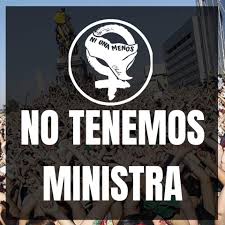
#NoTenemosMinistra: The crisis in Chile’s Ministry of Women and Gender Equality
By Bárbara Sepúlveda Hales & Lieta Vivaldi Macho The recent appointment of the new Minister of Women and Gender Equality, Macarena Santelices, by President Sebastián

Science, political crisis and the lives of people
By Lorena Moraes* Last weekend, the largest Brazilian national survey on Covid-19 suffered resistance in a number of cities, most of them located in the

Bolsonaro’s most radical supporters only believe what he tells them
As Brazil has been rising the tops of global coronavirus dissemination curve and Bolsonaro’s popularity hits a new low, his most radical support base has
Sexual politics in times of pandemic
March and early April 2020 It has been very challenging to prepare the SPW announcement for March/April 2020 due to the abnormality, risks, and losses
COVID-19 and AIDS: parallels and lessons
By Richard Parker* In the COVID-19 pandemic, the history of the HIV/AIDS epidemic emergence and responses offers lessons for reflecting on the current challenges and

Back to where we always have been: sex/gender segregation to contain Covid-19
By Sonia Corrêa[1] But, people die, don’t they? Yes, indeed. However, the current naturalization of death erases thinking – Santiago López Petit In the first week of
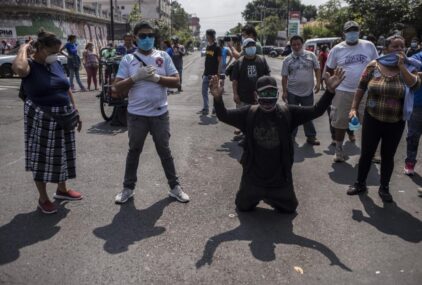
Bukele: A ‘caudilho’ Dies and A Messiah is Born in El Salvador
SPW begins a series of brief analyses of the Covid-19 crisis in contexts that are generally under-reported by the mainstream press and which are characterized
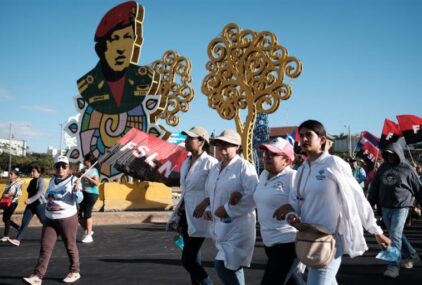
Nicaragua: A Pandemic Carnival
“Amor en los tiempos del covid-19” march, organized by the government. Photo: EFE. Nicaragua and the dance of horrors in the struggle against COVID 19

Sexual politics in January and February 2020
Anti- gender politics in Latin America – SPW is pleased to announce the collection Anti-gender Politics in Latin America, which encompasses nine case studies from
Anti-gender politics in Latin America
SPW is pleased to announce the collection Anti-gender Politics in Latin America, comprised of 9 case studies from Argentina, Brazil, Chile, Colombia, Costa Rica, Ecuador,

Sexual politics round up in 2019
The year of 2019 has finished and, as traditionally, SPW offers our readers and followers a compilation of the main facts, trends, setbacks and victories
Sexual politics in October, November and early December 2019
HIGHLIGHTS Latin America: Politics in Trance In the period covered by this newsletter, Latin America has been the scene of three simultaneous elections – in
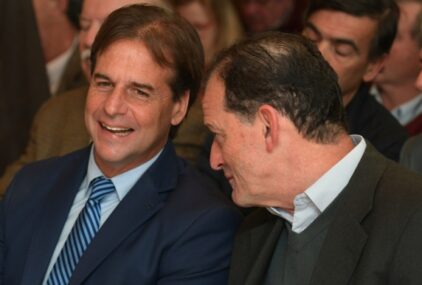
The 2019 election in Uruguay: a new relation of forces
By Santiago Puyol* The elections held in Uruguay on Sunday, October 27th, represented the greatest news for the Uruguayan political system fifteen years after the
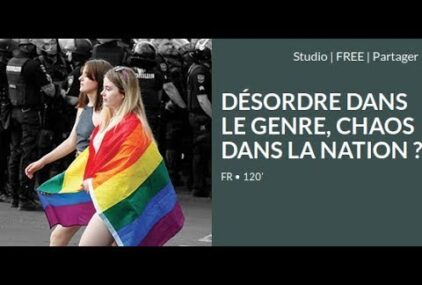
Désordre dans le genre, chaos dans la nation?
Au sein du Festival des Libertés, qui a eu lieu à Bruxelles, Belgique, la coordinateur du SPW, Sonia Corrêa, a participé du débat Désordre dans
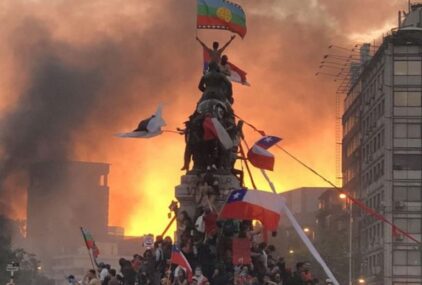
Chile Uprising: A Call for Dignity
By Jaime Barrientos, Facultad de Psicología, Universidad Alberto Hurtado, Chile, and Manuel Cárdenas, Escuela de Psicología, Universidad Valparaíso, Chile. In Chile, at the beginning of
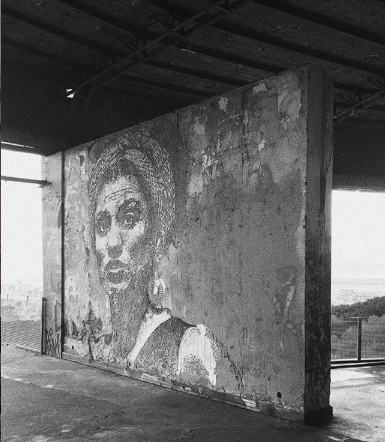
Three Cards and a Joker: Bolsonaro and the Marielle Case
By Isabela Kalil The Context On October 29, 2019, Jornal Nacional (the main Brazilian television newspaper, broadcast by Rede Globo) reported that the name of
Sexual politics in September 2019
September 28 – “Abortion is a Health Issue” was the theme of this year’s International Safe Abortion Day, widely celebrated around the world (see compilation).

Interview with Judith Butler: Knowledge against fear
Why there is no such concept as a “gender ideology”? And whose interests does it serve to? There is no ideology of gender, for that
Antigender politics from May to August 2019
We start this announcement recalling that, before May 2019, two major antigender events have taken place that are worth revisiting because of their potential subsequent
Gender (once again) under attack in Brazil
On Tuesday, September 3rd, JMB has Twitted that he mandated the Minister of Education to draft bill to prohibit the diffusion of “gender ideology” in
Trump’s antigender stance for religious exemptions in July and August 2019
On May 30, the US State Department announced the creation of the “Inalienable Rights Commission” to advise Secretary of State Mike Pompeo. The body, chaired
Mapping of bills against “gender ideology” in Brazil’s Parliament
At present, 15 bills related to “gender ideology” are being processed in the Parliament. Eight of them were presented in the first half of 2019,
Minister Araújo is questioned in public hearing for anti-gender foreign politics
SPW has transcripted and translated Minister of Foreign Affairs Ernesto Araújo remarks during a Public Hearing on July 8th, 2019, when he was summoned to

Sexual politics in May and June 2019
#StopTheBans – Thousands of demonstrators marched in more than 500 cities across the US on May, 21th to protect abortion rights after Alabama state house passed,

Uproar and Perversity: Gender and Sexuality in the Vortex of Politics
By Sonia Corrêa A few days before completing the symbolic mark of Jair Messias Bolsonaro’s – or JMB’s – first 100 days of government, consecrated

Permanent War, Decreasing Popularity: What Will Come Next?
By Fábio Grotz A continuous state of war driven by the government is what drives the speech and activities of actors engaged in the redemptive

Sexual politics in Brazil: Almost 180 days into the JMB Administration
With great pleasure, SPW offers an assessment of sexuality and gender politics, including abortion rights, in the first (almost) six months of the Jair Messias

Gender and Abortion Rights in the Congressional Scene
By Sonia Corrêa What has been happening, since January, in the Brazilian Congress regarding abortion rights and gender must be situated in a longer political.

Human Rights, Gender and Sexuality: A Minister Who Does Not Play Around
By Rajnia de Vito and Marco Aurélio Prado In a political scene that is thoroughly saturated with sex and gender tropes and memes, Damares Alves,

Lena Lavinas: “We’re watching a politics of dismantling”
Lena Lavinas is an economist and full professor at the Economics Institute of the Federal University of Rio de Janeiro. In 2017, she published the

Health policy: From lull to cataclysm
By Fábio Grotz With regards to the trajectory of the policy response to HIV and reproductive health in Brazil — which, between 1980 and the
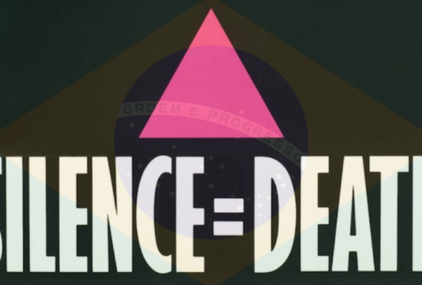
Understanding the dismantling of the AIDS response in Brazil
Rio de Janeiro, May 27th, 2019 Brazilian Interdisciplinary AIDS Association (ABIA) After the justifications given by the Ministry of Health for the establishment of the
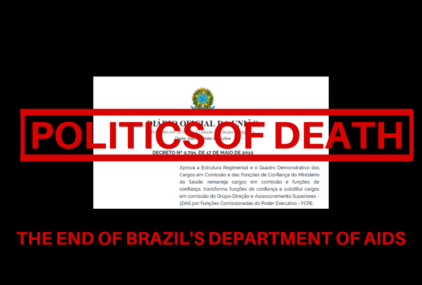
Politics of Death: The End of Brazil’s Department of AIDS
Brazil’s national AIDS movement – comprised of networks, collectives, CSOs and activists signed below – repudiates Decree N. 9795 (read in Portuguese), released on May
Sexual politics in April 2019
Highlights Algeria and Sudan: A revived Arab Spring? – Almost six years after the Arab Spring waned under the shadows of the Sissi regime, political
Sonia Corrêa on “Gender Ideology” for 2019 CREA Conference
Part I Part II
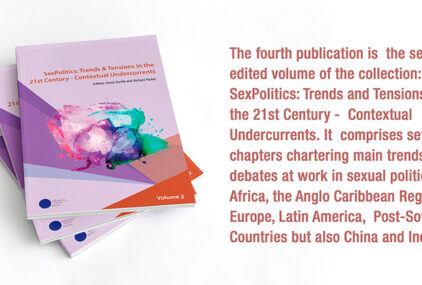
SexPolitics: Trends & Tensions in the 21st Century
Access all e-books and working papers of this project at: https://sxpolitics.org/trendsandtensions/ Sexuality Policy Watch (SPW) would like to re-launch the fourth publication of its most

Judith Butler: “To deny the humanities leaves us adrift in a world driven by economic forces alone”
First of all, could you please tell me briefly about the creation of GENDER INTERNATIONAL? Why have you come up with this idea? How many
Sexual politics in March 2019
The Christchurch attack In Christchurch, New Zealand, a solitary white male Australian sniper killed fifty people who were praying in two mosques. Prime Minister Jacinda
How sexual politics intersect with a shifting global landscape
SPW republishes the article “Reflecting on 2011 events: scattered notes on how sexual politics intersect with a shifting global landscape“, written by Sonia Corrêa, who
Brazil’s Ministry of Education creates a commission to monitor national SATs
The Ministry of Education (MEC) created on Wednesday (March 20th) a three-person commission to assess the national exam whose scores are used to get in
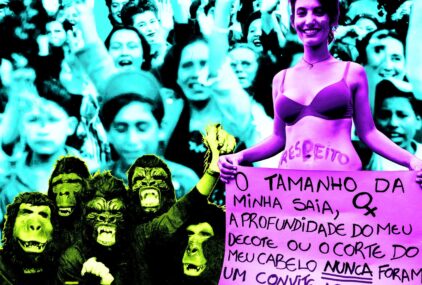
UFMG becomes a target of religious conservative politics for a visiting professor call
By Marco Aurélio Máximo Prado, Professor at the Psychology Department at UFMG In the last few weeks, the Federal University of Minas Gerais (UFMG) has
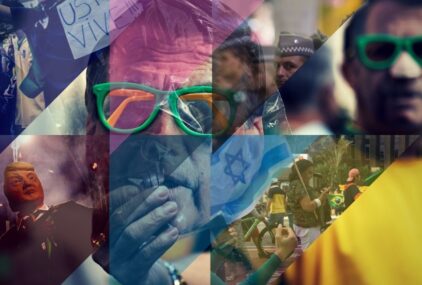
Brazilian presidential election: a perfect catastrophe?
By Sonia Corrêa Time to mourn Politics is both reasoning and affect. This is how the first version of this essay, written in the immediate aftermath

Sexual Politics in January and February 2019
#Hail International Women’s Day 2019: struggle, endurance, resistance! #Eyes on Brazil From an insider´s point of view, observing Brazilian politics after January 1st is like being caught
Sexual politics round-up in 2018
As 2018 reaches its end, SPW publishes a recollection of main events, trends, discoveries and challenges as we start 2019 and prepare for all the

The Brazilian 2018 Election: A perfect catastophre?
Read Sonia Corrêa’s article on the antecedents, outcomes and meanings of the 2018 Brazilian presidential elections.
Sexual politics in October 2018
The Brazilian perfect storm We apologize for the delay in the circulation of SPW’s October 2018 monthly announcement due to the stormy process and result
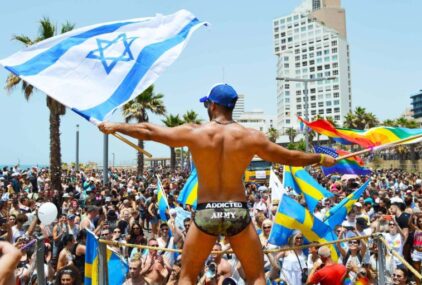
Pinkwashing: The promised land beyond the rainbow
Text by Berenice Bento (UnB) published at Outras Palavras, on Dec. 12, 2018. Translated by SPW. Available here. At first glance, nothing seems stranger to
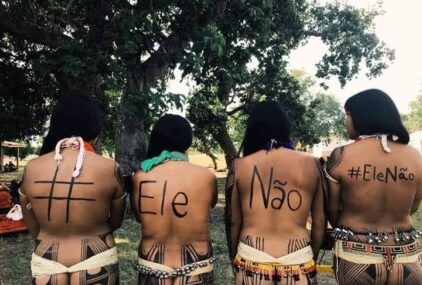
How women can decide the Brazilian election
By Isabela Oliveira Kalil[1] An article published by The New York Times, on September 24, examined the Brazilian presidential election scenario and defined Jair Bolsonaro,
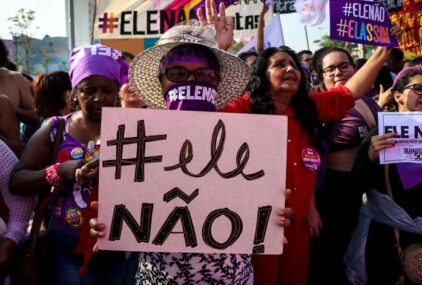
Women in the 2018 Brazilian elections: paradoxes and democratic resistance
By Denise Mantovani[1] and Maria Lígia Elias[2] It is not easy to analyze an electoral context in “real time”. But we cannot, however, escape from examining
Sexual politics in September 2018
September is the key moment of the year in the global struggle for abortion rights, as the 28th marks the International Safe Abortion Day. In

Sexual politics in August 2018
#MourningMuseuNacional: As this announcement was being finalized, the Brazilian National Museum burned in flames. A singular and irrecoverable collection of the country’s historical and cultural
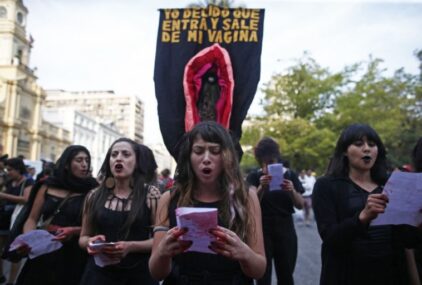
The Chilean Catholic Church and its crisis
By Jaime Barrientos Chile began 2018 with a visit from Pope Francis. The country still remembered the one paid by John Paul II who, in

QueerMuseum: In Defense of Difference
Text originally published at Artememoria. Available here. Curator Gaudêncio Fidelis on Queermuseum, his exhibition that was closed down because of pressure from the far-right. INTERVIEW
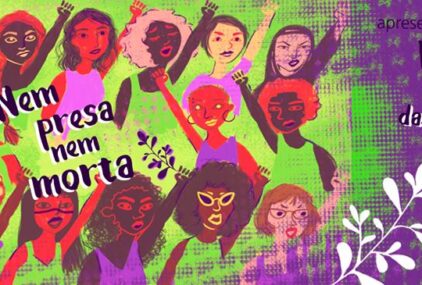
Festival ‘For Women’s Lives’ gathered feminists across the country
By Angela Freitas Feminists, networks and organizations engaged in the struggle for the right to abortion in Brazil had two months to prepare a mobilization
Brazilian Supreme Court Public Hearing on the Decriminalization of Abortion
Download Sonia Corrêa’s article on the public hearings for abortion decriminalization in Brazil — a landmark event in the feminist struggle for abortion rights.

The diversity in the São Paulo LGBT Pride Parade and the State of Israel
By Marco Aurélio Máximo Prado “I contend that these values all derive from important Jewish sources, which is not to say that they are only
Sexual politics in July 2018
22nd International AIDS Conference: On July 22, Pedro Villardi, from GTPI-ABIA, participated in the Challenging Criminalization Globally Pre-Conference, one of the more important satellites events
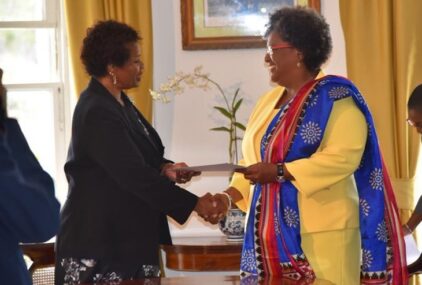
Social justice in the time of austerity: the promise(s) of Mia Mottley
By Roberta Clarke On May 24th, Mia Mottley became Prime Minister of Barbados with her Barbados Labour Party (BLP) winning all thirty parliamentary seats. This
Sexual politics in June 2018
Main global trends ICD Reform – On June 18, the Working Group set up by the World Health Organization (WHO) released the final version of
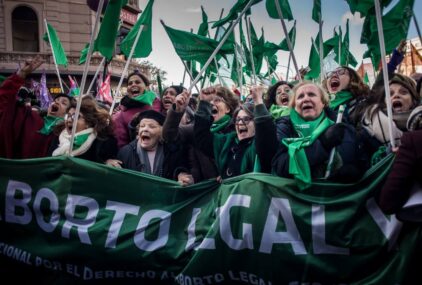
The green tide
Three Argentinean partners who work on gender, sexuality and abortion matters generously share their views on key undercurrents of the process leading to the partial
Abortion rights in Brazil: the institutional debate, international effects on the media
By Fábio Grotz and Sonia Corrêa A new chapter of the ongoing institutional debate on abortion rights in Brazil is scheduled for August 3rd and
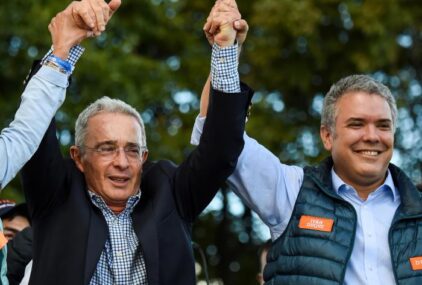
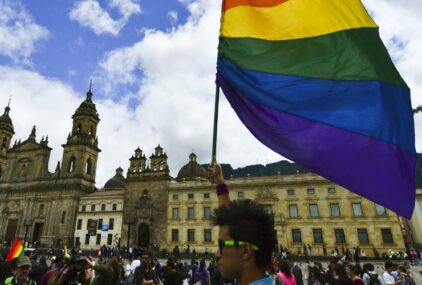
Gender and sexuality in the Colombia elections
By Franklin Gil Hernandes Apparently, attacks on “gender ideology”, quite central to the 2016 peace referendum, were peripheral in the 2018 Colombian presidential campaign.
BBC expands the coverage of abortion in Brazil: but at what cost?
By Fábio Grotz Since early June, BBC Brazil — possibly with a view to feeding the national debate around ADPF 442/2017 or perhaps as a
Assessing gender and sexuality politics in the Colombia elections
By Sandra Mazo Cardona An inside look from gender and sexuality on the circumstances that led to Duque’s victory in the Colombian presidential elections On
Sonia Corrêa’s Talk at the Gender Threat(ened) Colloquium (UERJ, 2017)
Watch Sonia Corrêa’s speech ‘Gender Ideology: tracking its origins and meanings in current gender politics’ at the Gender Threat(ened) conference in Rio de Janeiro’s State
Sexual politics in May 2018
Nicaragua: SPW calls attention to the violent political crisis sweeping through this small Central American country and expresses its solidarity with the Nicaraguan society that

Gender Ideology: tracking its origins and meanings in current gender politics
By Sonia Corrêa In the first week of November 2017, Judith Butler was viciously attacked in Brazil by a heterogeneous group of actors who define themselves as
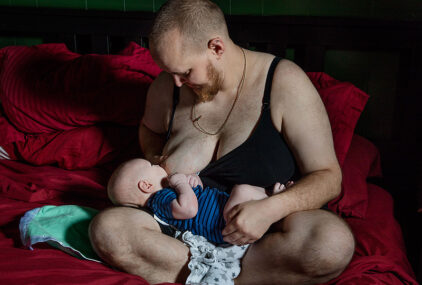
Political mythology on abortion and trans men
Blas Radi (Universidad de Buenos Aires)[1] The sexual and (non) reproductive health of trans men is a challenging issue. In the first place, because it
Brazilian abortion rights landscape
We gather here our monthly briefing writing efforts on the international context in regard to the state of the art and developments of abortion rights
SexPolitics Trends & Tensions in the 21st Century
Click here to access the website of the series SexPolitics: Trend & Tensions in the 21st Century Sexuality Policy Watch (SPW) launches the fourth publication of

Report of the Durban Seminar
On July 13-15th, 2016 Sexuality Policy Watch organized the seminar/workshop SexPolitics: Mapping Key Trends and Tensions in the Early 21st Century in Durban, South Africa.

Sexual politics in March and early April 2018
On March 14th, 2018, Marielle Franco and her driver Anderson Gomes were brutally assassinated in a shootout a week after Women’s International Day. Marielle was
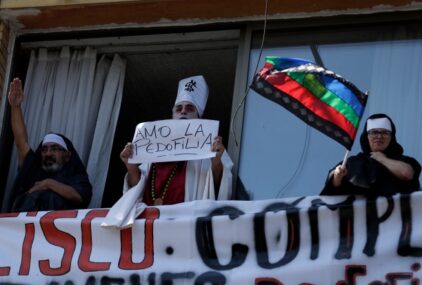
The Pope’s visit to Chile: the limits of the ‘Francis phenomenon’
By José Manuel Morán Faúndes Things did not turn out as expected in Chile. Pope Francis, whose image as a charismatic leader sharply contrasts with
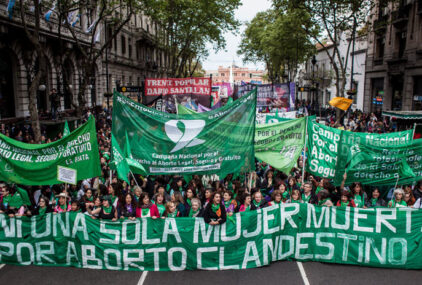
Argentina: abortion came out of the closet
By Victoria Pedrido On March 20, five draft bills to pass the Voluntary Pregnancy Termination law were debated by Commissions in Parliament. Of those, one

Can a subaltern speak?
Can a subaltern speak? No, is the response of the feminist philosopher Gayatri Spivak, when she realizes that to “have the right to a voice” the place of the subaltern must be subverted.
Sexual politics in February and early March 2018
Main global trends Another mass shooting in Parkland (Florida) shocked the US and the world. Research findings that gained visibility after the tragedy reveal that

Abortion and gender identity in Brazil in the midst of uncertainties
By Sonia Corrêa Brazilian abortion and sexual politics continue ensnarled by the uncertainties of the overall political environment. On February 16th, a presidential decree determined
Sexual Politics in January 2018
In January of 2018, a fierce transnational feminist controversy erupted on the question of sexual harassment. In the same week of the Golden Globes Award

Evoking Teresita de Barbieri
By Sonia Corrêa In late January 2018, three people departed whose voices, or better said whose writings, inhabit very special places in my memory and
“We lost Teresita De Barbieri!”
Remembering Teresita De Barbieri who passed away on January 21, 2018. By Ana Laura de Giorgi Uruguayan, feminist and academically committed. First exiled in Chile, then
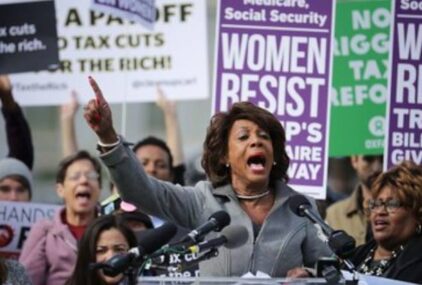
#ReadOurSigns: on the ground from the L.A. Women’s March
By Magaly Marques Los Angeles, January 21st, 2018 The best part of a protest or demonstration is to witness the creativity with which people express
Sexual Politics 2017 Round-Up
As 2018 begins, SPW highlights the main events and trends as well as tensions and challenges traversing sexual politics worldwide. Trends and Facts January In

Judith Butler attacked in Brazil: a briefing
By Sonia Corrêa In the third week of October 2017, an array of openly right-wing formations comprised of the Catholic hierarchy, evangelical Christians, conservative psychologists
Sexual Politics in November 2017
In Europe, the rise of the extreme right – which implies both the deepening of racism and a threat to gender and sexuality-related rights –
Testimonies on #metoo
By Peggy Antrobus On 21 October 2017 Today is the 43rd anniversary of the murders of my two younger sisters, Jenny and June. They were
Sexual Politics in October 2017
October began with the International Day of the Girl on the 11th when the media attention was towards highlighting how access to education, especially in some

Sexual politics in Brazil: the conservative restoration a further step ahead #2
By Rajnia de Vito and Angela de Freitas In order to properly situate sexual politics in Brazil (while paying special attention to abortion), we must
The Anatrella case and the silence from the “family defenders”
What happens when a big name of the anti-gender crusade is involved in a sex scandal? By Rogério Diniz Junqueira* Monsignor Tony Anatrella is a
Vik Muniz writes about censorship in Brazil
By Vik Muniz In Brazil, evangelical politicians and a conservative press are working to suppress art by forcing museums to shut down or reject shows,
Sexual politics in Brazil: the conservative restoration a further step ahead
As SPW readers know, for some years now Brazil has been undergoing regressions in gender and sexual politics and, since last year, a full conservative
Sexual Politics in September 2017
September is the key moment of the year in regard to abortion rights, as the 28th marks the International Safe Abortion Day worldwide. As informed

Sexual Politics in August 2017
Two outstandingly positive news are to be reported in sexual politics worldwide in August 2017. In India, the Supreme Court issued a groundbreaking decision on
What is the latest news on the abortion rights front in Brazil?
By Carla Batista and Sonia Corrêa* In November 2016, the first bench of the Brazilian Supreme Court, in a judgment of a habeas corpus of
Sexual Politics in July 2017
In July, once again, contradictory trends were registered in the abortion frontline. In Chile, the processing of a bill aimed at legalizing abortion in three cases
Farewell: Barbara Hau’ofa
by Seona Smiles. Barbara Hau’ofa was a quiet, modest person who nonetheless justifiably stood out in a crowd. For a start she was extremely tall and slim. As her short chubby friend who was seen constantly in her company on the University of the South Pacific campus, I believe we were nicknamed ‘Bat and Ball’.
Sexual politics in June 2017
June is LGBTIQ Pride month worldwide. This SPW brief highlights events around the world, prioritizing parades and other demonstrations that are not captured by mainstream radars. In that regard, we also recommend the readers who read Spanish to peruse the new blog Orgullos Críticos which examines trends and traps implied in the growing normalization and pinkwashing of pride parades
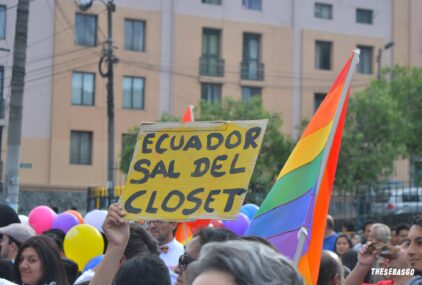
Sexual politics in Ecuador in the 2000’s: a bird’s eye view
By María Amelia Viteri and Gabriel Ocampo. Homosexuality was criminalized in Ecuador until November, 1997[1]. As a result, until then, lesbian, gay, bisexual and transgender persons were considered criminals, could face imprisonment and were often tortured and even killed.
Queer Asia 2017 – Conference Review
By Matthew Waites. The Queer Asia conference has emerged as one of the most fresh and ground breaking conference events in global queer studies. The event is held at the School of Oriental and African Studies in London, yet the organising team nevertheless managed to bring together presentations
The mountain delivered a pope
By João Manuel de Oliveira. The legend says that Portugal is a conservative country with a supposedly glorious past, whenever colonization and its engagement with the slave traffic eliminated from the equation. It is also described as a profoundly religious country, deeply marked by the influence of endemic Catholicism. Sociologists, using an equation
Sexual Politics in April and May 2017
In April and May, Brazilian crisis has deepened further more, prompting colossal political chaos which reverberated in sexual politics. Sonia Corrêa, SPW co-chair, assess the deep connections within the crisis regarding threats to abortion rights. Celebrations and good news came from around the world. In Bangkok, researchers and activists gathered
Brazil: under the shadows of chaos a major threat to abortion rights
As this highly volatile and complex political context was building up, PEC 29/2015, the Constitutional amendment on the right to life from conception — tabled by Senator Magno Malta in 2015 and dormant ever since in the Committee on Constitution and Justice — was re-introduced for rapid processing.
Sexual Politics in March and early April 2017
In March and early April, the abortion frontline in Latin America has been remarkably eventful, in positive ways. In Bolivia, the proposed revision of abortion
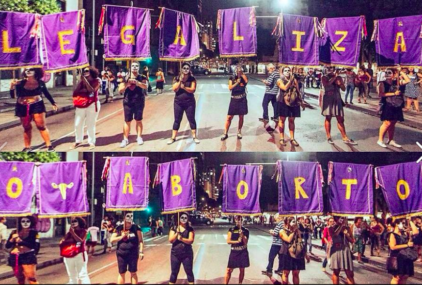
Brazil: Abortion rights at the Supreme Court
The criminalization of abortion by the 1940 Brazilian Penal Code is incompatible with women’s fundamental rights enshrined in the 1988 Federal Constitution. This premise grounds the petition presented to the Supreme Court (STF), on March 7th 2017

Brazil: Abortion lawsuit at the Supreme Court
By Sonia Corrêa On March 7, a lawsuit (ADPF 442) was filed at the Brazilian Supreme Court to challenge the constitutionality of the Penal Code’s
Sexual Politics in February and early March 2017
There are many events to be reported in regard to abortion rights in February and early March 2017. The most important comes from Brazil where
Diversity in the Constitution of Mexico City
by Gloria Careaga* Differently from other Mexican states, Mexico City, the Federal District of the Republic, did not have its own Constitution until February 5th,
Sexual Politics in January 2017
In January, the first and foremost events to be reported are avalanche of draconian and regressive policy measures adopted in the chaotic first two weeks

The Trumping of global sexual politics: a preliminary assessment
By Sonia Corrêa In the first two weeks of his administration Donald Trump has opened a can of worms spreading around draconian and regressive conservative
The Women’s March on Washington was inevitable
With endorsement of the Republican Party, the Trump campaign openly disrespected and insulted more than half of the US population and this led to what can be described as a “pressure cooker effect”. After months of an unprecedented election season when Hillary and all women were mistreated by the candidate — who felt entitled to abuse his position– and sometimes also by the press; after outrageous remarks and threats to attack immigrants, Muslims, Mexican-Americans and the entire American population of African descent, the build up of outrage was steaming from coast to coast.

Sexual Politics Round-up in 2016
As 2017 begins, SPW highlights the main events and trends as well as tensions and challenges traversing sexual politics worldwide. January In January, the Zika
Sexual Politics in late October and November 2016
November began with a resounding shift in global politics: Donald Trump was elected president of the United States. As the reactions flooded through the world
Brazilian Supreme Court opinion re-ignites the abortion rights debate
In the midst of the conservative restoration that has swept Brazil in 2016, on November 29th, the First Chamber of the Brazilian Supreme Court – in which five of the eleven judges have a seat – has issued, an unexpected decision arguing in favor of decriminalization of abortion
Diverse voices: civil society at the 8th BRICS summit
By Laura Trajber Waisbich . As a first exercise, we will give a brief background to how social participation has been played out in the BRICS. After one full cycle of BRICS chairmanships, since South Africa joined the group in 2011, civil society engagement with the BRICS (both at the national level and internationally) has evolved significantly, albeit in a setting constantly full of obstacles.
The controversy surrounding gender: a central question of (sexual) politics in Colombia
By Mara Vivero. In this text I will present some elements on gender ideology, its antecedents and contemporary uses and secondly I will refer to the Colombian case, as one of the cases in which the term “gender ideology” has been used as part of a conservative rhetorical strategy to the constant interfaces between religious and political sectors that oppose the changes that have occurred in society in terms of gender and sexuality.
Brazilian Supreme Court decision re-ignites the abortion rights debates
In the midst of the conservative restoration that swept Brazil in 2016, the First Chamber of the Brazilian Supreme Court, where five of the eleven
Local Representation and Party Politics: Transexual and Travesti Candidates in Brazil
At a time in which electoral processes are undermining democracy not only in Brazil, but also in many other countries, electoral results can give in sight to many questions regarding the foundations of the democratic process.

US Elections: A statement from Judith Butler
There are two questions that voters in the US from the left of center are asking themselves: Who are these people who voted for

The Sexual Politics in September and early October 2016
Last month a large number of events took place across the globe to mark September 28th as the Global Day of Action for Access to
September in Brazil: retreats and resistance
September 2016 began under the government of Michel Temer, whose intermediary presidency governed Brazil from May to August while awaiting the results of the impeachment
Vitit Muntarbhorn: new UN investigator to protect LGBT
The UN Human Rights Council has nominated its first independent investigator aimed at protecting people in regard to sexual orientation and gender identity across the

Emerging Powers, Sexuality and Human Rights at the AWID Forum
The session examined how the geopolitical shifts implied in the articulation of these global South countries in new blocs, especially the BRICS, has generated expectations that this emergence of “powers from the South” would eventually open up space for new platforms for the political work on sexuality, gender and human rights, that would not be caught by overlapping North-South tensions (or post-colonial effects) that perennially cross these fields of debate.
Key Trends and Tensions in sexual politics: a commentary
It also seemed to me that the general mood of pessimism came from the fact that most of the meeting’s participants were not digital natives, not exactly the ”globalized children”. This meant – again, with notable exceptions – that we still saw activism and policy advocacy

Sexual politics in August 2016
In August, the Rio Olympic Games provided a privileged stage for the critical observing of gender and sexuality performances. Several SPW partners positively and generously
Sexual Justice and political culture in Colombia
by Franklin Gil Hernández [1] The implementation of sexual and reproductive rights in Colombia can be described as ”half way done”. In all areas in
Olympics 2016: a preliminary overview over sex work
The Prostitution Policy Watch is preparing a report on the effects of the 2016 Rio Olympic Games on sex work in the city. The survey
Female Sexuality at the Rio Olympics: many paradoxes
by Laura Molinari Alonso and Jimena de Garay The 2016 Olympics have been portrayed as the women’s Games. In fact, 2016 has seen the highest
Where were the trans bodies in the Rio Games?
by Leonardo Peçanha The Rio Olympic Games were a landmark in regard to gay and lesbian athletes openly disclosing their sexual orientation. This visibility and
The ‘sexual games’ are over: what’s next?
Since August 5th, as in an extended Carnival, ordinary life in Brazil, particularly in Rio, was suspended. At their end the Olympic Games 2016 have
After the games: another abortion death
As soon as the Olympics were over, Rio — the city that projected the global image of a new Mount Olympus of fit and sensual
Sexual politics in July 2016
Between July 12th and 15th, right before the Durban International AIDS Conference, SPW organized a seminar in Umhlanga, the Northern District of the City.
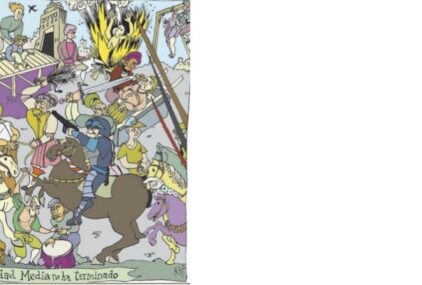
The problem is ‘criminal law’
by Sonia Corrêa “The discourses that legitimize punitive power, as established in the middle Ages, are in full force. This is when criminology was born


Sexual politics in June 2016
The proposal launched in May by the LAC 5 countries for the creation of a Special Mandate on Human Rights and Sexual Orientation and Gender
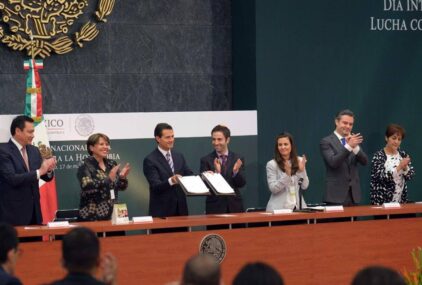
The ‘state’ and sexual politics: An interview with Gloria Careaga
On March 2016, we relaunched our Spanish website that (among other things) provides access to the Spanish translation of Queering the Public Sphere in Mexico
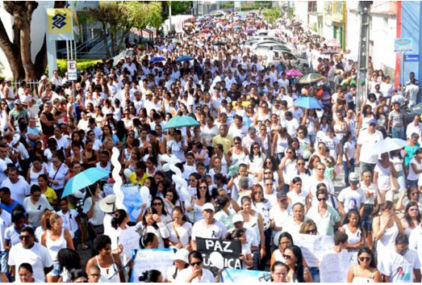
Brazil in crisis: Another update
In June, 2016, as the impeachment of Dilma Roussef followed its course, it became increasingly evident that one of the strongest motivations of the power maneuvering that led to the April parliamentary coup was the interest of many of those supporting this move to strangle the ongoing investigations on corruption.
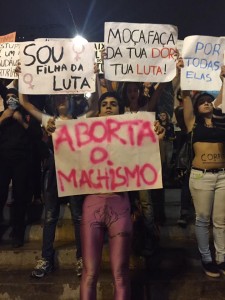
Sexual politics in May 2016
As the Brazilian crisis continues unfolding it gets increasingly intricate with gender and sexuality politics. Read Sonia Corrêa and Fábio Grotz report on what happened
UN Human Rights mandate on SOGI
At the UN Human Rights Council the LAC Group 5 – formed by Argentina, Brazil, Chile, Colombia and Uruguay – announced the decision to submit
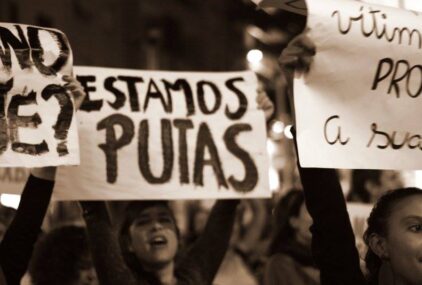
Brazil: The conservative restoration and sexual politics
It is not exactly to keep track of the Brazilian political development these days. On May 11th, the Brazilian Senate confirmed the admissibility of the impeachment of President Dilma Rousseff, which had been approved by the House on April 17th.
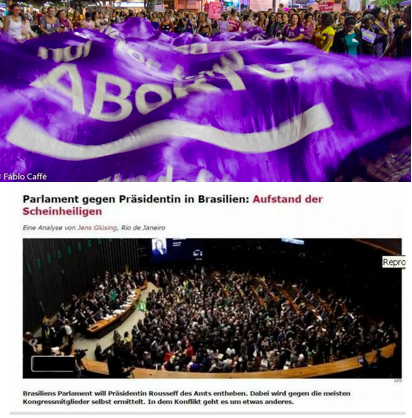
Sexual Politics in April 2016
A new wave of deadly attacks against human rights and secular activists is at play in Bangladesh. In final April, two LGBT activists were hacked

As the Brazilian crisis unfolds, the abortion frontlines keep burning
Since our reports of early 2015, SPW has always linked developments in the abortion debate to the on-going Brazilian political and economic crisis. On April 17th, 2016, this crisis reached an initial point of culmination when the House of Representatives voted for and approved the admissibility of the impeachment of President Dilma Rousseff.
Brazilian state violence: one more episode
Luana Barbosa dos Reis Santos was brutally killed by Brazilian cops in the city of Ribeirão Preto (São Paulo) in early April. She was taking
An unamed letter from Bangladesh regarding the murders of LGBT activists
SPW shares an unnamed letter written by Bangladesh activist after the murders of LGBT activists in the Asian country in the past weeks. The letter

“Underage” sexuality: the tragic effect of draconian criminal laws
As underlined by Michel Foucault in his writings, in modern times, children and adolescent sexualities have been under close and systematic surveillance. While in the
The sexual politics in March and early April 2016
We have the great pleasure to inform that our Spanish page has been re-launched. In this opportunity Alejandra Sardá from Akahatá has written an update

Let’s be diverse but docile: The “Revolution of joy” has arrived A few reflections on the new Argentinean government’s sexual politics
In an article written for SPW, Alejandra Sardá-Chandiramani, from Akahatá, analyzes the sexual politics scenario after the 2015 elections. In her own words: The open
Brazilian abortion politics: An update
During 2015, as previously reported by SPW, Brazilian abortion politics continued to evolve under pressures created by the unsettled intersection of regressive policy trends (which have been gaining strength since the mid 2000’s) and the macro-political crisis which has overtaken the Brazilian res publica.
The sexual politics in February 2016
In February, there were good news to report from both Haiti and Europe. In the case of Haiti, the Penal Code reform is underway and
OHCHR Report on the Contribution of the family to the realization of the right to an adequate standard of living for its members
In July 2015, during the 29th Session of the Human Rights Council, as reported by SPW and many other sources, a Resolution on the Protection
The many places of prostitution
In late November, 2015, the Institute of Philosophy and Social Sciences of the Federal University of Rio de Janeiro (IFCS/UFRJ) hosted a one week course
Mourning Lohana Berkins
On February 5th, the Argentinean trans leadership Lohana Berkins has departed. Lohana was recognized worldwide as a champion of trans rights as well as a
Sexual Politics in January 2016
The global epidemics fueled by the mosquito-born Zika virus, its potential correlation with microcephaly and the connection with abortion rights is one main headline in

Zika and abortion rights: Brazil in the eye of the storm
If things had gone well, 2014 would have been the perfect year to commemorate the positive developments of sexual and reproductive health and rights in Brazil.
2015 Sexual Politics Round- Up
As the year heads toward its end, SPW recollects main trends and facts in sexual politics worldwide. January Pope Francis drew global attention after urging
Sexual Politics in November 2015
As we were finalizing the compilation of sexual politics related events that make the headlines in November the screens were taken over by the armed
Feminist occupations
October and November 2015 will be marked in the Brazilian calendar as a colorful time of feminist occupations. Feminist bodies, voices, lemmas, writings, images have invaded the streets, social networks, the male writers op-ed spaces in the mainstream press. Feminist voices of all ages and social strata arose everywhere to make clear that we have had enough.
The Sexual Politics Landscape in October 2015
Check the main facts in October 2015. We highlight the Stop Trans Pathologization Campaign 2015; the Synod on the Family’s final statement; Brazilian feminists protests against partially approved legislation that criminalizes providing information and assistance in regard to abortion; and the Indonesian regressive law against sexual freedom.
Revisit the SPW Regional Dialogues
Between 2009 and 2011 SPW has been engaged in a critical reflection on Sexuality and (Geo) Politics that involved regional dialogues in Asia, Africa and
Brazil: Feminists take the streets against Cunha and Bill 5069/2013
As it has been systematically reported by SPW in the last few months, Brazil is now a battleground in regard to the right to legal
The Sexual Politics Landscape in September 2015
At the global stage, one even to be highlighted was the launching of the Sex Work Law Map, produced by the Institute of Development Studies.
Abortion politics in Brazil: a wider frontline to cope with
The front slide image is a detail of Social Fabric, a drawing by the Brazilian artist Rosana Paulino Article by Sonia Corrêa and Fábio Grotz *
The Sexual Politics landscape in August 2015 and early September
SPW has the great pleasure to announce the publication of Working Paper nº 11 Emerging Powers, Sexuality and Human Rights: Fumbling around the elephant. Authored

Struggling for legal abortion in Brazil: The Congress frontline
Image: Barbara Kruger By Sonia Corrêa[1] As previously reported by SPW (here and here), for some time now, growing obstacles have been impairing any movement
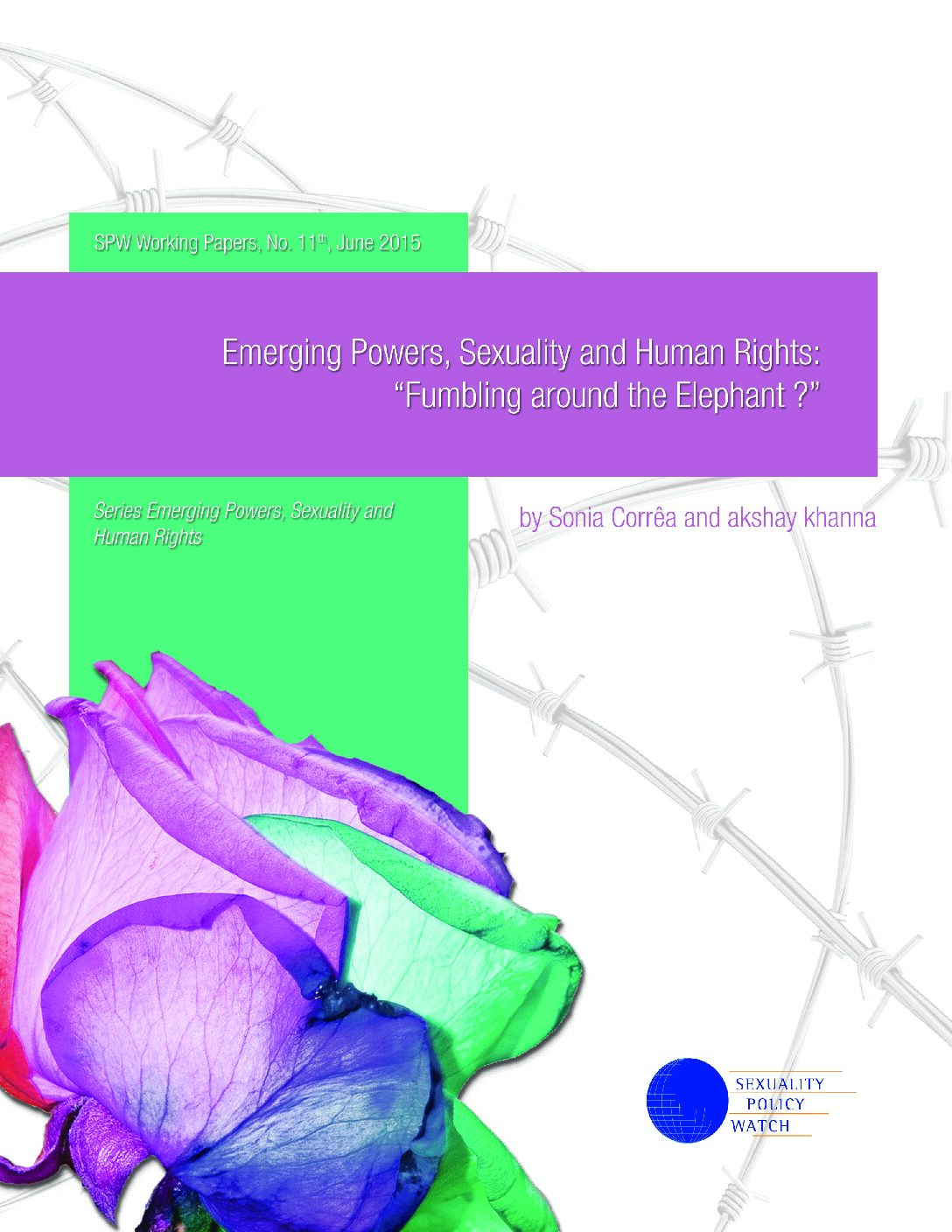
Working Paper No. 11 – Emerging Powers, Sexuality and Human Rights: Fumbling around the elephant, by Sonia Corrêa and akshay khanna
In 2013, in collaboration with partners, SPW began a new line of work that examines the intersections between geopolitical trends — coalescing around the “emergence”
Pope Francis’ decision to forgive women who have abortion is criticized by reproductive rights advocates
Pope Francis once more gained global visibility by allowing priests to forgive women who have had an abortion. His speech — delivered on September first
The sexual politics landscape in July 2015
In July the hottest topic to be reported on is, undoubtedly, the global controversy that emerged when Amnesty International made public a draft policy defining
Loss and gain in recent UN debates on ‘the family’
Written by Fábio Grotz (in collaboration with Sonia Corrêa) Since the heyday of preparation for the International Conference on Population and Development (ICPD, Cairo, 1994),
Sex work and human rights: Under the shadows of (de) regulation
Michelle Agnoletti [1] In July 2015 a heated controversy around sex work and human rights erupted globally. A campaign was launched by international organizations that
UN Committee on Human Rights discusses the right to life
Sonia Corrêa The UN Committee on Human Rights is developing a new General Comment on Article 6 of the International Covenant on Civil and Political
The Belize Pride Event: the overlapping of LGBT tourism and sexual politics
Gay and lesbian tourism companies have, in the past several years, taken a turn for the calculative. More and more, we are seeing rankings like Spartacus International Gay Guide’s “Gay Travel Index” which purport to determine which countries are the friendliest for gay and lesbian tourists, and which are not.
The challenges of a “progressive” Pope
by Juan Marco Vaggione Since his inauguration as the new pontiff, Bergoglio has generated new complexities for those of us who think that it is
Sexual Politics in June 2015
On June 18th, the Vatican launched the encyclical “Laudato Si – On Care for Our Common Home”. The encyclical is the first one to have
Gloria Careaga Perez: Towards a society based on rights and freedoms
By Gloria Careaga Perez Since 2009, when same sex marriage was legalized in Mexico City, obbstacles faced by same-sex couples to be granted full rights

Caitlin Jenner and Rachel Dolezal: The conceptual and political challenges undergirding the contrast between transexuality and transraciality
In the first week of June 2015, two articles have reached us that spoke to the unabated tensions – and perhaps unresolvable – tensions between those streams of feminism that deny the validity and ‘authenticity’ of female transgender identities and experiences.
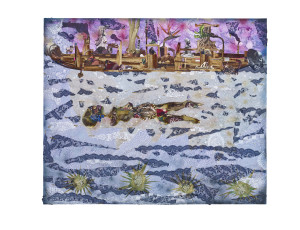
Wangechi Mutu creates Africa’s Out
Since very early in time SPW has included Sexuality and Art as one topic of its Newsletter. In doing so we aimed at making visibility
The veil conflicts unabated
In Sexuality, Health and Human Rights (Corrêa, Parker and Petchesky, 2008) we have examined the early 2000’s French controversies, which led to the banning of
Working Paper No. 10 – Emerging powers: Can it be that “sexuality and human rights” is a ‘lateral issue’?, by Sonia Corrêa
This article shares ideas discussed in the project first round of conversation, which was held in Rio in July 2013, and includes an analysis – originally presented at a panel at Conectas’ 13th International Human Rights Colloquium, held in São Paulo in the same year – on the way rising powers, since their emergence, have behaved in multilateral debates around human rights, gender and sexuality. It has been originally published in the 10th Anniversary commemorative edition of SUR Journal (Edition V.11-N.20- Jun/2014)
Sexual politics in May 2015
In early May, SPW re-launched its website. Its new architecture allows an easier access to our products, publications and other contents. In particular, we call
Revisiting intersectionality
In Biopolitics at the Crossroads of Sexuality and Disaster: The Case of Haiti, Rosalind Petchesky begins her reflections by sharing a definition of intersectionality: “An
Sexuality around the world: Main debates
_______________________________________________________ Relevant meetings The V Conference of ILGA-LAC was held in Curitiba, Brazil, from January 26th to 30th, 2010. Regional highlights > Read these information
Ecuador’s Left punishes women rights
by By Manuela L. Picq* A debate on abortion suspended the voting on the new penal code in the Ecuadorian Congress this week. Congresswoman Soledad Buendía,
Working Paper No. 9, by Justin Perez & Indian LGBTQI community issued an open letter to the editors of Bangalore Mirror
SPW presents its Working paper n. 9, in which Justin Perez (Univesity of California, Irvine) procedes to a critical understanding of lesbian and gay tourism,
Criminalization of Abortions Among Young Women: Analysis of the Public Safety and Justice Systems in Rio de Janeiro
Read the article Young Women: Analysis of the Public Safety and Justice Systems in Rio de Janeiro, by Carla Gomes and Beatriz Galli.
The abortion frontline in Brazil: one step forward
Fábio Grotz & Sonia Corrêa Abortion is criminalized in Brazil, except in the cases of woman’s life risk, rape and anencephalic mal formation of the
CAL’s victory at the ACHPR: Many reasons to celebrate
by the SPW team In the statement, that appraises the decision of the African Court on Human and People’s Rights in granting observer status the


The Brazilian Resolution
In collaboration with Arc International and Action Canada for Population and Development (ACPD) SPW has organized an international consultation involving LGBT activists, from all over

Sexuality and Politics: Regional Dialogues from the Global South
Sexuality Policy Watch presents the final outcomes of the regional Dialogues in Asia, Latin America and Africa and of one inter-regional meeting that took
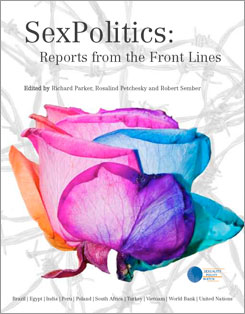
E-book SexPolitics: Reports from the Front Lines
SPW is very pleased to announce that SexPolitics: Reports from the Frontlines launched last year is now available in Spanish – Políticas sobre Sexualidad: Reportes desde las líneas del frente. This e-book is the result from a global research project initiated in 2004 to examine the dynamics of sexual politics in eight countries – Brazil, Egypt, India, Peru, Polonia, South Africa, Turkey and Vietnam – and two global institutions: the United Nations and the World Bank.
Sexual and reproductive rights global landscape in March 2015
Women’s, feminists and other civil society NGOs from Latin America and the Caribbean launched a statementcriticizing the Political Declaration approved by Members States Monday 9
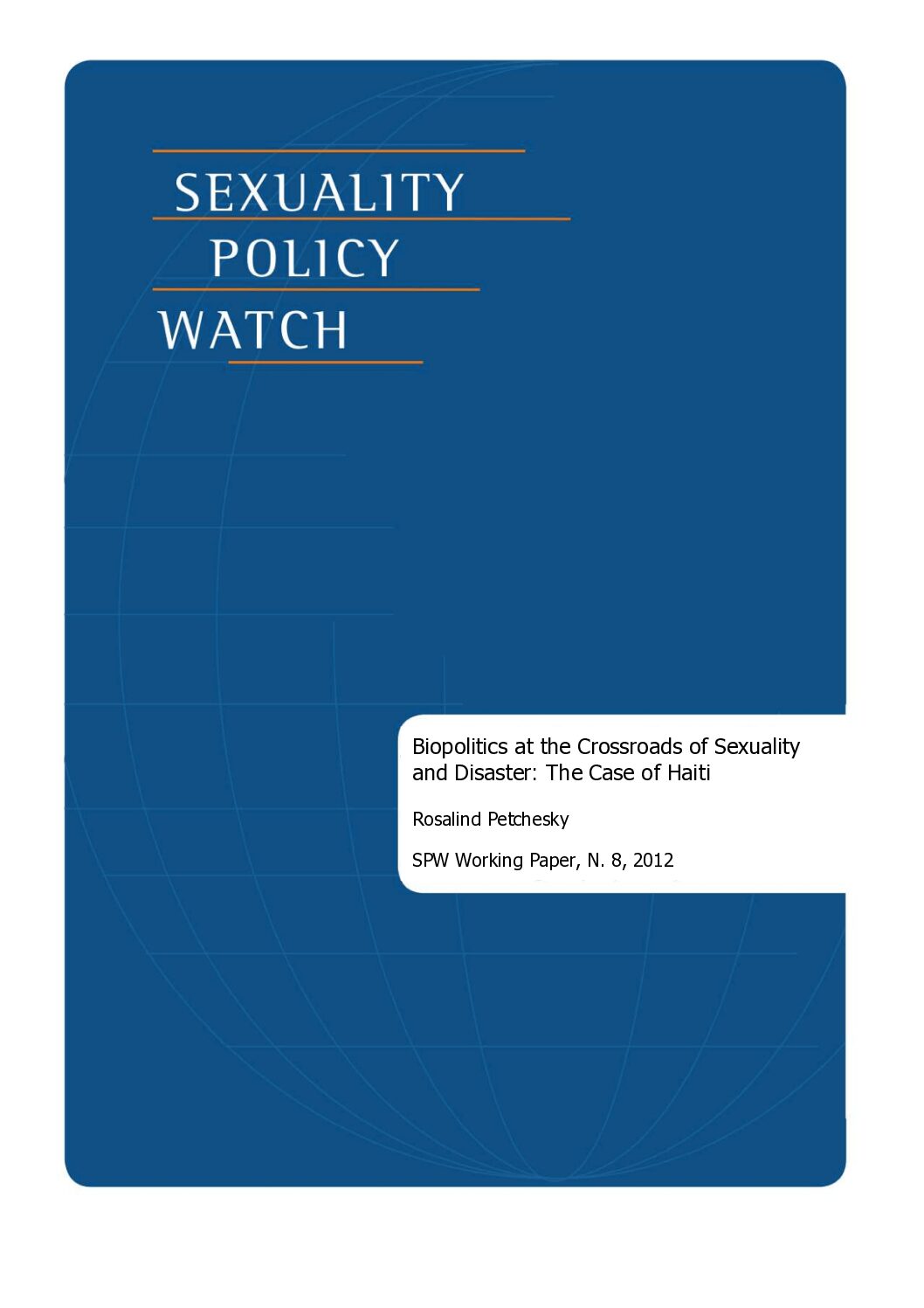
Working Paper No. 8 – Biopolitics at the Crossroads of Sexuality and Disaster: The Case of Haiti, by Rosalind P. Petchesky
SPW Working Paper N. 8 presents the remarkable analysis developed by Rosalind Petchesky, member of SPW Steering Committee, on the biopolitics of the militarized humanitarian
Sexual and Reproductive Rights Global Landscape in February 2015
No major event has been registered by our radars at the sexual and reproductive rights global landscape in February. But we would like to recommend
Working Paper No. 7 – The global context: Sexuality and geopolitics (selected texts)
In the Working Paper The global context: Sexuality and geopolitics, find the following selected texts from SPW Newsletters N. 10 and N. 11: Reflecting on
Sexual and reproductive rights global landscape in January 2015
In January, reproductive rights have invaded the front pages and screens under the impact of Pope Francis’ statementurging the faithful not to reproduce as “rabbits”.

Sexual politics in Post Soviet countries, by Anna Kirey and Yana Sitnikova
1. Part 1 – Intro and overview of the region https://youtu.be/_Bi8HvQjzwk 2. Part 2 – ‘Propaganda’ legislation and regulation of sexuality in the region https://youtu.be/vZ1YneaFIPc
Working Paper No. 6 – Some thoughts for Sexuality Policy Watch on The Global Gender Gap Report 2009, by Kate Bedford
In late 2009, the World Economic Forum (WEF) launched its new report on the Global Gender Gap Index, which gained immediate visibility in both global
Sexuality politics in 2014: A brief retrospective
April – In a landmark decision, Indian Supreme Court allowed transgender people to identify as a third gender and directed the central and state governments
Sexual and reproductive rights global landscape in November 2014
Among the main events in November, we highlight the Men Engage Symposium, held in Delhi, in which SPW was present with the participation of our
Working Paper No. 5 – Pope’s visit to Brazil, by Washington Castilhos
In 2007, the Pope’s visit to Brazil mobilized groups in opposition to the Vatican’s moral dogmatism. In support of these groups, SPW, in close collaboration
Special Working Paper – Sexual Minorities, by Rosalind Petchesky
The position paper The Language of ‘Sexual Minorities’ and the Politics of Identity, written by Rosalind Petchesky, in collaboration with Sonia Corrêa, Ignacio Saiz and
Sexual and reproductive rights global landscape in October 2014
In October the 10th anniversary of SUR Journal – International Journal on Human Right was marked by the publication of its 20th issue that comprises
Sexual and reproductive rights global landscapes in September 2014
One main highlight of the period concerns the politics of abortion in Brazil. Despite the tragic deaths of two women caused by illegal and unsafe
Working Paper No. 4 – Senegal: homophobia and Islamic political manipulation, by Codou Bop
Check out the Working Paper Senegal: homophobia and Islamic political manipulation by Codou Bop, a Senegalese journalist. She develops a particularly sharp insight analysis about on
Abortion and the general elections: a chronicle of announced tragedies
Jandira Cruz and Elisângela Barbosa died after resorting to unsafe clandestine abortion clinics. Their deaths are now inevitably interwoven with the 2014 intense and complex
Sexual and reproductive rights global landscape in August 2014
In August, the Sexuality Policy Watch (SPW) published the outcomes from the three Regional Dialogues organized in Asia (2009), Latin America (2009) and Africa (2010)
Sexual and reproductive rights global landscape in July 2014
In 2013, Sexuality Policy Watch began a new line of work aimed at critically examining how sexuality, gender and human rights can be located in
Working Paper No. 3 – Interrogating ‘Sexualities’ at Beijing+10?, by Angela Collet
SPW Working Paper 3, “Interrogating ‘Sexualities’ at Beijing+10?, written by Angela Collet, is an anlysis on the CSW and Beijing+10 process. Read it here.
Interview With Darkmatter—Janani Balasubramanian and Alok Vaid-Menon
Read interteview Janani Balasubramanian and Alok Vaid-Menon about South Asian-American queer activism. Here.
Article Newsletter N 14 – Vqueeram Aditya Sahay
The four figures of the law: Brief theoretical inquiries into the Queer movement’s relationship with law Vqueeram Aditya Sahay* This piece is about what the
Article Newsletter N 14 – Jordan Osserman
The 2013 Indian Supreme Court decision on section 377: beyond the law Jordan Osserman * While many LGBTQ activists across the globe expressed mourning, rage
Article Newsletter N 14 – Nitya Vasudevan
“When the light of our century may blind us” Nitya Vasudevan* When does the idea of a global solidarity threaten to compromise contextualised political struggles?
Article Newsletter N 14 – Gautam
Moving forward, perhaps: The 2013 India Supreme Court Decision on Section 377 Gautam Bhan* In the immediate moment, it simply felt difficult to breathe. It
Article Newsletter N.14 – Stella
The Paradoxical Geopolitics of Recriminalizing Homosexuality in Uganda: One of Three Ugly Sisters Stella Nyanzi* Uganda’s re-criminalization of homosexuality is not an isolated case, but
SPW Newsletter N.14 – July, 2014
SPW is on Twitter and Facebook! Follow @sxpolitics and like our Facebook fan page to read more on our activities and sex politics around the
Article Newsletter N 14 – akshay
The Queer body between the Judicial and the Political – reflections on the anti-homosexuality laws in India and Uganda akshay khanna* Nostalgia for a recent

Working Paper No. 2 – Bracting Sexuality: Human Rights and Sexual Orientation, by Ignacio Saiz
The SPW report, “Bracting Sexuality: Human Rights and Sexual Orientation”, written by Ignacio Saiz, analyzes the recognition of rights relating to sexual orientation within the
Sexual and reproductive rights in May and early June
Brazil In May and early June the Brazilian sexual politics scenario has winessed setbacks and authoritarian measures, particularly with regard to women’s rights. At the
Working Paper No. 1 – Global Implications of U.S. Domestic and International Policies on Sexuality, by Françoise Girard
The SPW report, “Global Implications of U.S. Domestic and International Policies on Sexuality”, written by Françoise Girard, was launched at the San Juan high level

Butterflies: a video by Vagner Almeida
Buttlerflies is an awarwed video directed by Vagner Almeida documenting the lives of young gay men and travesties in the poor outskirts of Rio de
Human Rights Speaker Series
On May 28th, Sonia Corrêa, SPW co-chair, spoke at the panel on Human Rights at the Global Stage, organized by the City of West Hollywood.
The 2006 International AIDS Conference in Toronto – Interview 7
These short vídeos document Sexuality Policy Watch activities at the 2006 International AIDS Conference in Toronto: a workshop to discuss the preliminary findings of the
Sexual and reproductive rights global landscape in March and early April 2014
Sexual and reproductive rights global landscape in March and early April 2014 During March and early April, Brazil was under the spotlight in terms of
Sexual and Reproductive Rights Global Landscape in January and February 2014
Dear friends, Around the World During January and February 2014, SPW has watched the development of anti-homosexuality bills in Nigeria and Uganda, as well as
Advances and setbacks in sexual and reproductive right’s landscape in 2013
During the year of 2013, sexual and reproductive rights were threatened by state decisions in various places around the world. At the year’s end, three
Global landscape on sexual and reproductive rights in November 2013
November was marked by two relevant facts in the sexual and reproductive rights landscape: the financing of Human Rights Campaign to promote LGBT rights and
Global and regional issues highlighted by SPW on October
In October 2013 our main themes were the following: On October 10, activist Gabriela Leite, who devoted her life to fight for the rights of
World facts highlighted by SPW on September
During the month of September, Sexuality Policy Watch has followed the global landscape of sexual and reproductive rights. In the Latin American scene, we highlighted
World facts highlighted by SPW in September 2013
During September, Sexuality Policy Watch followed the global landscape of sexual and reproductive rights. In the Latin American scene, we highlighted the Regional Conference on
SPW Newsletter N.13 – July, 2013
SPW Newsletter No. 13 landscapes the implications of the new papacy of Francis the First for the sexual and reproductive rights in Latin America. We invited five SPW partners: Daniel Jones, Diana Maffía and Juan Marco Vaggione, from Argentina; Edgar Ruiz, from Mexico; and Maria José Rosado, from Brazil to share their views on how this political shift at the Vatican will affect sexual politics in the region. We choose three authors from Argentina because we wanted critical assessments made by analysts more closely acquainted with Bergoglio’s trajectory and political style. Edgar Ruiz in his article provides a sweeping view of the new papacy from a wider Latin American perspective, and Maria Jose Rosado’s interview speaks more directly of the Brazilian context including concerns about the papal visit and its potential negative impacts.
SPW Newsletter’s 13 – author’s profiles
Maria José Rosado Sociologist. Teacher at the Pontifical Catholic University of São Paulo. She founded the Brazilian NGO Catholics for Free Choice. Her field of
As to more fully grab what is happening in Brazil
Read the new IDS Working Paper The Changing Faces of Citizen Action: A Mapping Study through an ‘Unruly’ Lens, which speaks of Brazilian contemporary experience of citizenship struggles.
International Day Against Homophobia and Transphobia (IDAHO) 2013
May 17th is the International Day Against Homophobia and Transphobia (IDAHO). In 2013, some 100 countries have reported activities to be held in remembrance of the Day and of the victims of homophobia and transphobia. We selected some of the amazing initiatives, which you can see here and get inspired to take part in this movement.
Transcription of the Brazilian NGOs original note
Read the “Transcription of the Brazilian NGOs original note,” with concerns on the ordinance published by the Ministry of Health of that allows states and municipalities to use, for “general health purposes,” those funds that had been originally transferred by the Union for the exclusive use of AIDS programs, but were not used until december 2011.
SPW Newsletter N.12 – October, 2012
SPW Newsletter No.12 aims to analyze how sexuality matters are debated in international human rights bodies, specifically within the recently reformed Inter-American Human Rights System and the United Nations Human Rights Council (UN HRC). In the case of UN HRC, this issue of the SPW Newsletter looks closely at the second round of Universal Periodical Review (UPR) of India and Brazil, held in May 2012. Our main goal was to explore how two of the so-called emerging powers have responded to the UPR process, if sexual and reproductive rights issues have or have not been addressed in these reviews, and how the Indian and Brazilian states have or have not reacted to recommendations made in relation to these topics. These brief analytical exercises provide interesting insights on the merits and limits of the UPR processes, as well the challenges implied in engaging with and monitoring these reviews.
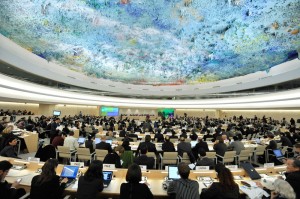
Sexual and reproductive rights at the 2012 Universal Periodic Review of Brazil
Read “INTRODUCTION: Sexual and reproductive rights at the 2012 Universal Periodic Review of Brazil”, written for the SPW Newsletter N. 12, based on analysis of Magaly Pazello, from EMERGE-Communication and Emergence Research Centre and Women’s Networking Support Programme of the Association for Progressive Communications (APC).
Interview: Camila Asano
For the Newsletter N. 12, SPW interviewed Camila Asano, Coordinator of Foreign Policy and Human Rights at Conectas Human Rights, who participated of the second round of the Universal Periodical Review (UPR) of Brazil, at the UN Human Rights Council (HRC), in Geneva, in May 2012. In this interview, Ms. Asano analyzed this mechanism for the human rights, explaining how this process works and highlighting recommendations to Brazil, challenges and perspectives. Read more.
The Inter-American Human Rights System is under threat: Implications for the Sexuality and Human Rights Agenda
Read “The Inter-American Human Rights System is under threat: Implications for the Sexuality and Human Rights Agenda”, written by Marcelo Ferreyra, Latin America and Caribbean Coordinator at Global Initiative for Sexuality and Human Rights – Heartland Alliance for Human Needs & Human Rights, for the SPW Newsletter N. 12.
Gender Identity Law in Argentina
Argentina: On April 24, 2012 the Senate Committees on General Legislation and on Population and Development signed in Buenos Aires an agreement that authorizes the discussion on the Gender Identity Law at the Argentine Senate to proceed. Read more.
SPW Newsletter N.11 – March, 2012
Starting with the issue No. 11, SPW Newsletters no longer provide detailed links to posted material, as they will have already been circulated through the announcements of new website postings. The newsletter will mainly focus on one or two pieces of substantive analysis addressing one key debate and, eventually, one key event that we consider to be have been critical in the global sexual politics landscape in the period immediately preceding the publication. Partners and collaborators are invited to share their views on these topics and the Newsletter No 11 is devoted to two key topics: the ongoing debate around the validity of aid conditionality as an instrument to protect LGBT rights and the current state of affairs of abortion reform in Uruguay. Good reading!
Abortion law reform in Uruguay: The state of art
For the SPW Newsletter No 11, Lilián Abracinskas, director of Mujer y Salud en Uruguay (MYSU), wrote the article “Abortion law reform in Uruguay: The state of art”, presenting the current state of affairs of abortion reform in Uruguay. Read more.
Aid, resistance and Queer power
Hakima Abbas, the Executive Director of Fahamu Network for Social Justice, wrote for the SPW Newsletter n. 11 the article “Aid, resistance and Queer power”, on the effects of the aid conditionality to the LGBTIQ issues in Africa.
Aid conditionality and respect for LGBT people rights
Read the article Aid conditionality and respect for LGBT people rights, written by Luis Abolafia Anguita, from Fundación Triángulo, a Spanish LGBT organization wich works with development cooperation. The article debates the threats, reactions and effects of the recent initiative to reduce the development aid to countries that criminalize homosexuality.
Interview: Radhika Balakrishman
Read the interview with Radhika Balakrishnan, the Executive Director and a Professor at the Center for Women’s Global Leadership, about aid conditionalities to developing countries and its impacts on national human rights agenda.
Interview: Malu S. Marin
Read the interview with Malu S. Marin, Executive Director of ACHIEVE – Action for Health Initiatives, in the Philippines. Ms. Marin talked on the work that she has been doing on HIV, health and migration issues for more than 11 years. She is also involved in the LGBT movement in the Philippines, mainly promoting representation of LGBTs in the political arena through her involvement in Ladlad Partylist, a political party for LGBTs founded in 2003.
Interview: Cai Yiping and Pei Yuxin
In late September 2011, SPW promoted an Inter-Regional Dialogue about Sexuality and Geopolitics. Cai Yiping, a feminist activist based in Beijing, who is a member of the Executive Committee of DAWN – Development Alternatives with Woman for a New Era, and Pei Yuxin, assistant Professor of the Department of Social Work, Sun Yat-sen University (in Guangzhou) have also participated. They were interviewed by SPW team and shared their knowledge of sexuality research, activism and related public debates in China. Read the interview.
The connections between China and the world
SPW: How do you see the connections between China and the rest of the world in terms of sexuality research and activism? Pei: As I
:: Main challenges for research and activism on sexuality
SPW: What about challenges? Pei, what are the main challenges for research in sexuality in China? What are the main obstacles? What are the opportunities?
:: Critical sexuality issues in Chinese society
SPW: What do you see as the most critical issues concerning sexuality and sexual rights, broadly speaking, in China today? Pei: As a researcher, I
2011 – Intersections and challenges for the sexual politics in LA, Africa and Asia: notes on the Inter-regional Dialogue on Sexuality and Politics
From September 26 to 29 2011, the Sexuality Policy Watch (SPW) organized the Inter-Regional Dialogue on Sexuality and Politics, in Rio de Janeiro, gathering researchers and activist members of the global forum, as well as people involved with the Regional Dialogues on Sexuality and Geopolitics, which took place in Asia (April 2009, Hanoi, Vietnam), Latin America (August 2009, Rio de Janeiro, Brazil) and Africa (October 2010, Lagos, Nigeria).
Asian experts endorse SOGI rights
Thailand: In September 2011, the “16th Asia Pacific Forum’s Annual meeting” took place in Bangkok and Professor Vitit Muntarbhorn presented the report written by the Advisory Council of Jurists on issues of sexual orientation and gender identity. Read the Douglas Sander’s article.
Argentina uncategorized: Debates about human trafficking, prostitution and sex work
Read the article “Argentina uncategorized: Debates about human trafficking, prostitution and sex work,” by Carolina Justo von Lurzer and Santiago Morcillo, on the debate organized by the Sexualities Studies Group of the Gino Germani Research Institute of the University of Buenos Aires to discuss the public policies related to prostitution, after president Cristina Fernandez Kirchner announced the enactment of the decree 936/11, which prohibits advertisements that promote sexual services in all media.
Reflecting on 2011: incomplete notes on how sexual politics intersect with a shifting landscape
Read the “Reflecting on 2011: incomplete notes on how sexual politics intersect with a shifting landscape”, by Sonia Corrêa, published in the Newsletter n.10.
SPW Newsletter N.10 – September, 2011
A number of factors hampered our ability to deliver the 10th SPW Newsletter in early 2011, as planned. On the one hand, we regret and apologize for this delay. On the other, it is rather striking to note that how, in such a relatively short period of time, the world scenario has been swept by a sequence of outstanding events and trends, whose meaning and effects can not yet be fully grasped. So, in this issue you can find information on the cycle of “Regional Dialogues on Sexuality and Geopolitics”, that is finalyzing in late September 2011, with an inter-regional meeting which will take place in Rio de Janeiro to share and process the outcomes of the three dialogues and to prepare the foundation for a global publication, planned for 2012. In the section “Around the world”, you can read reflections on how sexual politics intersect with a shifting landscape, as well as on the relevants global meetings in terms of the intersections between sexuality and politics. Find also the sections “Advocacy: keep an eye”, “Sexuality in Art”, “Check it out” and “We Recommend”, with suggestions of publications, resources, papers, articles, and relevant links.

APC publishess the final reports of the EroTICs: Sexuality and the Internet – an exploratory research
APC launches the final reports of the EroTICs: Sexuality and the Internet – an exploratory research, with the full research findings from Brazil, India, Lebanon, South Africa and United States, that delve into the complexities of policy and legislative trends on internet content regulation, map key actors and processes, and document how sexuality figures as a central theme in this debate. Read more.
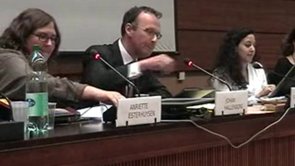
SPW participates at the 17th Session of the UN Human Rights Council
From May 30 to June 17, 2011, the “17th session of the UN Human Rights Council” took place in Geneva, Switzerland. Invited by the Association for Progressive Communications (APC), Marina Maria, SPW’s communication and project assistant, participated in the panel Internet rights are human rights, organized by APC on June 3, to present some outcomes from the research “EroTICs: Sex, rights and the internet – An exploratory research study”.
English translation of the statement read in Arabic by the Saudi Arabia representative at the HRC session in Geneva
The following is a rough English translation of the statement read in Arabic by the Saudi Arabia representative at the HRC session in Geneva: Your
More on the Human Rights of sex workers and LGBT individuals in USA
SPW has contacted Serra Sippel, director of CHANGE: Center for Health and Gender Equity, and asked her what are the practical implications of the positive
“Same-Sex Africa and the Fantasy of Global Participation”: Brief notes
Read “Same-Sex Africa and the Fantasy of Global Participation”: Brief notes, written by Rafael de la Dehesa, on the Tavia Nyong’o reflections about the recent efforts by activists in the Global North to promote LGBT rights in several East African nations.
The meaning of the Kampala Court Decision
Read the article “The meaning of the Kampala Court Decision”, by Kasha Jacqueline, from the Freedom and Roam Uganda (FARUG), on the Uganda’s high court decision permanently prohibiting the tabloid Rolling Stone (no relation to the venerable U.S. publication by the same name) from continuing its public vigilante campaign against that country’s LGBT community.
Brazilian Civil society representatives participate in debate with the UNAIDS Mission to Brazil
Brazil: On November 29th, representatives of Brazilian NGOs, including the SPW’s Co-chairs Richard Parker and Sonia Corrêa, participated in a meeting with an UNAIDS mission that visited Brazil. The visit occured in the week of December 1st that marks the International Day of Fight against AIDS, therefore we also offer more information on HIV/AIDS.

SPW Newsletter, N. 9 – October, 2010
In this issue, you find information on the main activities which SPW has been involved in the last months, like the African Regional Dialogue on Sexuality and Geopolitics, that will be held in Lagos, Nigeria from October 4th to 6th, 2010, as part of the series of Regional Dialogues on Sexuality and Geopolitics. We also highlight in “Around the world” a series of global meetings that are relevant in terms of the intersections between sexuality and politics, mainly the Vienna XVIII International AIDS Conference (July). You also can find in this issue other updates on regional highlights and more in the sessions “Advocacy: keep an eye”, “Sexuality in Art”, “Check it out” and “We Recommend”, with suggestions of publications, resources, papers, articles, and relevant links.
Abortion and Human Rights in Brazil – Part 2
In the article “Abortion and Human Rights in Brazil – Part 2” SPW’s Co-chair Sonia Corrêa analizes that the debate on abortion has continued to interweave with the complex political dynamics of the electoral period in Brazil. As she highlighted, even before the campaign was in its full fledge mode after August, abortion had already become one main issue.
Interview with Marcela Romero
Between July 18 and 23, 2010, the International Aids Conference was held in Vienna, Austria, the premier gathering for those working in the field of
Internet and sexuality from IGF 2010
Read “Internet and sexuality from IGF 2010”, written by Marina Maria, project assistant of the Sexuality Policy Watch. In this article, Marina describres her experience participating in the Internet Governance Forum (IGF) 2010, that took place in Vilnius, Lithuania, from September 14-17, analysing some aspects on gender and sexuality issues debated during this meeting.
Abortion and HIV at the AIDS Conference
By Aziza Ahmed* The International AIDS Conference in 2010 held one of the first plenary sessions dedicated to abortion and HIV. The plenary focused on
The final stage of the EroTICs research project in Brazil
SPW has just concluded the Brazilian stage of the EroTICs: sexuality and the internet – an exploratory research project, sponsored by the Association for Progressive Communications (APC). Soon, a final report presenting the observations, analysis, and findings of the study will be published, in which it was tried to map and analyze recent initiatives and debates concerning internet regulation.
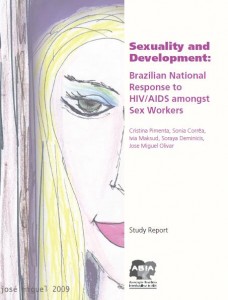
Sexuality and Development: Brazilian National Response to HIV/AIDS amongst Sex Workers
The report “Sexuality and Development: Brazilian National Response to HIV/AIDS amongst Sex Workers” presents the main findings of a case study conducted during 2008-2009 by The Brazilian Interdisciplinary AIDS Association (ABIA), which is one component of a global research initiative sponsored by the Institute for Development Studies (IDS) “Sexuality and Development” Program.
Habemus equal marriage
Carlos Figari* and Mario Pecheny** In July 15th, 2010, at 4 am, the Argentine Senate voted for the reform of civil marriage. The project had
Echoing Butler’s refusal
By Rosalind Petchesky and Sonia Corrêa* Judith Butler’s refusal to receive the Berlin Christopher Street Day (Gay Pride) Civil Courage Prize echoed ideas we have
The III Brazilian Human Rights Program: a last chapter?
Brazil: On May 13th, 2010, President Lula finally signed a new decree altering the text of III National Program for Human Rights (PNDH3), in which the Catholic Church and other conservative voices’ prevailed. Read “The III Brazilian Human Rights Program: a last chapter?”, an analisis by Jandira Queiroz and Sonia Corrêa, members of the SPW team.
Remembering Rhonda
USA: Rhonda Copelon, a US human rights lawyer and an intellectual leader and pioneer in the field of sexual and reproductive rights, died on 2010 May 6th. Read a note by SPW and more.
American gay couple forcibly separated
USA: Elderly gay couple forcibly separated by county officials in California. Click here to read a short article written by Kenneth Camargo and more on it.
Synthesis and highlights – African Dialogue
Read here the synthesis of presentations and some highlights of the African Dialogue and be informed about the main issues debated during the meeting. >
Homophobia, Africa and Evangelical Neocolonialism
Read the article “Homophobia, Africa and Evangelical Neocolonialism” on the Uganda’s anti-homophobia Bill, written by Rosalind P. Petchesky, Member of the SPW’s Steering Committee and Distinguished Professor of Political Science at Hunter College and the Graduate Center at the City University of New York.
Newsletter 8 – para RTF
CONTENTS I. SPW ACTIVITIES / EDITORIAL Since late September 2009, the SPW executive team has been engaged in a wide variety of activities. First and
The photographer Zanele Muholi’s artwork
In this issue of SPW’s newsletter, we unfortunately highlight an event that recently occurred in South Africa, not in favor of, but against initiatives that
Advocacy
See news on the Human Rights Council.
The abortion front lines
2.8 The abortion front lines In the struggle for legal abortion, as well, good news is often accompanied by bad news. As we were finalizing
Genital mutilation
2.7 Genital mutilation Since 2003, February 6th has been recognized as the International Day of Zero Tolerance to Female Genital Mutilation. Surveying the Web in
Human Rights violations around the world
2.6 Human Rights violations Turkey: Multiple Murders of transgender people highlight inadequate state protection Jamaica: British Honorary Consul John Terry murdered in his bedroom. The
Sexuality and religion
2.5 Sexuality and religion Vatican: Read the article The Great Catholic Cover-up, by Christopher Hitchens, a columnist for Vanity Fair and the Roger S. Mertz
Laws, policies and politics
2.4 Laws, policies and politics Australia: Australia recognises ‘non-specified’ gender. Read more. USA: A restriction on abortion coverage was added to the health care bill
Global and regional relevant events
2.3 Global and regional relevant events > The Panel Discussion on Opposing grave Human Rights Violations on the basis of Sexual Orientation and Gender Identity
The same sex marriage debate
2.2 The same sex marriage debate > Mexico: Mexico City backs gay marriage in Latin American first (contents available in English and Spanish) > Argentina:
The Uganda case
2.1 The Uganda case > The article Draconian laws against homosexuality in Africa, by Cesnabmihilo Aken’ova > A complete coverage available at SPW’s website
The contents of the Latin American and Asian Dialogues on Sexuality and Geopolitics are available
The overview and short papers written for the Latin American Regional Dialogue are available on SPW’s website (in Spanish and Portuguese only), as are the summaries (also available in English). The papers, summaries and reports produced on the Asian Dialogue are also available (in English only).
Back to the Future? Beijing +15 and the UN Commission on the Status of Women Only Partly Delivers on SRRH
Read the article “Back to the Future? Beijing +15 and the UN Commission on the Status of Women Only Partly Delivers on SRRH”, by Cynthia Rothschild, a sexual rights and human rights activist based in New York, on the 54th Session of the UN Commission on the Status of Women (CSW) from March 1-12, 2010.
The EroTICS Brazilian case study
The EroTICS Brazilian case study: A short article synthesizing the findings of this first level of investigation was written by SPW and Clam and will soon published by Gender IT.
Calling for the de-pathologization of transexuality
As a result of the Latin American Regional Dialogue on Sexuality and Geopolitics, the participants have written a statement to join efforts with the international campaign Stop TransPathologization 2012.
2010 – SPW organizes the African Dialogue on Sexuality and Geopolitcs
Originally planned for early 2009, the African Regional Dialogue on Sexuality and Geopolitics has been postponed to the last week September, 2010 and will be held in Lagos, Nigeria.
The 54th Session of the UN Commission on the Status of Women (CSW) from March 1-12, 2010 (Beijing+15)
From 1-12 March 2010, the Commission on the Status of Women undertook a fifteen-year review of the implementation of the Beijing Declaration and Platform for Action and the outcomes of the twenty-third special session of the General Assembly. Member States, representatives of non-governmental organizations and of UN entities participated in the session. A series of parallel events provided additional opportunities for information exchange and networking. See below a complete converge.
Abortion and Human Rights: the current Brazilian controversy
Read the article “Abortion and Human Rights: the current Brazilian controversy”, by Sonia Corrêa, on the important setbacks in regard to abortion that Brazil has been experiencing in recent years.
Trans people
Due to the larger representation of trans people in this edition of ILGA-LAC, there was a greater exchange of experiences, and more effective integration amongst
Pre-conference event themes
Planned preparatory meetings on the 26th and 27th of January 2010, preceded the main event, with themes directly related to the defence of LGBT rights.
International instruments, commitments of the United Nations and international policy
As well as examples of achievements regarding public policy and LGBTI citizenship in Latin America, the conference also promoted the exchange of experiences about different
5th ILGA-LAC Conference brings together more than 400LGBTI activists in Curitiba, Brazil
Brazil: 5th ILGA-LAC Conference brings together more than 400 LGBT activists in Curitiba, Brazil.

SPW Newsletter, N. 8 – March, 2010
In this issue, you find information on what SPW has been involved since October, 2009. First and foremost, we made further progress on preparation for the Dialogue on Sexuality and Geopolitics and the African Regional Dialogue will held in the last week September, 2010. Following the recommendation of the Latin American Regional Dialogue, we have added our voices to a global campaign that has been underway since May 2009 by developing, together with partners, a statement calling for the de-pathologization of transexuality. In the session “Around the world”, we highlight on the one hand the regressive legislation proposed in Uganda, which aims to further criminalize “homosexual” behavior, and on the other hand you find information on the same sex marriage legislation recently approved in the Federal District of Mexico. Read also about other regional highlights, and recent sexuality/sexual rights advocacy, like the 54th Session of the Commission on the Status of Women (CSW). See what projects and events connect art and sexuality and browse listings of upcoming events, scholarships, job opportunities and publications.
Draconian laws against homosexuality in Africa
In the article “Draconian laws against homosexuality in Africa”, Cesnabmihilo Aken’ova discusses on the state homophobia that has swept over the African continent. She analyses the draconian laws against homosexuality proposed by some leaders and positions that have placed the human rights of same sex loving people and people who are perceived to be gay under attack.
In three steps*
By Mauro ï Cabral (1) 1. Each year, during this week, I write a text that can be short or long, as well as more
SPW Newsletter n.7 – October, 2009
In this issue, you find information on the main activities which SPW has been involved since June. The first one is the Latin American Regional Dialogue on Sexuality and Geoplitics that took place in Rio de Janeiro, in August, and gathered close to 50 researchers and activists to reflect on the sexual political landscape in the region. The other important activity is that SPW’s is involved in the global research EroTICs: Sexuality and the internet – an exploratory research project, organized by the Association for Progressive Communications (APC WNSP). Read also about global and local events involving sexuality, politics, as well as recent sexuality/sexual rights advocacy. See what projects and events connect art and sexuality and browse listings of upcoming events, scholarships, job opportunities and publications.
The abortion front lines – Newsletter n.7
In the last few months one main legal and policy regression has been registered in relation to legal abortion. Read more about it in the section “Around the world – The abortion front lines” of the Newsletter n.7.
Latin American Dialogue program
The program of the Latin American Dialogue includeded the following sessions: Sexuality, State and Political Processes This session discussed the actual situation of sexual politics
SPW debates the dynamics of sexuality in Latin America
Between August 24th and 26th, 2009, the Latin American Dialogue on Sexuality and Geopolitics took place in Rio de Janeiro, Brazil. Organized by Sexuality Policy
Fourth panel – Religion and Sexual Politics
Fourth panel – Religion and Sexual Politics Afternoon – August 25, 2009 After the presentation and debate of the conference overview paper on religion and
Fourth Session – Sexuality, Religion and Politics
Fourth Session – Sexuality, Religion and Politics Afternoon – August 25, 2009 The last session of the Dialogue, coordinated by Gloria Careaga, started with the
Third Panel – Sexuality and Economics: visibilities and invisibilities
Third Panel – Sexuality and Economics: visibilities and invisibilities Morning – August 25, 2009 The panel that followed was chaired by Lucila Esquivel, coordinator of
Third Session – Sexuality and Economics: visibilities and invisibilities
Third Session – Sexuality and Economics: visibilities and invisibilities Morning – August 25, 2009 The overview paper, Prostitution as economic activity in urban Brazil, was
Second panel — Science and Sexual Politics
Second panel — Science and Sexual Politics Afternoon – August 24, 2009 In the panel that followed, these points were further examined from rather distinct
Second session—Science and Sexual Politics
Second session—Science and Sexual Politics Afternoon – August 24, 2009 The overview paper presented in the afternoon section, Science, Gender and Sexuality, was written by
First panel – Sexuality, States and Political Processes
First panel – Sexuality, States and Political Processes Morning—August 24 , 2009 The panel that followed was coordinated by Sérgio Carrara, co-director of the Latin
First Session – Sexuality, States and Political Processes
First Session – Sexuality, States and Political Processes Morning—August 24 , 2009 The first session of the Latin American Dialogue on Sexuality and Geopolitics was

SPW Newsletter n.6 – June, 2009
In this issue learn what SPW has been doing since January, including the Asian Regional Dialogue on Sexuality and Geopolitics, held in Hanoi, Vietnam, in April 10-12, 2009, and the web-based survey to evaluate the use and application of the Yogyakarta Principles whithin Brazilian LGBT activists, groups and researchers. Read also about global and local events involving sexuality, politics, as well as recent sexuality/sexual rights advocacy. See what projects and events connect art and sexuality and browse listings of upcoming events, scholarships, job opportunities and publications.
The abortion front lines – Newsletter n.6
The abortion front lines: Recently in Brazil a scandal came out when a 9 years-old girl was impregnated by his stepfather and then excommunicated by the Olinda’s bishop. Meanwhile, in Nepal the Court orders the State to improve women’s access to abortion. Read more in the SPW’s newsletter n.6.
Day 3 – April, 12th – Politics of sexuality in Asia: where do we go from here?
After two days of intense discussions, during which the politics of sexuality in Asia were examined from a variety of angles, the chairs of the
Day 2 – Sexuality flows: Information society and migration
In its second day, the Asian Regional Dialogue on Sexuality and Geopolitics addressed two critical realms that intersect with each other and have critical impacts
DAY 1 – 2nd session – Negotiating multiple identities
The second session of the meeting discussed aspects related to the negotiation of multiple sexual identities being politically expressed within Asia, but are denied recognition
Sexuality and Geopolitics: Reporting From the First Asia Regional Dialogue
This session brought to the larger audience that was at 2009 IASSCS Conference a synthesis of the discussions held at the first Asia Regional Dialogue
DAY 1 – 1st Session – Viagra vs. Condoms: unequal partners?
In the first session of the Asian Regional Dialogue on Sexuality and Geopolitics, held in the Sofitel Plaza Hotel in Hanoi, Vietnam on April 10th,
Migrant labor and sexual politics
Asia, with its high-income countries and rapidly industrializing centers rising in the midst of widespread poverty and regional inequalities, is a primary source and locus
Condom versus Viagra
The juxtaposition of “Condom” and “Viagra” in the title of the proposed session is to indicate that there are different perceptions and values centering on
Negotiating Multiple Identities
This session would aim to peel away the layers of meaning that exist between the personal and political. It would cover religion, culture, class, sexualities,
Papers and articles written by our partners
Argentina uncategorized: Debates about human trafficking, prostitution and sex work In this article, Carolina Justo von Lurzer and Santiago Morcillo present the main points debateted
Papers and articles Written by SPW’s members
Internet Regulation and Sexual Politics in Brazil The issue 55(2) of Development – Citzenship for Change assesses the potential and unpacks the myths around new
SPW Newsletter N.5 – January, 2009
In this issue we highlight the UN declaration on sexual orientation, gender identity and human rights and the long anticipated end of the Bush Era: Welcome Obama! Other updates, materials and texts are provided in the sections Advocacy: keep an eye and Sexuality in Art. In Check it out, you can find links to job opportunities, scholarships, upcoming events and publications.
SPW Newsletter, N.4 – September, 2008
In this issue learn what SPW has been doing since April, including the events we organized to coincide with the International AIDS Conference in Mexico City. Read also about global and local events involving sexuality, politics, religion and economics, as well as recent sexuality/sexual rights advocacy, in particular at the UN Human Rights Council. See what projects and events connect art and sexuality and browse listings of upcoming events, scholarships, job opportunities and publications.
SPW Newsletter, N.2 – Dec, 2007
This issue brings information about the main activities developed by SPW during the last semester as well as the various launchings of Yogyakarta Principles and other debates on sexuality related issues that took places around the world. You will also find the section “Sexuality in Art” and links to job opportunities, scholarships and events we should “keep an eye”.
SPW Newsletter N.1 – April, 2007
In this issue read the first article of a series produced by SPW about the Pope Benedict XVI visit to Brazil on May 2007 and its implications for national political debates on sexuality and human rights. See also the proposal for the SPW participation at the 6th International Conference organized by International Association for the Study of Sexuality, Culture and Society (IASSCS) and check the suggestions about publications, events and opportunities.
Asian Dialogue on Sexuality and Geopolitics final report
NEW! The final report of the discussions held at the Asian Dialogue on Sexuality and Geopolitics is already available! Click here to download (PDF).
Framework and Papers
In order to prepare for the Asia Regional Dialogue, a regional Task Force was formed with the goal of identifying key themes and key individuals
Key Issues and Plan for the Asian Regional Dialogue
It was agreed that the broad focus of the Dialogue would be on the politics of sexuality: the political processes, actors and outcomes that have
The Yogyakarta Principles
By Daniel Sarmento* One of the most important human rights issues in the current world regards discrimination based on sexual orientation and gender identity. Notwithstanding
Brazil prepares for the 1st Brazilian GLBT National Conference
By Marina Maria* The First Brazilian National GLBT Conference will be held in Brasília between June, 6th – 8th, 2008. Roughly 600 participants are expected,
Sexual rights within the Human Rights Council Universal Periodic Review
By Angela Collet* Since its creation in 2006, the Human Rights Council has been engaged in intense efforts to advance the notion of sexual rights
First Brazilian National LGBT Conference: Contexts and Analysis
By Marina Maria* The First Brazilian National Conference on LGBT public policies was held in Brasilia, the capital of Brazil, from June 5th to 8th
Update on ongoing resistance to the Indian anti-sodomy law
By Radhika Ramassuban* India continues to have on its statute books a 150-year-old anti-sodomy law enacted in the mid-nineteenth century by the British colonizers in
Turkey’s new struggle: re/defining
Pinar Ilkkaracan* In July 2007, the religious conservative Justice and Development Party (AKP)¹ was re-elected in secular Turkey. Since the election, Turkish feminists, LGBTT activists
Abortion Struggles: More gains than losses
By Sonia Corrêa* When 2007 begun, abortion rights advocates worldwide were, on the one hand, deeply regretting the abolition of the therapeutic abortion clause from
Interview: Elena Reynaga
In its eleventh edition, the International AWID Forum, held in Cape Town, South Africa, in November of 2008, has for the first time opened the
Y por fin (no todas) bailamos
Por Alejandra Sardá-Chandiramani* El XI Foro Internacional AWID de Ciudad del Cabo fue mi tercer Foro AWID, ya que antes había estado en Guadalajara (2002)
A call to end all criminal penalties against people because of their sexual orientation or gender identity: A historical victory
By Gloria Careaga* In New York City on December 18th, 2008, 66 UN member states joined together for the first time ever to support a
Brazilian project debates disability and sexuality during IASSCS Conference
By Marina Maria* In the International Conference Dis/organized – Changing bodies, rights and cultures, carried out in June, in Peru, and promoted by the International
Book Launch: Sexuality, Health and Human Rights
On 7 October 2008, a special reception was held at the City University of New York (CUNY) in the USA to honor the new book Sexuality, Health and Human Rights by Sonia Corrêa, Richard Parker and Rosalind Petchesky, published by Routledge in August 2008.
Inauguration of e-book SexPolitics – English version
On November 8th, 2007, the Columbia University secretariat of SPW hosted a meeting to officially inaugurate the e-book SexPolitics: Reports from the Front Lines, one of the main achievements of the global policy monitoring project.
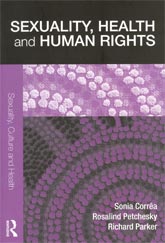
Sexuality, Health and Human Rights
The book Sexuality, Health and Human Rights was published by Routledge in August 2008, and written by SPW’s Steering Committee members Sonia Corrêa, Richard Parker and Rosalind Petchesky. This ground breaking work provides a critical analysis of shifting theoretical perspectives and activist strategies regarding sexual politics and their larger geopolitical context in the twenty-first century.
SPW Activities
NEW! Sexuality Policy Watch presents the final outcomes of the regional Dialogues in Asia, Latin America and Africa and of one inter-regional meeting that took
Our publications
As SPW presents the final publications of the Regional Dialogues on Sexuality and (Geo) Politics, we also recommend as an additional reading (in Spanish and
SPW Newsletter No. 14
SPW Newsletter No. 14 discusses recent developments in law relating to same-sex desire in India and Uganda > Read more in this issue