
SPW Activities and Products in 2025
Throughout 2025, SPW participated in several national and international events and, together with new and old partners, promoted debates and launched new publications.

DEMOCRACIES IN DISPUTE: Explore the series and access the materials
In 2024, more than 64 countries will have elections at different levels*. These disputes are both electoral and about the meaning of democracies. They will

Sonia Corrêa interview at SDGSummit2030: September 2023
Feminist Voices at #SDGSummit2030 on “Speak out against anti-gender and anti-rights narratives and actions to achieve the 2030 Agenda” with Sonia Correa, Co-Coordinator, Sexuality Policy Watch (SPW),
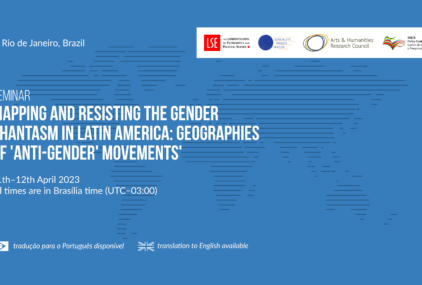
SPW and LSE host seminar on anti-gender movements in Latin America
On April 11th and 12th, the seminar “Mapping and resisting the gender phantasm in Latin America: geographies of ‘anti-gender’ movements” took place in Rio de

The politics of gender: A genealogical commentary –
“I was motivated to write this comment after reading a series of analyses that re-visit the conditions in which a transnational agenda of repudiation of
Global Public Health Journal – Human Rights ‘Missing the point’: A conversation with Sonia Corrêa about the emergence and complexities of anti-gender politics at the intersections of human rights and health
Reproductive and sexual health policies have long mobilised religious and political forces. In this interview conducted in September of 2021, Brazilian feminist activist and researcher
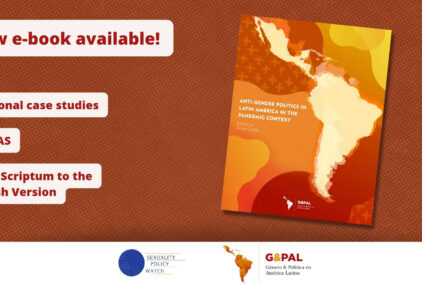
NEW E-BOOK: Anti-Gender Politics in Latin America in the Pandemic Context
SPW has launched the English version of our latest research. The e-book “Anti-Gender Politics in Latin America in the Pandemic Context” presents the results of
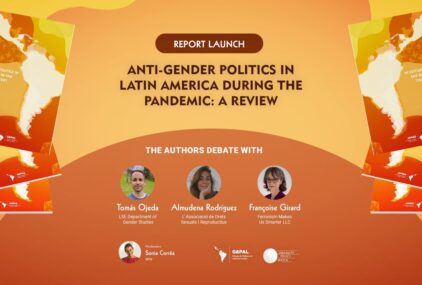
Anti-gender politics in Latin America during the pandemic: A review – Launching debate
SPW has launched the e-book “Antigender Policies in Latin America in the Pandemic Context”. The e-book presents the results of the second research phase
Anti-gender politics and policies in Brazil: Submitted to the Mandate of the United Nations Independent Expert on Sexual Orientation and Gender Identity
In order to more fully understand the political and policy atmosphere in relation to gender, sexuality and human rights in Brazil it is necessary to
Anti-gender politics and policies in Brazil: Submitted to the Mandate of the United Nations Independent Expert on Sexual Orientation and Gender Identity
In order to more fully understand the political and policy atmosphere in relation to gender, sexuality and human rights in Brazil it is necessary to
SPW and other media outlets: partnerships
Derechos en riesgo: la cruzada antigénero en América Latina y el Caribe Línea del tiempo de las políticas antigénero – Wambra Telemedicina: la última tensión
Brazil’s review by the CEDAW: contributions
Contributions to the List of Issues Prior to Reporting of the review of Brazil by the Committee on the Elimination of Discrimination against Women (CEDAW)
Brazil in the UPR: Shadow Report presented in 2019
The SPW is pleased to offer the part-time report produced by civil society regarding the country’s assessment in the UN Universal Periodic Review 2017. The

Rosalind Petchesky wins the Charles A. McCoy Award
SPW dearly congratulates our friend and Steering Committee member, Rosalind Petchesky, for receiving the New Political Science Charles A. McCoy Career Achievement Award, a more
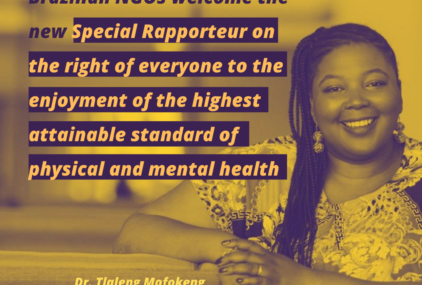
Open Letter addressed to Dr. Tlaleng Mofokeng
Rio de Janeiro, August 21st, 2020 Open Letter addressed to Dr. Tlaleng Mofokeng as the new United Nations Special Rapporteur on the right of everyone

Regional Research and Brazil Case: Local Devolution
July, 2019 Isabela Kalil: Políticas de direita criam ‘Bolsonaro protetor de mulheres’, diz estudiosa – Universa Isabela Kalil: ‘O bolsonarismo é maior que Bolsonaro’: projeto
Biopolitics & The COVID-19 Pandemic: A Feminist Perspective
As part of DAWN’s webinar series DAWN Talks on COVID-19, Sonia Corrêa shares a piece she wrote especially for DAWN on COVID-19 biopolitics from a

Brazil’s Minister of Health dismisses two civil servants for expressing support for women’s sexual and reproductive health
On 5 June 2020, the Interim Minister of Health, General Eduardo Pazuello, dismissed Flávia Andrade Nunes Fialho, Coordinator of Women’s Health, and Danilo Campos da
ABIA statement: democracy in Brazil and COVID-19 health policy
The Brazilian Interdisciplinary AIDS Association (ABIA) expresses deep concern regarding President Jair Bolsonaro’s latest changes in the Ministry of Health and regarding his active support

In defense of Jacqueline Pitanguy
On December 3rd, sociologist Jacqueline Pitanguy became the target of a serious accusation by the Brazilian Minister of Family Women and Human Rights, Damares Alves,
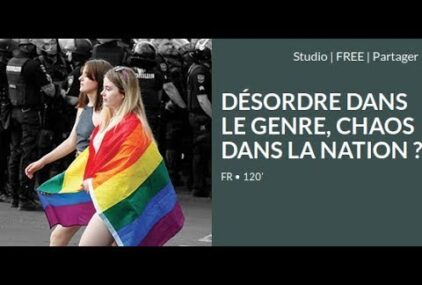
Désordre dans le genre, chaos dans la nation?
Au sein du Festival des Libertés, qui a eu lieu à Bruxelles, Belgique, la coordinateur du SPW, Sonia Corrêa, a participé du débat Désordre dans
Brazilian Civil Society Position Note – Nairobi Summit ICPD 25
Nairobi, November 14th, 2019. Gathered at the Nairobi Summit to celebrate the twenty-fifth anniversary of the International Conference in Population and Development (Cairo, 1994), the

The Lancet HIV highlights threats the Brazilian response to the epidemic faces
Due to a historically progressive human-rights based approach to HIV/AIDS treatment and prevention, Brazil has globally been deemed an important standard-bearer of the HIV/AIDS response
Understanding the dismantling of the AIDS response in Brazil
Rio de Janeiro, May 27th, 2019 Brazilian Interdisciplinary AIDS Association (ABIA) After the justifications given by the Ministry of Health for the establishment of the
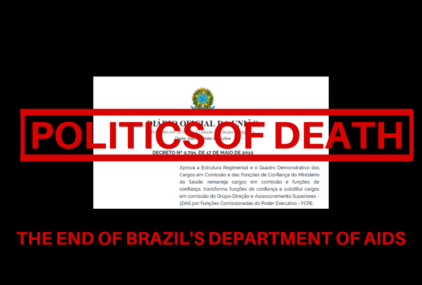
Politics of Death: The End of Brazil’s Department of AIDS
Brazil’s national AIDS movement – comprised of networks, collectives, CSOs and activists signed below – repudiates Decree N. 9795 (read in Portuguese), released on May
Sonia Corrêa on “Gender Ideology” for 2019 CREA Conference
Part I Part II
Gender and Politics in Latin America
Since January 2018, SPW has been developing a research and action initiative on antigender politics in Latin America: the project Género y Política en América
ABIA concerned after Director of Department of HIV/AIDS and STIs exonerated
On January 10, Ministry of Health’s AIDS and STIs Federal Agency Director Adele Benzaken was exonerated from office, under Bolsonaro’s administration since the 1st. Dr.
The globalisation of anti-gender campaigns
Transnational anti-gender movements in Europe and Latin America create unlikely alliances by Sonia Corrêa, David Patternote and Roman Kuhar This is a paper originally published

Report of the Durban Seminar
On July 13-15th, 2016 Sexuality Policy Watch organized the seminar/workshop SexPolitics: Mapping Key Trends and Tensions in the Early 21st Century in Durban, South Africa.
The murder of Marielle Franco: a call to action
Brazilian civil society, in particular, the black and feminist movements, as well as human rights defenders, have already expressed their indignation and repudiation regarding the
Civil Society Note Brazil in the UPR 2017
The Brazilian civil society organizations attending the process of the Universal Periodic Revision of Brazil at the United Nations (UN) want to manifest their position
ABIA’s note on the withdrawal of Law Provision 198 that would criminalize HIV transmission
According to ABIA, the withdrawal of Law Provision 198 that would legally define the transmission of HIV as a heinous crime, is a victory for

All in for #Decrim!
Sexuality Policy Watch (SPW) and the Brazilian Interdisciplinary AIDS Association (ABIA) strongly support the All in for #Decrim campaign as part of the global activism surrounding the International Day Against Violence Against Sex Workers on December 17th.
Reform of abortion law in Uruguay: Context, process and lessons learned
Authored by Susan Wood, Lilián Abracinskas, Sonia Corrêa and Mario Pecheny, this article – based on a descriptive study of the context and political processes
Tribute to Agniva Lahiri
With great sadness SPW informs about the departure of Agniva Lahiri, a young Indian activist from Kolkata, who was deeply engaged in local and global
Key Trends and Tensions in sexual politics: a commentary
It also seemed to me that the general mood of pessimism came from the fact that most of the meeting’s participants were not digital natives, not exactly the ”globalized children”. This meant – again, with notable exceptions – that we still saw activism and policy advocacy
SexPolitics: Trends and tensions in the early 21st century
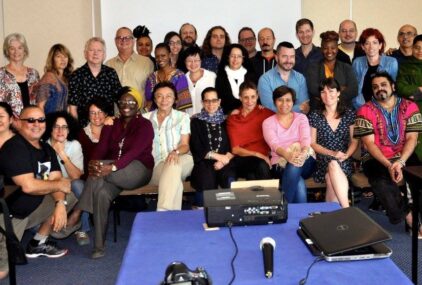
Right before the Durban International AIDS Conference SPW organized a seminar in Umhlanga. Thirty four researchers and activists from Africa, Asia, the Americas and Europe
July 2016 – SPW Durban Seminar: SexPolitics: Mapping Key Trends and Tensions in the Early 21st Century
On July 13-15th, Sexuality Policy Watch (SPW) is organizing, in Durban, South Africa, the seminar/workshop ‘SexPolitics: Mapping Key Trends and Tensions in the Early 21st
SPW mourns the death of Diana Sacayán
On October 14, the internationally known Argentinean trans activist Amancay Diana Sacayán was found dead in her apartment. She was the third Argentinean trans woman
Revisit the SPW Regional Dialogues
Between 2009 and 2011 SPW has been engaged in a critical reflection on Sexuality and (Geo) Politics that involved regional dialogues in Asia, Africa and
Brazilian academic institutions and CSO’ submissions to the OCHR’s resolution on the protection of the family
The Brazilian academic institution and civil society organizations listed below offered a contribution to the UN High Commissioner for Human Rights Report on the impact

Global feminisms and social justice movements have lost Gigi
With great sadness as SPW we mark the departure of Gigi Francisco – activist, scholar, teacher and for a long time a working partner and wonderful friend of many of us. Gigi’s departure is a major loss for global feminisms and social justice movements.
What the ‘Abortion Drone’ Will (And Won’t) Mean for Reproductive Rights
The Poland “abortion drone” is causing a splash in the media and excited buzz in the reproductive rights community, but it has also become a source of misinformation and anxiety.
HEALTH SECTOR REFORM, MATERNAL MORTALITY AND ABORTION A Global Policy Research Effort
This global research effort was undertaken between 2004 and 2006 by DAWN, Development Alternative with Women for a New Era. Coordinated by Sonia Corrêa, it
SPW Activities – March 2015
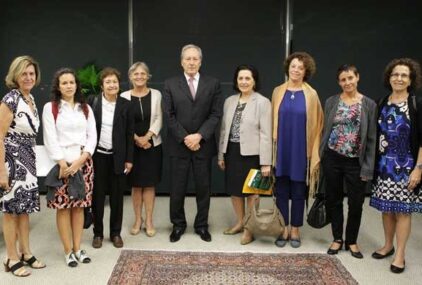
On March 23rd and 24th a group of Brazilian feminists, including Sonia Corrêa have met with national authorities in Brasilia to present a petition protesting
Brazilian Interdisciplinary Aids Association has launched Global AIDS Policy Watch (GAPW)
Brazilian Interdisciplinary Aids Association has launched Global AIDS Policy Watch (GAPW), a watchdog to monitor and develop a critical analysis of AIDS-related policies globally and
SPW Activities – December 2014 / January 2015
The SPW partner in the “Emerging Powers, Sexuality and Human Rights Project’, the India researcher and activist akshay khanna participated in two events organized by
SPW Activities – November, 2014
Gloria Careaga, member of SPW Steering Committee, and our working partner akshay khana spoke at the Men Engage Symposium, held in Delhi.
SPW Activities – October 2014
The SPW co-chair, Richard Parker, attended on 15 October, in Vietnam, the “Workshop on prevention approaches for MSM and HIV: global perspectives and Vietnam”, which
New issue of SUR – International Journal on Human Rights
The new issue of SUR – International Journal on Human Rights celebrates its 10th anniversary with 55 articles on the challenges and sucesses of the
September 28th – Global Day of Action for Access to Safe and Legal Abortion
SPW joins forces with other networks and organizations engaged in the Global Day of Action for Access to Safe Abortion. We recall that the date
AIDS Prevention missing in the 2014 Brazil World Cup – ABIA expresses its views on the findings of the World Cup study released by the Observatory of Prostitution
The Brazilian Interdisciplinary Association for Aids (ABIA) expresses its concern about the results of the survey – released in partnership with the Observatory of prostitution
SPW Activities – September 2014
SPW co-chair Sonia Corrêa spoke at the panel on sexual and reproductive rights of the Women and Girls Rising Conference, held in New York on
SPW Activities – August 2014
Richard Parker Participation at the 29th ABA Meeting in Natal On August 6th, 2014, SPW Co-cordinator Richard Parker participated in the Round Table on Challenges
SPW at the Civil Society Dialogues parallel to the VI BRICS Summit
In 2013, Sexuality Policy Watch began a new line of work aimed at critically examining how sexuality, gender and human rights are located in the
Declaration of women’s and feminists movements
At the VI Summit of President of BRICS We, the networks and the feminist movements of the global South, that gathered in Fortaleza, 14-16 July
Brazilian Interdisciplinary AIDS Association (ABIA) expresses condolences for the lives lost in the tragedy of flight MH17
The Brazilian Interdisciplinary AIDS Association (ABIA) expresses our deep sentiment of grief with the lives lost in the tragedy of flight MH17 of Malaysian Airlines
SPW Activities – July, 2014
Sonia Corrêa and SPW partners in the “Emerging Powers, Sexuality and Human Rights Project” — akshay khana, Cai Yiping, Laura Waisbich — – attended the
ABIA looks cautiously at the WHO recommendation regarding the use of antiretroviral medicines among men who have sex with men
The Brazilian Interdisciplinary AIDS Association cautiously receives the new World Health Organization (WHO) guideline recommending that men who have sex with men (MSM) consider using
SPW Activities – May / June 2014
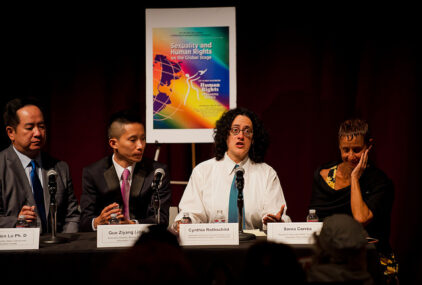
Sonia Corrêa and Rosalind Petchesky, members of SPW Steering Committee participated at the Orientations and Identities: Sexuality and Human Rights on the Global Stage Conference organized by
ABIA disseminates a statement repudiating police action against sex workers in Niterói (RJ)
The Brazilian Interdisciplinary AIDS Association vehemently repudiates the grave human rights violations committed on May 23rd by civil police against more than 200 sex workers
Human Rights Speaker Series
On May 28th, Sonia Corrêa, SPW co-chair, spoke at the panel on Human Rights at the Global Stage, organized by the City of West Hollywood.
SPW in April 2014
SPW in April 2014 Kasha Jacqueline in Brazil On April 24th, 2014, Amnesty International and Sexuality Policy Watch, in Rio, promoted an open debate with

The 2006 International AIDS Conference in Toronto – Interview 7
These short vídeos document Sexuality Policy Watch activities at the 2006 International AIDS Conference in Toronto: a workshop to discuss the preliminary findings of the
EROTICs project final publication online
Read the final publication of the EROTICS: sex, rights and the Internet project here.
ABIA statement against Fifa manual on HIV/Aids
A manual prepared by FIFA and distributed to public school teachers working in schools of the cities hosting the World Cup games this year was
SPW Activities – February 2014
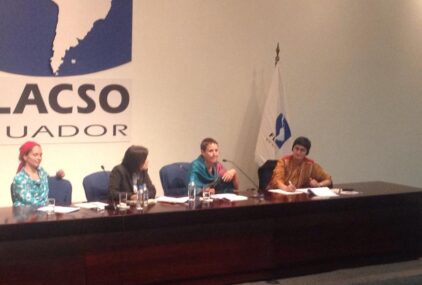
At the V Queering Paradigm Conference held in Quito, in February 2014, Sonia Corrêa, Nikita Dhawan and Brenny Mendinza were keynote speakers at one main
Dossier Gabriela Leite
The death of Gabriela Leite, on October 10, meant a great loss for the struggle for the rights of prostitutes, and sexual rights brodaly speaking,
Brazilian bill legalizes and regulates prostitution
The political history of prostitution in Brazil has been winding. In recent years, the hegemony of discourses on sexual exploitation and trafficking for sexual purposes
“Rest in Peace Sunila”
SPW deeply laments the departure of our dear friend and collaborator, Sunila Abeysekera, a leading feminist and human rights activist from Sri Lanka whose legacies
Sexuality Research and Political Change in Buenos Aires
Immediately before the 9th IASSCS Conference, a second round of the Sexuality Research and Political Change Training Program was held in Buenos Aires, from August 23rd to 27th, 2013. Check more information and the album of workshop pictures.
Letter Repudiating the Ministry of Health’s Censorship of the Campaign about Prostitution and HIV/AIDS
Read the “Letter Repudiating the Ministry of Health’s Censorship of the Campaign about Prostitution and HIV/AIDS”, written by the Brazilian Interdisciplinary AIDS Association – ABIA, after the Ministry of Health announced its censorship of the campaign about prostitution and HIV/AIDS launched on International Prostitutes Day (June 2nd).
SPW organizes a new training program on sexuality and change
From March 18th to 22th, 2013 Sexuality Policy Watch organized the Sexuality and change – a new training program, in Rio de Janeiro, Brazil, gathering participants from Angola, Argentina, Brazil, Cameroon, China, Egypt, India, Mexico, Philippines, Senegal, South Africa, Trinidad & Tobago, United States and Venezuela. This was the first training program offered by SPW and this initiative prompted participants to examine how theory, research and policy can shape meaningful social change. Read more.
Civil Society follow up on the crisis Brazilian AIDS Response
Brazil: Read the “Civil Society follow up on the crisis Brazilian AIDS Response,” published after the Ministry of Health Note of Clarification in opposition to a public note written by Brazilian NGOs with concerns about the funds for AIDS programs.
ABIA organizes a seminar to mark thirty years of AIDS – the event will address the trajectory of both the epidemic and the Brazilian response
The Brazilian Interdisciplinary AIDS Association (ABIA) is completing 25 years in 2012. To mark this anniversary, a seminar will be held in August 2012 that will analyze the trajectory of the thirty years of AIDS in Brazil and the current challenges currently facing the Brazilian national response to the epidemic. Read more.
Panel discussion will highlight the politics of human rights interventionism
UK: The Equal Rights Trust and the Human Rights Lawyers Association invite to the panel discussion “Advancing Sexual Rights in the ‘Developing World’: The Politics of Human Rights Interventionism”, which will take place in London, on 10 May 2012. Read more.
ABIA and SPW support the Brazilian UPR Pre-session
Brazil: ABIA and SPW supported the Brazilian UPR Pre-session, which took place on April 2nd, in Geneva, presenting a short video and recommendations aiming to contextualize some recent aspects of human rights in the country.
Sonia Corrêa: In the name of “maternalism”, all privacy violation is permitted
Interview: Conceição Lemes A protest movement against the Provisional Measure 577 (MP 577) creating the National System of Registration, Tracking and Follow-up of Pregnant and
Reports to the UN Universal Periodic Review Brazil – 2012
Sexuality Policy Watch (SPW) and the Brazilian Interdisciplinary AIDS Association (ABIA) were involved in the production of reports on the status of human rights in Brazil for the second Universal Periodic Review of the Human Rights Council, which will be held in June 2012. Read the reports.
2011 – Intersections and challenges for the sexual politics in LA, Africa and Asia: notes on the Inter-regional Dialogue on Sexuality and Politics
From September 26 to 29 2011, the Sexuality Policy Watch (SPW) organized the Inter-Regional Dialogue on Sexuality and Politics, in Rio de Janeiro, gathering researchers and activist members of the global forum, as well as people involved with the Regional Dialogues on Sexuality and Geopolitics, which took place in Asia (April 2009, Hanoi, Vietnam), Latin America (August 2009, Rio de Janeiro, Brazil) and Africa (October 2010, Lagos, Nigeria).
2011 – SPW Inter- Regional Dialogues on Sexuality and Geopolitics
The Sexuality Policy Watch is hosting the Inter-Regional Dialogue on Sexuality and Politics prior to its Advisory Group regular meeting in Rio de Janeiro, Brazil, on September 26-29, 2011.
2011 – SPW at the VIII IASSCS Conference
The Sexuality Policy Watch (SPW) is participating at the VIII International Association for the Study of Sexuality, Culture and Society (IASSCS) Conference, in Madrid, Spain, from 6th to 9th July 2011, organizing the session Regional dynamics in Sexuality and politics: common threads and differences (July 8th) and participating in the panel Electronic Sociability, Gender, Sexuality and Internet Regulation (July 9th), organized by APC-WNSP. Read more.
SPW participates at the 17th Session of the UN Human Rights Council
From May 30 to June 17, 2011, the “17th session of the UN Human Rights Council” took place in Geneva, Switzerland. Invited by the Association for Progressive Communications (APC), Marina Maria, SPW’s communication and project assistant, participated in the panel Internet rights are human rights, organized by APC on June 3, to present some outcomes from the research “EroTICs: Sex, rights and the internet – An exploratory research study”.
Responding to HIV and AIDS in Brazil: Structural Violence, Social Movements, and the Local Politics of Global Health
Richard Parker, SPW’s Co-chair, will participate in the Seminar Responding to HIV and AIDS in Brazil: Structural Violence, Social Movements, and the Local Politics of Global Health, which will be held on May 2nd 2011 at the Wenner-Gren Foundation, in New York. Read more at the New York Academy of Sciences Anthropology website.
Celebrating the World AIDS Day 2010
Brazil: On December 1st, 2010 was celebrated the World AIDS Day and, to mark this date, representatives of Brazilian NGOs, including the SPW’s Co-chairs Richard Parker and Sonia Corrêa, participated in a meeting with an UNAIDS mission that visited Brazil. Read more on it and other HIV/AIDS issues.
XVIII International AIDS Conference – Vienna
Click on the icons to see the pictures in a bigger version. Photos by Malu S. Marin
Abortion and the 2010 electoral period in Brazil
Brazil: Brazilian human rights defenders launched a manifesto against the way the abortion issue is being exploited in the current electoral period in Brazil. Support the online petition and, if you want to know more about this context, read the article Brazil: abortion at front line, written by Sonia Corrêa, SPW’s Co-chair, and a complete coverage (in Portuguese) on this issue. Read more.
The African Regional Dialogue on Sexuality and Geopolitics
On October 5th and 6th, a group of 18 researchers and activists from various countries in Africa, representing diverse communities engaged with sexual rights debates
The final stage of the EroTICs research project in Brazil
SPW has just concluded the Brazilian stage of the EroTICs: sexuality and the internet – an exploratory research project, sponsored by the Association for Progressive Communications (APC). Soon, a final report presenting the observations, analysis, and findings of the study will be published, in which it was tried to map and analyze recent initiatives and debates concerning internet regulation.
The APC-EroTICs research team is at the Internet Governance Forum (IGF 2010), being held in Vilnius, Lituania
> Visit the IFG 2010 website > Read “Internet Governance Issues on Sexuality and Women’s Rights” at GenderIT.org > Follow @apc_news live streaming on Twitter.com
Synthesis and highlights – African Dialogue
Read here the synthesis of presentations and some highlights of the African Dialogue and be informed about the main issues debated during the meeting. >
Final report – African Regional Dialogue
Find here the compilation of the African Regional Dialogue that combines the final report with the Synthesis by Dr. Oka Obono, Sociology Department University of
2010 – African Dialogue – note, participants and pictures
Here you can find a brief note on the African Dialogue, and the list of participants. See also some pictures of the meeting. > Read
African Dialogue
Lagos – Nigeria – October, 2010 Originally planned for early 2010, the African Regional Dialogue on Sexuality and Geopolitics took place from October 4th to
Pre-conference event themes
Planned preparatory meetings on the 26th and 27th of January 2010, preceded the main event, with themes directly related to the defence of LGBT rights.
The Gala dinner
There were several government representatives present at the opening ceremony, including: Human Rights Minister, Paulo Vanucchi and from within the same department, the national co-ordinator
5th ILGA-LAC Conference brings together more than 400LGBTI activists in Curitiba, Brazil
Brazil: 5th ILGA-LAC Conference brings together more than 400 LGBT activists in Curitiba, Brazil.
MANIFESTE LA TRANSEXUALITÉ N’EST PAS UNE MALADIE! POUR LA SUPPRESSION DE LA TRANSEXUALITÉ DU DSM ET DU CID!
MANIFESTE LA TRANSEXUALITÉ N’EST PAS UNE MALADIE! POUR LA SUPPRESSION DE LA TRANSEXUALITÉ DU DSM ET DU CID! Nous, participants du Dialogue Latino-américain sur Sexualité
Transexuality is not a disease Calling for the elimination of transexuality from the DSM and ICD
Transexuality is not a disease Calling for the elimination of transexuality from the DSM and ICD We, as participants of the Latin American Regional Dialogue
Disaster in Chile
Chile: The SPW team is shocked with the disaster that devastated Chile on February 27, 2010, the hundreds of deaths and the many risks that may ensue the disaster that has been catastrophic for every sector of society, including Chile’s feminist and LGBTI communities.
Earthquake in Haiti
Haiti: The SPW team is shocked with the disaster that devastated Haiti on January 12, 2010, the thousands of deaths and the many risks that may ensue the disaster that has been catastrophic for every sector of society, including Haiti’s feminist and LGBTI communities.
Latin American Dialogue program
The program of the Latin American Dialogue includeded the following sessions: Sexuality, State and Political Processes This session discussed the actual situation of sexual politics
SPW debates the dynamics of sexuality in Latin America
Between August 24th and 26th, 2009, the Latin American Dialogue on Sexuality and Geopolitics took place in Rio de Janeiro, Brazil. Organized by Sexuality Policy
Fourth Session – Sexuality, Religion and Politics
Fourth Session – Sexuality, Religion and Politics Afternoon – August 25, 2009 The last session of the Dialogue, coordinated by Gloria Careaga, started with the
Third Panel – Sexuality and Economics: visibilities and invisibilities
Third Panel – Sexuality and Economics: visibilities and invisibilities Morning – August 25, 2009 The panel that followed was chaired by Lucila Esquivel, coordinator of
Third Session – Sexuality and Economics: visibilities and invisibilities
Third Session – Sexuality and Economics: visibilities and invisibilities Morning – August 25, 2009 The overview paper, Prostitution as economic activity in urban Brazil, was
Second session—Science and Sexual Politics
Second session—Science and Sexual Politics Afternoon – August 24, 2009 The overview paper presented in the afternoon section, Science, Gender and Sexuality, was written by
First panel – Sexuality, States and Political Processes
First panel – Sexuality, States and Political Processes Morning—August 24 , 2009 The panel that followed was coordinated by Sérgio Carrara, co-director of the Latin
First Session – Sexuality, States and Political Processes
First Session – Sexuality, States and Political Processes Morning—August 24 , 2009 The first session of the Latin American Dialogue on Sexuality and Geopolitics was
Latin American Dialogue
Rio de Janeiro, Brazil – August 24-26, 2009 Latin America has been a fertile ground for sexual and reproductive rights debates during the last decades,
SPW participates in the research EroTICs
SPW was selected to conduct, in partnership with CLAM – Latin American Center on Sexuality and Human Rights, the investigation of the Brazilian case for the EroTICs: Sexuality and the internet – an exploratory research project, organized by APC.
SPW Asian Dialogue at IASSCS
In order to share the outcomes of the SPW Asian Dialogue on Sexuality and Geoplitics with participants of the 2009 IASSCS Conference, a devolution workshop was held in the Vietnam’s Women’s Museum on April 16th, when summaries of the various panels were presented and discussed.
Day 3 – April, 12th – Politics of sexuality in Asia: where do we go from here?
After two days of intense discussions, during which the politics of sexuality in Asia were examined from a variety of angles, the chairs of the
Day 2 – Sexuality flows: Information society and migration
In its second day, the Asian Regional Dialogue on Sexuality and Geopolitics addressed two critical realms that intersect with each other and have critical impacts
DAY 1 – 2nd session – Negotiating multiple identities
The second session of the meeting discussed aspects related to the negotiation of multiple sexual identities being politically expressed within Asia, but are denied recognition
Sexuality and Geopolitics: Reporting From the First Asia Regional Dialogue
This session brought to the larger audience that was at 2009 IASSCS Conference a synthesis of the discussions held at the first Asia Regional Dialogue
DAY 1 – 1st Session – Viagra vs. Condoms: unequal partners?
In the first session of the Asian Regional Dialogue on Sexuality and Geopolitics, held in the Sofitel Plaza Hotel in Hanoi, Vietnam on April 10th,
Sexuality in the Tech-Era
Recent statistics show that almost 40 per cent of internet users in the world are living in Asia. For many Asians, the rapid expansion of
Lauching Yogyakarta Principles in New York
Summary of the panel discussion on the Yogyakarta Principles on the Application of International Law in Relation to Issues of Sexual Orientation and Gender Identity
Asian Regional Dialogue on Sexuality and Geopolitics sessions
DAY 1 – April, 10th – 1st session – Viagra vs. Condoms: unequal partners? In the first session of the Asian Regional Dialogue on Sexuality
Asian Regional Dialogue on Sexuality and Geopolitics Main Debates
Negotiating multiple identities To peel away the layers of meaning that exist between the personal and political, this session will cover religion, culture, class, sexualities,
Framework and Papers
In order to prepare for the Asia Regional Dialogue, a regional Task Force was formed with the goal of identifying key themes and key individuals

Sexuality and Hate Crimes
By Vagner de Almeida * Sexuality and Hate Crimes is a documentary and the first alternative film produced by Director Vagner de Almeida and Richard
SPW participates in First Meeting “La Sexualidad frente a la Sociedad”
By Gloria Careaga* The First Latin American and Caribbean Meeting “La Sexualidad frente a la Sociedad” (Sexuality at the Forefront of Society) took place in
Film and diversity over the rainbow in Fortaleza
By Vagner de Almeida* The first For Rainbow Festival of Cinema and Sexual Diversity held in Fortaleza, in the state of Ceará, is the first
Global Public Health
Global Public Health, a leading peer-reviewed journal distinguished by its global focus and concern for health inequalities and the social and cultural dimensions of health, has dedicated a special supplement to the research that culminated in the publication of SexPolitics. The supplement, entitled The Contested Politics of Sexual and Reproductive Health and Rights, features condensed versions of six of the ten case studies that appear in SexPolitics: Reports from the Front Lines; these include Brazil, India, Peru, South Africa, Vietnam, and the World Bank.
SPW launches publications during the 11th AWID International Forum
By Marina Maria* The 11th AWID International Forum entitled “Women’s Rights and Development” was held from November 14th to 17th 2008 in Cape Town, South
South American Regional Consultation on the Right to Health
SPW, ABIA and Conectas Human Rights facilitated a South American Consultation on Right to Health called by Anand Grover, UN Special Rapporteur on the Right to Health, March 25th and 26th, in São Paulo, Brazil.
2009 – Asian Dialogue
Hanoi, Vietnam – April 10 – 12, 2009 Asia is one of the fastest-changing regions in the world. Considering this, the Asian Dialogue on Sexuality
General Information
SPW organized a series of Regional Dialogues on Sexuality and Geopolitics, to convene in Asia (Vietnam, April 2009), Latin America (Rio de Janeiro, Brazil, August 2009) and Africa (Lagos, Nigeria, October 2010). Inspired by the studies that form the e-book SexPolitics: Reports from the Front Lines, the Regional Dialogues aimed at expanding the knowledge and understanding that emerged from this previous research efforts and to more organically articulate global analysis and regional and national processes of research and activism. The dialogues provided a venue to discuss and think more deeply and complexly about shifts in the geopolitical landscape of the politics of sexuality. Read more.
Book Launch: Sexuality, Health and Human Rights
On 7 October 2008, a special reception was held at the City University of New York (CUNY) in the USA to honor the new book Sexuality, Health and Human Rights by Sonia Corrêa, Richard Parker and Rosalind Petchesky, published by Routledge in August 2008.
Inauguration of e-book SexPolitics – Spanish version
At a special reception on August 4th, 2008, during the XVII International AIDS Conference in Mexico City, SPW celebrated the publication of the Spanish translation of SexPolitics – Políticas sobre sexualidad: Reportes desde las líneas del frente – available in paperback and as a CD-ROM.
Lauching Yogyakarta Principles in Brazil
The Yokyakarta Principles have been translated into Portuguese and were launched in a series of events in Brazil, held in 2007, in Porto Alegre (August 24th), Rio de Janeiro (August 27th), Nova Iguaçu (August, 31st), and São Paulo (August, 31st).
SPW Activities
NEW! Sexuality Policy Watch presents the final outcomes of the regional Dialogues in Asia, Latin America and Africa and of one inter-regional meeting that took

Development with a body: Sexuality, Human Rights & Development
The book Development with a Body, edited by Andrea Cornwall, Sonia Corrêa and Susan Jolly and recently published by Zed Books, offers compelling insights into contemporary challenges and transformative possibilities of the struggle for sexual rights. This is one of the results of the Seminar on Sexuality, Development and Human Rights (April, 2006).
IDS Bulletin – Sexuality Matters
SPW launched the Portuguese translation of the IDS Bulletin – Sexuality Matters. The publication is entitled Questões de Sexualidade – Ensaios Transculturais and is also being translated into Arabic, Chinese, French, Hindi and Spanish. The Arabic and Spanish translations are already available online.