

Sex work at the Olympics Games: report
Originally from Prostitution Policy Watch ——————- Once again, Rio de Janeiro has hosted a sporting mega-event, this time the 2016 Olympic and Paralympic Games. And once
Call for Applications: HIV, TB and Human Rights in Southern and East Africa
In an effort to ensure that ARASA partner civil society organisations (CSOs) have improved capacity to advocate and strengthen capacities of other CSOs, ARASA implements
Safe abortion day (28 september): News, analysis and campaigns
To celebrate the Global Day for Safe and Legal Abortion, SPW has collected news, analysis and actions from around the globe. Reflections from Our Countries
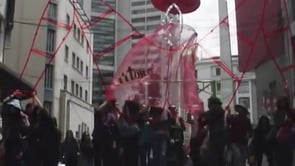
Space to abort: by Mujeres Creando
Mujeres Creando is a Bolivian feminist collective devoted to political street art interventions. They do not define themselves as artists but as political activists. Their
Empower newsletter: Women and LGBT voices from Nigeria
Women’s Health and Equal Rights Initiative (WHER) has launched its first issue of Empower newsletter, aimed at promoting a deeper conceptual understanding of gender and
Report on sex work activism
The International Committee on the Rights of Sex Workers in Europe (ICRSE) has launched its 2015 report that offers detailed description about its campaigns, resources,
The child now: new issue of GLQ journal
The new issue of GLQ Journal, by Duke University Press, brings the theme “The child now” and features Paul Amar’s article “The Street, the Sponge,
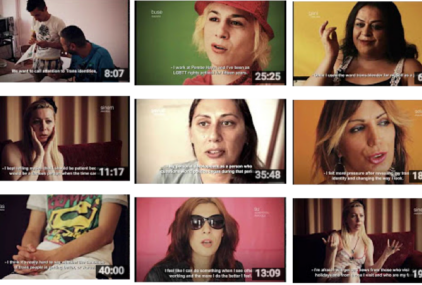
Proudly trans in Turkey: a Gabrielle Le Roux Project
Feminist and queer art was part of the 13th International AWID Forum in Costa do Sauípe, Bahia Sep 8th-11th , 2016). Gabrielle Le Roux was
In Plainspeak september issue: Migration and Sexuality
Talking about migration would be talking about what happens with the crossing of boundaries. Boundaries of culture and climate, and boundaries of visibility, where a change in semantics can come to render what was invisible visible (an accent, perhaps a way of dressing, one’s values and ideas, the experience of being surveilled as an alien), while also allowing the migrant certain new freedoms to be invisible (anonymity where ‘nobody knows your name’, and certain kinds of agency one may not have enjoyed back home).
India – Gender in Medical Education: Perceptions of Medical Educators
The study findings point to the need for a nuanced understanding of gender among medical educators and students. The introduction of gender could pave the way for an opening up of medicine to delve deeper into how signifiers such as class, caste, gender etc. have a bearing on health. The medical curriculum and training must undergo fundamental changes to integrate gender so as to ensure the creation of a gender-sensitive and socially-relevant medical force in the country.